Tampa, Florida
Tree Trimming and Pruning in Tampa, FL
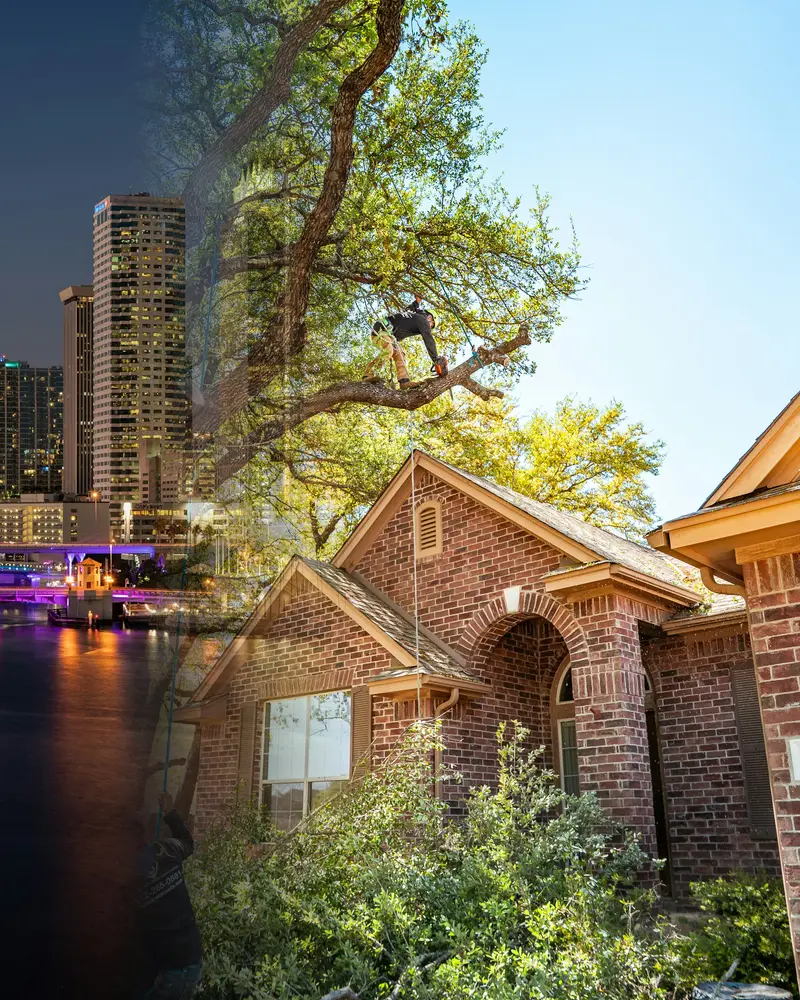
Most Tampa pruning requests come down to clearance — getting a canopy off a roofline, up above a sidewalk, or back from a driveway entrance. The useful discipline is deciding how much clearance you actually need, because in a long growing season a canopy cut back to the bare minimum will close the gap again sooner than you expect.
- Hillsborough County
- Urban and inner-suburban
- Mature street canopy
What this means on Tampa properties
The city's mature street-facing canopy is one of its defining features, and on narrow lots those trees are doing a lot at once: shading a house, overhanging a sidewalk and reaching a neighbour. Pruning here is usually about balancing several clearance requirements at the same time without taking so much live canopy that the tree responds with a flush of weak regrowth.
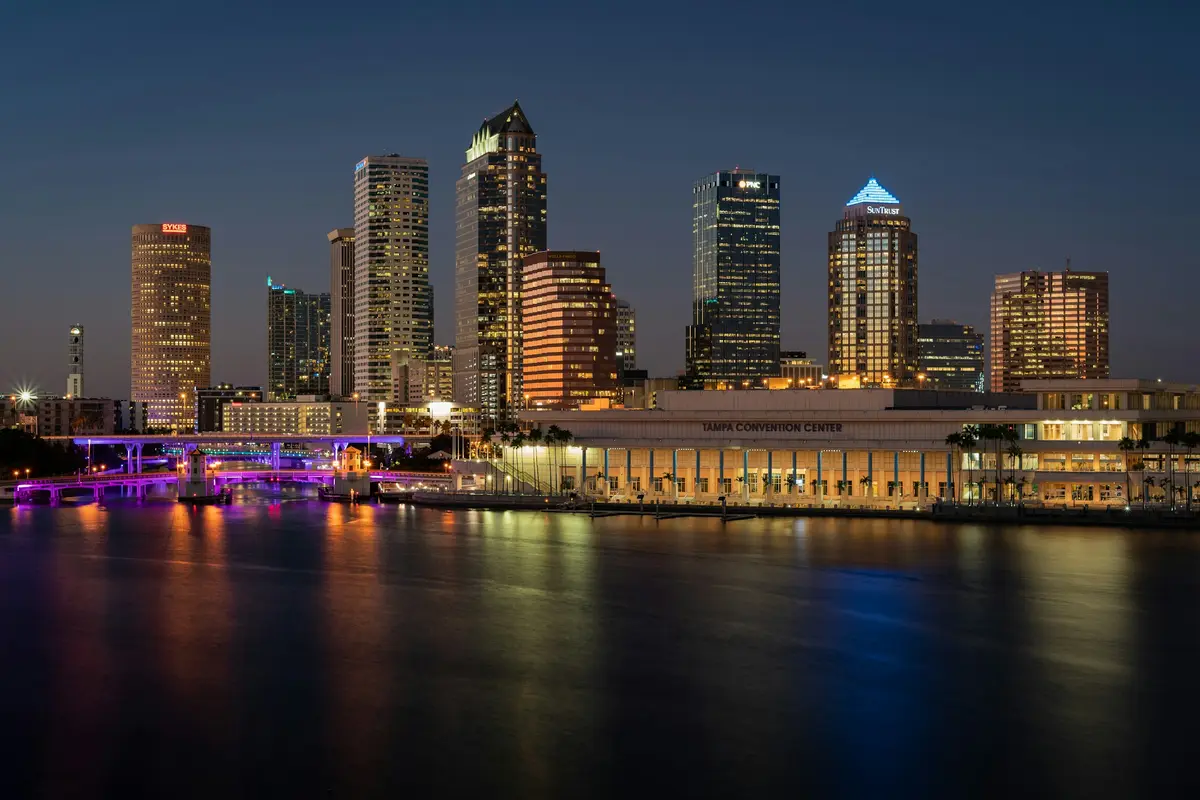
The city sits at the head of Tampa Bay with the Hillsborough River running through it, so low-lying areas and riverside properties can hold water after heavy rain, and saturated ground changes both tree stability and equipment access.
Tampa is an incorporated city with its own municipal code, and its tree provisions are not the same as those applying in unincorporated Hillsborough County. Requirements can vary by property and jurisdiction. Property owners should confirm current requirements with the relevant local authority before work begins.
Common reasons to prune
A laurel oak over a bungalow often needs three separate things: branches off the roof, deadwood out from above the front walk, and enough lift over the driveway to park under it. Asking for those by name gets a more useful answer than asking for a trim.
- Storm-torn stubs that should be cut back to a proper point rather than left ragged.
- Low growth over a driveway or footpath that catches vehicles and pedestrians.
- A young tree with two competing leaders that will become a weak union later.
- A neighbouring canopy reaching well over the boundary, where the two crowns have effectively merged.
- Growth over a street frontage or footpath where vehicles and pedestrians pass beneath.
Pruning versus removal
Pruning solves branch problems. It does not solve trunk problems, and it cannot make a tree fit a space that is fundamentally too small for it.
Pruning is the right tool Branch-level issues
- The trunk and root flare are sound.
- The tree is young enough that structure can still be guided.
Pruning will not fix it Whole-tree issues
- Decay is in the main stem or root flare, not in the branches.
- Repeated heavy cutting has already left a canopy of weakly attached regrowth.
Working aloft, and why it is the risk
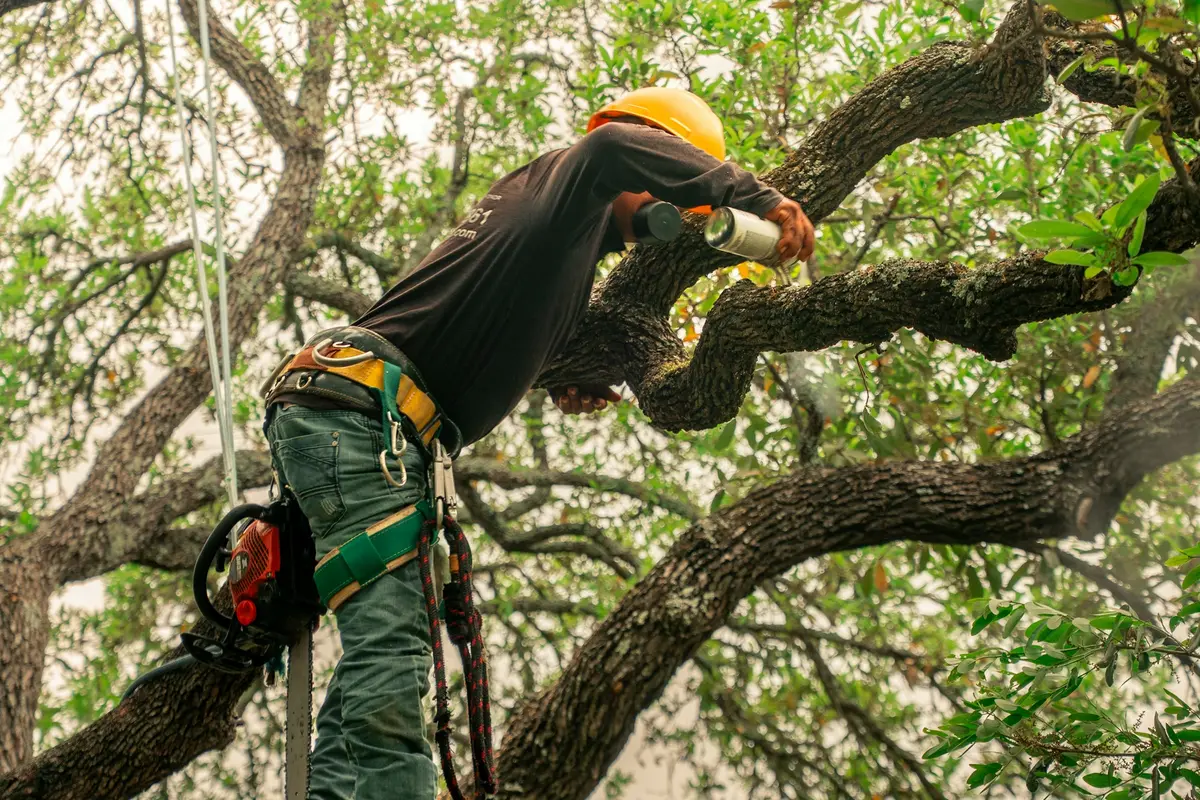
Most serious pruning injuries involve a fall or a dropped limb rather than the saw. Ladders leaned into a canopy are the common factor. If a cut cannot be reached safely from the ground, it is climbing or platform work, not a step-ladder-and-pole-saw job.
Never approach, move or work near a downed or sagging power line, and do not assume a line is inactive. Keep people, pets and vehicles well clear, and report the line to your electric utility or emergency services before anyone goes near the area.
How pruning work is normally approached
- Agree the objective
Clearance, deadwood, structure or sightlines. Pruning without a stated objective is how trees end up over-cut.
- Set the limit
How much live canopy comes off is decided before cutting starts, and kept modest. Removing too much at once weakens the tree and triggers stress regrowth.
- Work to the branch collar
Cuts are made at the right point so the wound can close properly, rather than leaving stubs or cutting flush into the stem.
- Deadwood and hazards first
Dead, broken and hanging material is taken out before any live reduction, since that is the part with an actual safety function.
- Clear and check
Debris removed, cuts reviewed from the ground, and any follow-up interval discussed if the work is staged.
What sets the size of a pruning job
- Canopy size and the number of cuts needed to meet the objective.
- Multiple trees in one visit, which usually works out more efficiently than single calls.
- Whether nearby beds and plantings need protection during the drop.
- Whether neighbouring canopies overlap the tree being worked on — where they interlock, material cannot always fall clear and has to be lowered instead of dropped.
- Whether material risks entering the water, which has to be prevented rather than recovered afterwards.
- Whether the site is reached from a rear alley or the street frontage, and whether that route is wide enough and clear enough to use on the day.
Decide these before the visit
- What outcome you actually want — more light, roof clearance, less deadwood, a tidier shape.
- Where brush can be staged while the chipper works.
- Whether beds, pots or delicate plantings need protecting underneath.
- Decide whether vehicles can be moved off the driveway for the day, and whether a gate or side access can be unlocked and left open.
- Measure the narrowest gate or gap on the route to the tree and have that figure ready. It answers more questions than almost anything else you can tell us.
- Say whether the area around the tree holds water after heavy rain. It affects the timing, the equipment and occasionally the assessment itself.
Debris and cleanup
Cleanup normally includes clearing hard surfaces, raking the drop area and removing cut material. Small leaf litter continues to fall for a while after any canopy work — that is normal rather than incomplete cleanup.
- Where an alley is the only route, material is loaded as it comes down rather than staged, because there is usually nowhere to stage it.
- Staging space on a frontage lot is usually limited, so material tends to be loaded as it comes down rather than piled.
- Where a crown extends over a boundary, agree in advance which side brush will be brought down to — dragging it back under the tree is often the slower option.
Hauled away, chipped on site, or stacked in an agreed position — all three are normal, and they are different amounts of work. Whichever you want should be stated in the scope before the day rather than settled afterwards.
Tree Trimming and Pruning in Tampa: common questions
How much clearance should I ask for over the roof?
Enough that branches are not touching in wind, plus an allowance for a season of growth. Asking for the minimum clearance today generally means asking again within a year or two, and cutting far harder to avoid that causes its own problems.
Can branches overhanging the sidewalk be trimmed?
Clearance over public sidewalks and streets can be subject to local requirements, and street trees are sometimes treated differently from trees on private property. Requirements can vary by property and jurisdiction, so confirm with the relevant local authority before work begins.
Can branches over my neighbour's property be cut?
There are rules about this and they vary. What is reasonable, and from which side, depends on local law and on the situation. It is worth agreeing with the neighbour before scheduling rather than discovering a disagreement mid-job.
There is nowhere obvious to park a truck. Is that a problem?
It is a planning question rather than a blocker. What matters is whether a chipper can be positioned within a workable carry of the tree, and whether that position can be held for the day. Tell us what the street is like when you call and it can be worked out beforehand rather than on arrival.
The tree has not been touched in years. Where should it start?
Normally with deadwood and anything making direct contact with a structure, because those are the parts creating actual risk or damage. Shaping and reduction can follow once the tree's condition is clear. Trying to correct decades of growth in one visit tends to take more off the tree than is good for it.
Related tree services in Tampa
When pruning will not be enough
Where the concern is in the trunk or the root flare rather than the branches, pruning cannot resolve it. This is the comparison worth making before booking either.
Compare pruning with tree removalIf the tree looks unwell rather than overgrown
Fungal growth at the base, a cavity, dieback at the top of the canopy or a lean that has changed are condition questions, not clearance questions.
Read about hazardous tree assessmentIf it is mostly the brush you want gone
Where material is already on the ground from earlier work or a storm, hauling is a separate job from cutting.
See how debris removal is handledDiscuss Trimming Your Trees in Tampa
Name the specific branches and the outcome you want — roof clearance, more light, deadwood gone. Being precise keeps the work targeted and stops a Tampa canopy being cut harder than it needs.
- Phone: 877-269-2454
- Serving Tampa Bay, Florida
Information on this page is general guidance for property owners and managers in the Tampa Bay area. It is not an arboricultural assessment, a legal opinion, a permitting determination or an insurance decision. Tree condition and site risk can only be judged in person.