Tampa, Florida
Tree Debris Removal and Hauling in Tampa, FL
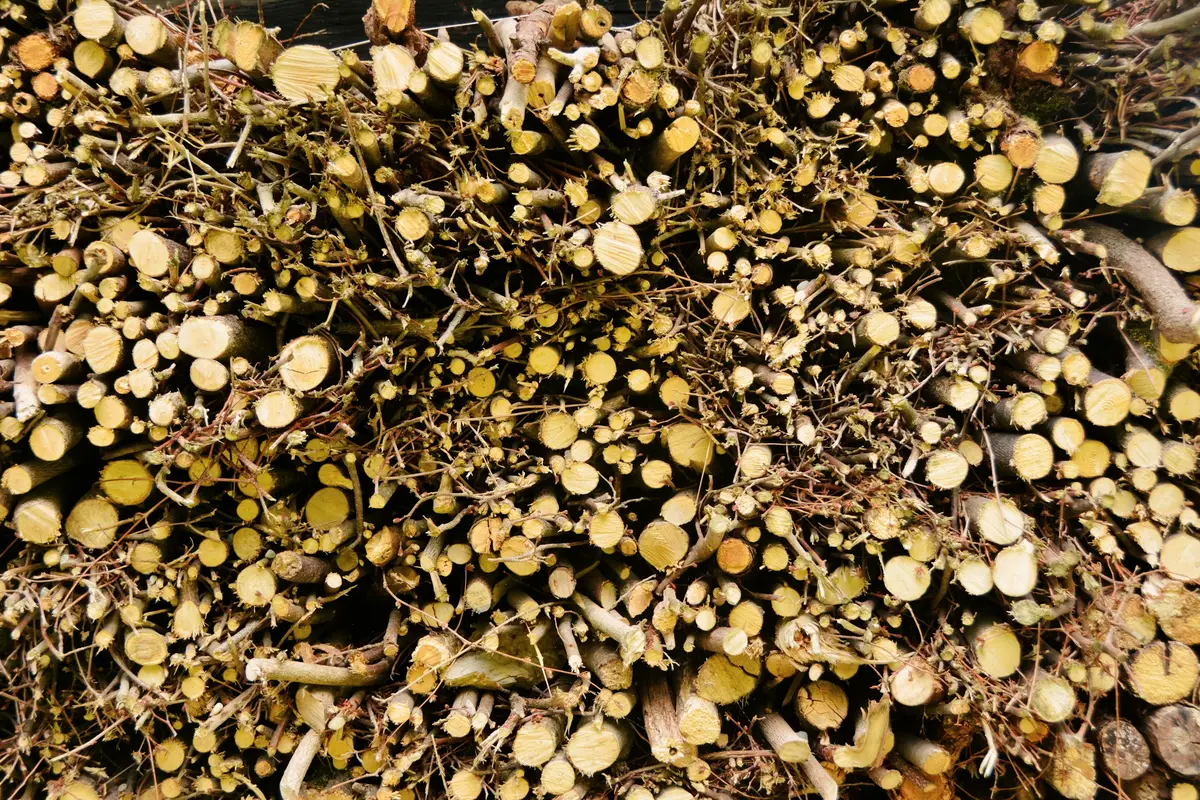
A good share of Tampa debris calls are about material that has been sitting longer than intended — a storm pile the collection programme did not take, or brush stacked in an alley months ago that has settled and grown through. Older piles are more work than fresh ones, not less, because the material interlocks and leaves a decomposed mat underneath.
- Hillsborough County
- Mature street canopy
- Urban and inner-suburban
What this means on Tampa properties
Collection arrangements in the City of Tampa are its own, and they differ from unincorporated Hillsborough County. After major events the city commonly publishes temporary instructions that supersede the usual rules. Checking the current guidance for your address is more reliable than assuming last season's arrangement, or a neighbour's experience in a different jurisdiction, still applies.
Neighbourhoods laid out through the early and mid twentieth century — Seminole Heights, Hyde Park, Palma Ceia and similar districts — carry some of the largest mature canopy in the region on comparatively narrow lots, with alleys, brick streets and closely spaced houses.
Tampa is an incorporated city with its own municipal code, and its tree provisions are not the same as those applying in unincorporated Hillsborough County. Requirements can vary by property and jurisdiction. Property owners should confirm current requirements with the relevant local authority before work begins.

Situations this covers
A pile occupying half a rear alley, part tree work and part general yard waste, is frequently passed over by collection programmes because of what is mixed in. Separating it is usually what makes it removable.
- Material stacked on a commercial site that is occupying a bay or a lane.
- A pile that has become a harbourage concern close to a building.
- Rounds and trunk sections too heavy to move without equipment.
- Growth overhanging a dock, deck or seawall, where anything dropped would go into the water rather than onto ground.
- A tree that has reached the roofline or the fence line decades after being planted for a smaller space.
What determines how a haul-out runs
- How far the material sits from where a truck can actually stand.
- Whether the property has to stay usable while loading is in progress.
- Whether anything non-woody has ended up in the pile.
- Whether the route runs through a gate, a side path or across turf.
- Whether the pile is loose brush, cut rounds, or a mixed heap of both.
Is this a hauling job, or does something still need cutting?
This service moves material that is already on the ground. If anything is still standing, still suspended or still holding load, that is tree work first and hauling afterwards — and the two are priced and planned differently.
A haul-away job Already down and safe to handle
- Chip or rounds left on site from earlier work.
- Material another contractor cut and left behind.
Needs cutting before hauling Still loaded or still standing
- Stumps — grinding is separate work with separate equipment.
- A trunk still bearing on a fence, structure or vehicle.
Handling a settled pile safely
Fence panels, wire, soil, rubble and treated timber in a woody pile change how it must be handled and where it can legally go. Identifying that beforehand avoids a part-loaded truck and a second visit, and keeps sharp material out of the loading process.
Never approach, move or work near a downed or sagging power line, and do not assume a line is inactive. Keep people, pets and vehicles well clear, and report the line to your electric utility or emergency services before anyone goes near the area.
How a haul-out is normally handled
- Sight the pile
Volume from a photograph is unreliable — piles compress and tangle. Where possible the material is looked at, or described in terms of area and height rather than 'a few branches'.
- Separate woody from non-woody
Soil, rubble, fencing, wire and general waste change what can be done with the load, and are best identified before the truck arrives.
- Plan the carry
Where the truck and chipper stand, and how material travels from pile to truck, is the main determinant of how long the job takes.
- Process brush
Light material is chipped, which reduces volume dramatically compared with loading it whole.
- Clear the ground
The footprint of the pile is raked and blown down, since a long-standing pile leaves a mat of decomposed material behind it.
What sets the size of a debris job
- The mix of chippable brush and heavy trunk wood.
- Actual volume, which is usually more than it looks from one angle.
- How long the material has been there and how tangled it has become.
- Overhead clearance along the approach as well as above the tree — a route that works at ground level does not always work with a chipper behind a truck.
- Whether the ground around the root plate has been saturated recently, which affects both stability and what can be driven across the site.
- Whether material can be dropped at all, or whether every piece has to be rigged and lowered into a small space — the difference between those two is substantial.
Debris and cleanup
Municipal storm-debris programmes are not the same across the Tampa Bay area, and after major events cities and counties often publish temporary rules on placement, separation and timing. Confirm the current instruction for your address before assuming kerbside collection will take a pile.
- Long-unmanaged canopies carry more accumulated deadwood than expected, so the volume coming down on a first visit is often higher than on subsequent ones.
- Overlapping canopies tend to produce more brush than expected, because material caught in a neighbouring crown comes down as well as the material that was cut.
- Where a crown extends over a boundary, agree in advance which side brush will be brought down to — dragging it back under the tree is often the slower option.
Hauled away, chipped on site, or stacked in an agreed position — all three are normal, and they are different amounts of work. Whichever you want should be stated in the scope before the day rather than settled afterwards.
Makes the visit quicker
- Separate anything non-woody out beforehand if you can.
- Confirm where a truck can park without blocking access.
- Note the narrowest gate or gap on the route.
- If the tree has not been worked on for some years, say so. The first visit after a long gap is usually a bigger job than the ones that follow, and it is better to know that upfront.
- Have a think about where a truck and chipper could stand near the property, and whether that space can be kept clear on the day.
- Note whether there is alley access behind the property and whether it is currently usable, because it is frequently the difference between an easy job and a hand-carry.
Tree Debris Removal and Hauling in Tampa: common questions
Will Tampa's collection take my pile?
It depends on the current programme and on what is in the pile. Mixed material is the usual reason a pile is passed over. Check the city's current instructions for your address, and if the pile has been declined, that is exactly when a private haul-out makes sense.
Can you collect from an alley rather than the street?
Usually, if the alley is passable. Access varies enormously block to block in Tampa, so tell us whether yours is clear and roughly how wide it is.
Can you take debris another contractor left?
Yes. Material left behind after other work is a common reason for this call. It helps to know what is in the pile — whether it is clean woody material or has fencing, soil and general waste mixed through it.
The ground around the tree stays wet. Does that make it less stable?
It can. Saturated soil holds a root plate less firmly, which is why trees with no visible defect sometimes move during sustained wet weather rather than during the strongest wind. Whether it applies to a particular tree needs someone at the base of it — soil movement is one of the few things that genuinely cannot be judged from a photograph.
Can dead limbs high in a dense canopy be seen from the ground?
Often not reliably. Under a heavy interlocking crown, dead material thirty or forty feet up is genuinely difficult to identify from below, and it tends to be held in place rather than falling clear. That is a reasonable reason to have someone look rather than to guess.
Related tree services in Tampa
If the pile came from a storm
Material still suspended in a canopy matters more than the pile at ground level.
Read about storm damage responseIf a stump is part of it
Grinding spoil is a separate volume from brush and trunk wood.
Read about stump grindingIf it is an area rather than a pile
Larger volumes across a parcel are scoped by area rather than by load.
Read about land and lot clearingArrange Debris Removal in Tampa
Give us the pile's footprint and height, roughly how much is heavy wood, and whether anything non-woody is mixed in. Photographs with something for scale help more than an estimate in loads.
- Phone: 877-269-2454
- Serving Tampa Bay, Florida
Information on this page is general guidance for property owners and managers in the Tampa Bay area. It is not an arboricultural assessment, a legal opinion, a permitting determination or an insurance decision. Tree condition and site risk can only be judged in person.