Palms specifically
Palm Tree Removal in Tampa Bay, FL
Palm removal is a different job from broadleaf tree removal, and the differences are practical rather than cosmetic. Palm trunks are dense and heavy for their diameter, palm debris is bulky and waterlogged rather than chippable, and palms are very often planted in the tightest spot on a property.
- Tampa Bay, Florida
- Hillsborough · Pinellas · Pasco
- Residential & commercial
What this service covers
Condition assessment also works differently. A palm's growing point sits at the centre of the crown, so a collapsed spear leaf, soft or discoloured tissue in the crown, or a narrowed section of trunk are significant findings rather than cosmetic ones. Several palm disorders are not treatable once symptoms are obvious, which is why an in-person look matters before assuming a palm can be saved.
Method follows condition. A palm with a compromised crown or a soft upper trunk cannot be climbed, and that single fact decides the approach before anything else is considered. Where the palm is sound, the crown comes off first, then the trunk is sectioned and lowered — dropping full sections is rarely an option next to a pool cage, a seawall or a wall.
Safety before anything else
A water-laden frond or a mature seed pod dropping from height carries real energy, and palm debris tends to fall in an unpredictable spread rather than straight down. The area below needs to be clear well beyond the apparent footprint of the crown.
Never approach, move or work near a downed or sagging power line, and do not assume a line is inactive. Keep people, pets and vehicles well clear, and report the line to your electric utility or emergency services before anyone goes near the area.
Palms in the Tampa Bay landscape
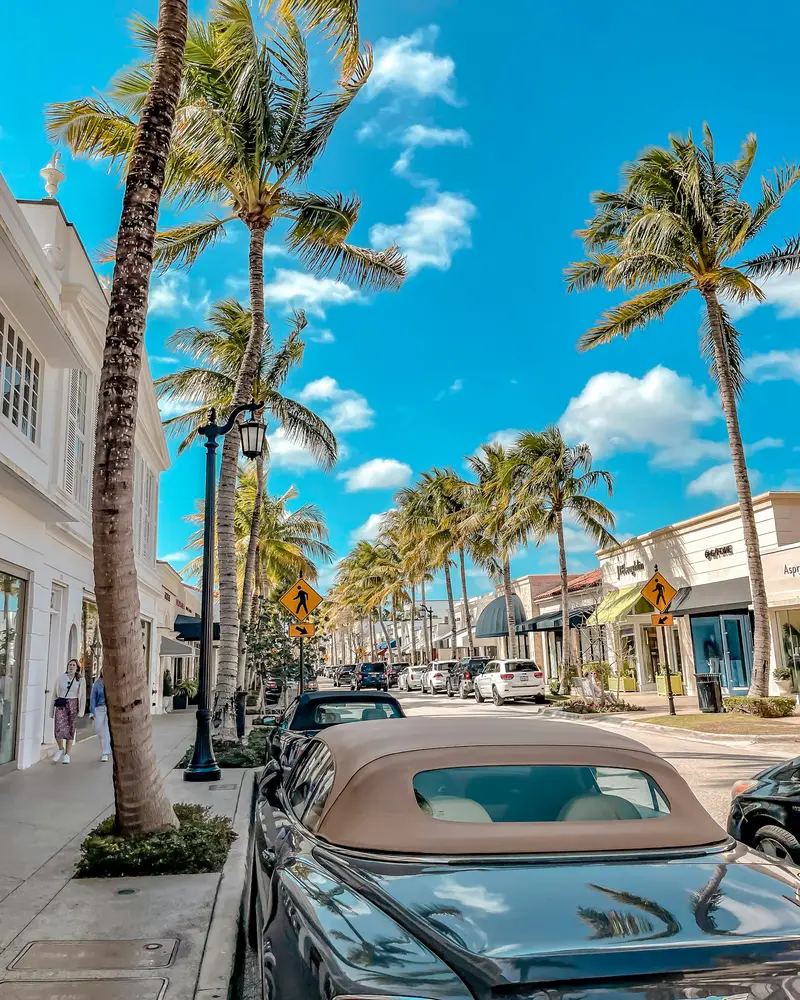
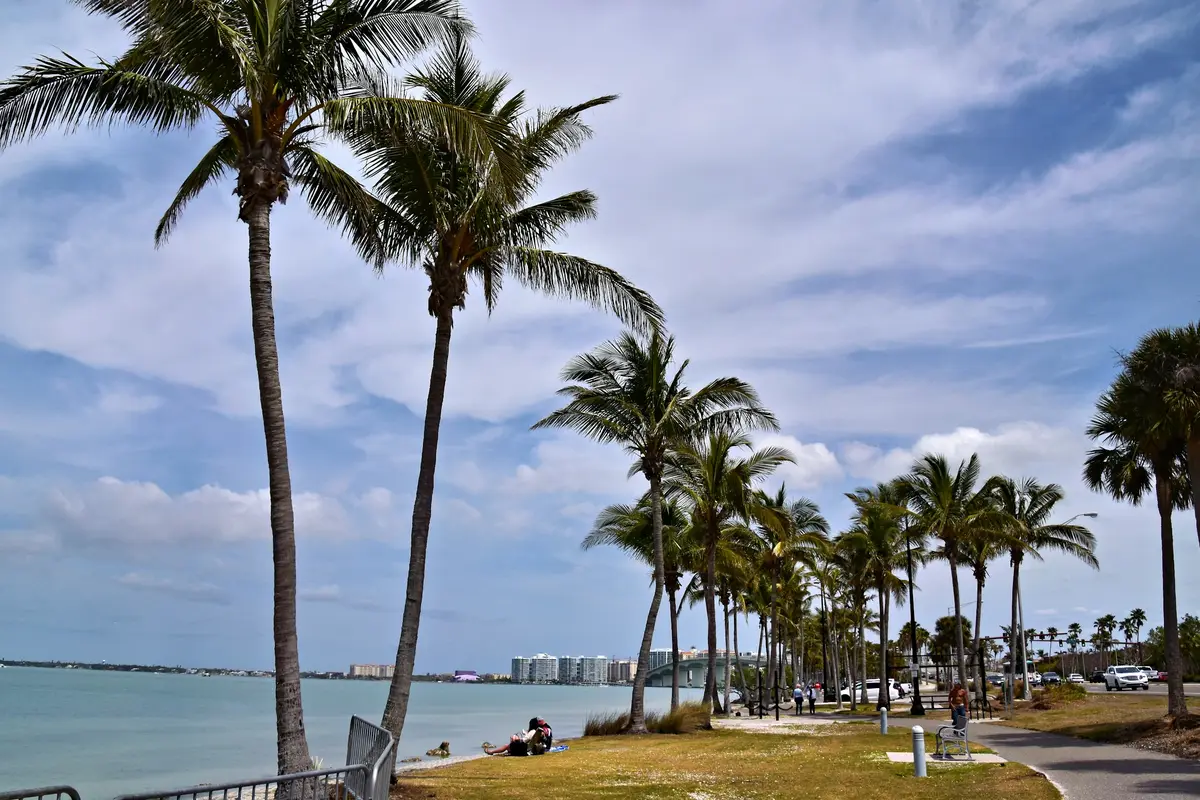
Palms are a defining part of the region's planted landscape, from the sabal palm — Florida's state tree — to a wide range of ornamental species used across residential and commercial property. Different palms have very different mature heights, trunk characteristics and litter habits, and the practical consequences for removal vary accordingly. We do not assume which palms are on a given property.
Position is the recurring theme. Palms across Tampa Bay are commonly planted along pool decks, beside seawalls, against walls and directly under service lines, because they were chosen for a narrow space. That means the clear working radius around the trunk, not the palm's height, is usually what governs how the removal has to be carried out.
Requirements can vary by property and jurisdiction. Property owners should confirm current requirements with the relevant local authority before work begins.
Why palms come out
The reason usually points to whether removal or maintenance is the honest answer.
Residential situations
- A crown that has thinned to a few fronds with no new growth emerging.
- A palm now well above the roofline dropping fronds onto the house.
- Continual frond and fruit litter into a pool or across a deck.
- A trunk leaning after a storm or after ground disturbance at the base.
Commercial and site situations
- Palms along entrances and walkways where falling fronds are a liability concern.
- Planting that has outgrown its bed against a building frontage.
- Palms under service lines that cannot be kept clear.
- Landscape rationalisation across a site with many palms of mixed condition.
Why palms end up being removed
- The crown has thinned to a few fronds, or new growth has stopped emerging.
- The spear leaf at the centre has collapsed or pulls out easily.
- The trunk has a narrowed or pinched section, indicating a period of severe stress.
- It has grown well above the roofline and dropping fronds now reach the building.
- It sits too close to a wall, pool deck or driveway for the trunk it has developed.
- Fruit, seed and frond litter is a continual maintenance burden over a pool or path.
- The trunk is leaning after a storm or after ground around the base was disturbed.
- It is planted directly beneath a service line and cannot be kept clear.
- A landscape change means the palm no longer fits the plan for the space.
- Soft, discoloured or foul-smelling tissue is visible in the crown or upper trunk.
Remove the palm, or keep maintaining it?
Palms fail differently from broadleaf trees, and they cannot be reduced or reshaped the way an oak can. That narrows the options: maintenance works until it does not, and then removal is the remaining one.
Maintenance still makes sense Crown and trunk sound
- The crown is producing healthy new growth from the centre.
- The problem is accumulated dead fronds, seed pods or litter rather than the palm itself.
- The trunk shows no soft area, cavity or narrowing below the crown.
- Height is still workable from the ground or a modest platform.
- The position is inconvenient rather than genuinely wrong for the mature size.
Removal is the sensible call Crown or trunk compromised
- The growing point has died — a palm cannot regrow one.
- A soft or collapsed section of trunk, which does not heal or compartmentalise.
- The palm has outgrown a position tight against a roofline, cage or seawall.
- Height now puts frond and pod fall over something people use daily.
- It is leaning from root-plate movement rather than from natural curvature.
How palm removal typically works
- Assess crown and trunk condition
A palm with a compromised crown or a soft upper trunk cannot be climbed, which changes the method before anything else is decided.
- Check overhead and underfoot
Palms are frequently planted close to lines, walls, pool cages and paving, so the clear space around the trunk is often the binding constraint.
- Remove the fronds
The crown is taken down first. Frond bases are heavy, waterlogged material and are cleared before the trunk is touched.
- Section the trunk
Palm trunks are dense and heavy for their diameter. They are cut in short sections and lowered rather than dropped where space is tight.
- Manage the fibrous mass
Palm material does not chip like hardwood. It is handled and loaded differently, and that affects both time and truck space.
- Deal with the base
Palm root balls are compact rather than spreading, which makes the base a different proposition to a hardwood stump.
- Clear and finish
The area is cleared of frond litter, fruit and fibre, which spread further than people expect during the work.
What affects a palm removal
- Overall height and how much of the trunk is above the roofline.
- Trunk diameter and density, which determine section weight.
- Whether the crown is sound enough for the palm to be climbed.
- Clearance around the base — pool cages, walls, decks and paving.
- Overhead lines or structures within the working radius.
- Whether sections can be dropped or must be lowered.
- The volume of frond and fruit material to be cleared.
- Whether the root ball is removed or ground.
- Access for a lift, if climbing is not appropriate.
- Multiple palms in one visit, which is usually more efficient than separate calls.
Before booking palm work
- An estimate of height, using the roofline or a nearby structure as a reference.
- Whether the palm is single-trunked or clumping, since that changes the job entirely.
- How close the trunk sits to paving, a pool deck, a cage or a wall.
- Whether anything overhead crosses the working radius.
- Whether the base is being ground out or left.
- What will occupy the space afterwards.
- Whether there are other palms you would want done at the same time.
- Any recent change in the crown, so the condition question can be discussed properly.
Debris and site finish
Palm debris is bulky, fibrous and heavy with water. It does not process like hardwood brush, and a palm often fills more truck space than a broadleaf tree of similar visual size.
Frond bases, fruit stalks and loose fibre scatter widely during removal, especially in wind. Pool surfaces, screens and pavers near the work usually need a proper clean-down at the end rather than a quick rake.
Palm root balls are relatively compact compared with a spreading hardwood root system. That often makes the base easier to deal with, though grinding still produces spoil that needs to be removed or backfilled.
Questions we are asked about this service
Are palms easier to remove than other trees?
Not necessarily. They are simpler in shape but the trunk is dense and heavy for its diameter, and palms are very often planted in the tightest available spot — beside a pool cage, against a wall, under a line. Position tends to matter more than form.
Can a declining palm be saved?
Sometimes, depending on the cause, and sometimes not — several palm disorders are not treatable once symptoms are obvious. A collapsed spear leaf or soft tissue in the crown is a serious sign. Diagnosis needs someone looking at the palm, not a description over the phone.
Should the root ball be ground out?
If you plan to plant, pave or build there, yes. Palm root balls are compact, so grinding is usually less involved than for a large hardwood stump, but the spoil still has to go somewhere.
Can a palm be relocated instead of removed?
Some palms transplant more successfully than most broadleaf trees, but it depends on the species, the size, the season, the equipment access at both ends and where it is going. It is a different job to a removal and needs to be scoped as one.
Why does trimming get mentioned when I asked about removal?
Because sometimes the actual problem is frond litter or clearance rather than the palm itself. If that is the issue, a maintenance approach may deal with it. If the crown is failing or the position is wrong, removal is the honest answer.
Are there rules about removing palms?
Possibly, depending on the address and the palm. Some jurisdictions treat certain palms differently from other trees, and some do not. Requirements can vary by property and jurisdiction, so confirm with the relevant local authority before work begins.
Is removing several palms at once more efficient?
Usually yes. Setup and access are shared, and palm debris handling — which is a significant part of the work — becomes more efficient at volume. If you have several, mention them all when you call.
Can a palm be transplanted rather than removed?
Some palms transplant more readily than broadleaf trees, but it depends on the species, size, season, destination and equipment access at both ends. It is a separate job from a removal and needs to be scoped as one.
Describe the palm and where it stands
Rough height against the roofline, how close the trunk is to paving or a pool cage, whether anything crosses overhead, and what the crown looks like. That is usually enough to work out the approach.
- Phone: 877-269-2454
- Serving Tampa Bay, Florida
Information on this page is general guidance for property owners and managers in the Tampa Bay area. It is not an arboricultural assessment, a legal opinion, a permitting determination or an insurance decision. Tree condition and site risk can only be judged in person.