Condition and risk
Hazardous Tree Removal in Tampa Bay, FL
Tree risk is a combination of two things: how likely the tree is to fail, and what sits underneath it if it does. The same defect means something very different over open ground than it does over a driveway where a car is parked every night, and both halves have to be looked at together.
- Tampa Bay, Florida
- Hillsborough · Pinellas · Pasco
- Residential & commercial
If a tree is threatening people, an occupied building or your only access, call straight away rather than waiting.
What this service covers
The indicators worth taking seriously are mostly at the bottom of the tree rather than the top. Look at the bottom of the tree first. Fungal fruiting bodies at the base, a cavity or soft area in the root flare, a vertical crack in the stem, or soil lifted on the opposite side to a lean all matter more than a scattering of dead twigs. Most catastrophic failures begin below eye level.
Not every declining tree needs to come out. Reducing a canopy lowers the load on a defective stem, removing deadwood removes the material most likely to fall, and some trees are reasonable candidates for planned monitoring. Where decay is in the trunk or the root flare, the options narrow considerably — there is no pruning fix for a compromised main stem.

Safety before anything else
While a tree is waiting to be assessed, the practical protection is keeping people and property out from under it. Move parking, relocate play equipment and furniture, and avoid the area in wind. A decayed tree that has stood for years can fail in a single gust, and there is no reliable way to predict the day.
Never approach, move or work near a downed or sagging power line, and do not assume a line is inactive. Keep people, pets and vehicles well clear, and report the line to your electric utility or emergency services before anyone goes near the area.
Assessment across the Tampa Bay area
Site history explains a great deal of the decline seen across the region. Trenching for utilities, new paving over a root zone, fill added against a trunk, and grade changes during construction all damage roots in ways that show up in the canopy years later. When a tree started declining, and what happened near it beforehand, is often more informative than the symptom itself.
Species and situation matter too. Laurel oaks are widely planted across older Tampa Bay neighbourhoods and are known for shorter useful lifespans and greater decay susceptibility than live oaks of the same age, and tall pines retained through construction frequently sit in root zones that were disturbed decades ago. Neither of those facts diagnoses a specific tree — only an in-person assessment does that.
Requirements can vary by property and jurisdiction. Property owners should confirm current requirements with the relevant local authority before work begins.
What usually prompts an assessment
These are reasonable triggers for having a tree looked at properly.
Residential situations
- Mushrooms or bracket fungi appearing at the base of a mature tree.
- Dead branches concentrated in the upper canopy rather than scattered through it.
- A lean that seems to have changed, or new cracking in the soil at the base.
- A neighbour's tree of the same age and species having failed.
Commercial and site situations
- Declining trees within reach of a building entrance or tenant unit.
- Trees flagged during a property condition survey.
- Canopy over parking bays where vehicles are left all day.
- Landscape trees affected by nearby trenching or resurfacing work.
Observable indicators worth taking seriously
- Mushrooms, conks or bracket fungi growing at the base, on the root flare or from the trunk.
- A cavity, hollow or soft area where a probe or a knuckle meets little resistance.
- Bark falling away in sheets to expose dead wood underneath.
- A vertical crack or seam running any significant distance up the trunk.
- Dead branches concentrated at the top of the canopy rather than scattered through it.
- A lean that has changed, or soil cracked and lifted on the opposite side of the base.
- Leaves noticeably smaller, sparser or off-colour compared with previous seasons.
- Sprouts appearing along the trunk, which can signal a tree under significant stress.
- Recent trenching, paving or grade change within the root zone.
- Sawdust-like frass, exit holes or heavy insect activity at the base.
Remove it, or keep watching it?
Not every defective tree needs to come down, and removing a tree that could have been managed is a loss. Risk is a combination of how likely a failure is and what would be underneath it — both halves have to be looked at, in person.
Monitoring can be reasonable Defect present, target absent
- The defect is real but nothing valuable or occupied sits within falling distance.
- Deadwood is confined to individual limbs that can be removed on their own.
- Decline followed a correctable change — grade, irrigation, root-zone disturbance.
- The tree can be reduced or thinned to lower the load on a weak union.
- There is a documented starting point, so any change can actually be noticed.
Removal is the honest answer Stem, base or repeated failure
- Decay, a cavity or fungal fruiting bodies on the main stem or root flare.
- Movement at the base — a lean that has changed, or soil lifted in an arc.
- A second limb has failed from the same kind of weak attachment.
- The defect sits directly above something occupied, and cannot be pruned away.
- Extensive dieback from the top of the canopy downward.
What an on-site assessment actually looks at
- The root flare and the soil around it, since most catastrophic failures start below eye level.
- The main stem, checked for cavities, cracks, included bark and old wound response.
- Branch attachments, especially unions where two stems of similar size meet.
- The proportion of dead to live canopy, and where the dead wood sits.
- What lies within the potential fall zone, and whether people are under it regularly.
- Site history — construction, drainage change, root severance, previous heavy pruning.
- Whether the defect can be managed by reducing the canopy or only by removal.
- Whether the tree is a suitable candidate for monitoring rather than immediate action.
From concern to resolution
- Describe what you are seeing
Which part of the tree, how long it has looked that way, and what has changed recently. Change over time is often more informative than a single symptom.
- Restrict use of the area
If people park, play or sit under the tree, moving that activity elsewhere is a sensible interim step while the tree is being looked at.
- On-site inspection
Base, stem, unions and canopy are examined in person. Photographs help a phone conversation but do not substitute for standing under the tree.
- Weigh the target
Risk is a combination of likelihood of failure and what is underneath. The same defect means different things over a shed and over a driveway.
- Choose the response
Removal, reduction to lower the load, deadwood clearance, or planned monitoring. Not every declining tree needs to come out immediately.
- Plan the takedown
Compromised trees are dismantled differently, since a decayed stem cannot be assumed to hold a climber or take rigging loads.
- Complete and reassess
The stump is dealt with as agreed, and any neighbouring tree showing similar signs is noted.
Factors that shape a hazardous removal
- How much sound wood remains, which determines whether the stem can be climbed or rigged at all.
- Whether a lift or crane is needed because the tree cannot support a climber.
- The size of the target zone and how much of it must stay usable.
- Whether the tree can be felled in one piece or must be taken down in small sections.
- The extent of decay at the base, which affects how predictable the fall direction is.
- Proximity to structures, boundaries and services.
- Whether other trees nearby show the same decline and are worth including.
- Ground conditions for equipment positioning.
- Whether the stump and root plate are part of the work.
- How urgent the situation is judged to be once the tree has been seen.
Useful information to gather
- How long the symptoms have been visible and whether they are getting worse.
- Photographs of the base, the trunk and the full canopy from a distance.
- Any work done near the tree in recent years — trenching, paving, fill, root cutting.
- Changes to irrigation or drainage in the root zone.
- What sits within the potential fall zone and how often people are there.
- Whether the tree has failed before, and which part failed.
- Whether neighbouring trees of the same type are showing similar signs.
- Whether the tree is close to a boundary or a shared structure.
Debris and site finish
Dead and decayed wood breaks up differently from sound timber. It tends to shatter on impact and produce more fragments, so ground clearing after a hazardous removal usually takes proportionally longer than the felling itself.
Where decay involves fungal activity, it is reasonable to prefer that material leaves the property rather than being chipped and spread as mulch nearby. If you have a preference, say so before work starts.
Grinding the stump of a decayed tree often reveals more deterioration below grade than was visible above it. That is normal, and it sometimes means the void is larger than expected and needs more fill.
Questions we are asked about this service
Is a dead tree always dangerous?
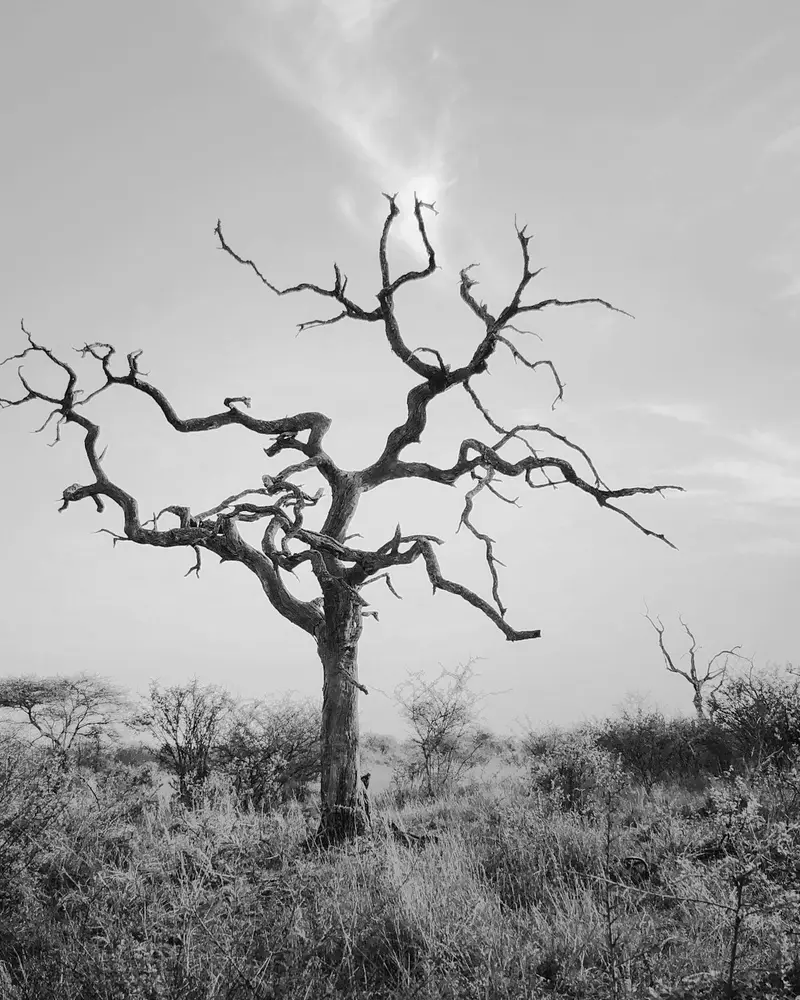
Not necessarily. Risk depends on what is underneath it. A dead tree in the middle of an open field is a low-risk situation; the same tree over a driveway or a play area is not. The target matters as much as the tree.
Can you tell me if my tree is dangerous from photos?
No, and we would not. Photographs help decide whether a visit is warranted, but the key indicators — the root flare, stem soundness, soil movement — need to be examined in person.
The tree looks fine but a neighbour's identical one failed. Should I worry?
It is worth having a look. Trees of the same species, age and situation often share the same defects and the same site history. That is a reasonable prompt for an inspection, not a reason to assume the worst.
Can a hazardous tree be saved instead of removed?
Sometimes. Reducing the canopy lowers the load on a defective stem, and removing deadwood removes the material most likely to fall. Whether that is enough depends on where the defect is. Decay in the trunk or root flare rarely leaves good options.
What about protected trees?
Some Tampa Bay jurisdictions have provisions covering trees by size, species or condition, and some make allowance for trees assessed as hazardous. Requirements can vary by property and jurisdiction, so confirm with the relevant local authority before work begins.
How quickly should this be dealt with?
That depends on the findings. A tree with soil movement at the base over an occupied structure is a different conversation to a tree with scattered deadwood. Restricting access under the tree is a sensible step in the meantime either way.
Can a hazardous tree be reduced rather than removed?
Sometimes. Lowering the canopy reduces the leverage on a defective stem and can be a legitimate option where the defect is manageable. Whether it is enough depends entirely on where the defect sits, which is an in-person judgement.
How often should mature trees be checked?
There is no universal interval. A practical approach is a look after any significant storm, and a proper assessment whenever something visibly changes — new deadwood, a fungal body, soil movement, or a change in how the tree looks against a fixed reference like a fence line.
Have a declining tree looked at in person
Describe what you are seeing and how long it has looked that way, and keep people and vehicles out from under the tree in the meantime. We will not give a verdict on a hazardous tree from photographs — that needs someone standing at the base.
- Phone: 877-269-2454
- Serving Tampa Bay, Florida
Information on this page is general guidance for property owners and managers in the Tampa Bay area. It is not an arboricultural assessment, a legal opinion, a permitting determination or an insurance decision. Tree condition and site risk can only be judged in person.