Dunedin, Florida
Tree Removal in Dunedin, FL
Removal in Dunedin deserves a genuine second look. The city's mature canopy is part of its character, city code includes tree provisions, and a good proportion of the trees people ask about removing have branch problems rather than tree problems — which pruning solves without losing anything.
- Pinellas County
- Gulf coast city
- Historic residential core
What this means on Dunedin properties
Where removal is the right answer, access is the practical constraint. Narrow streets, small frontages and closely spaced older houses mean sectional dismantling with a long carry to the truck, and in the historic core the working room between structures can be minimal. Dunedin administers its own code, distinct from unincorporated Pinellas County nearby.
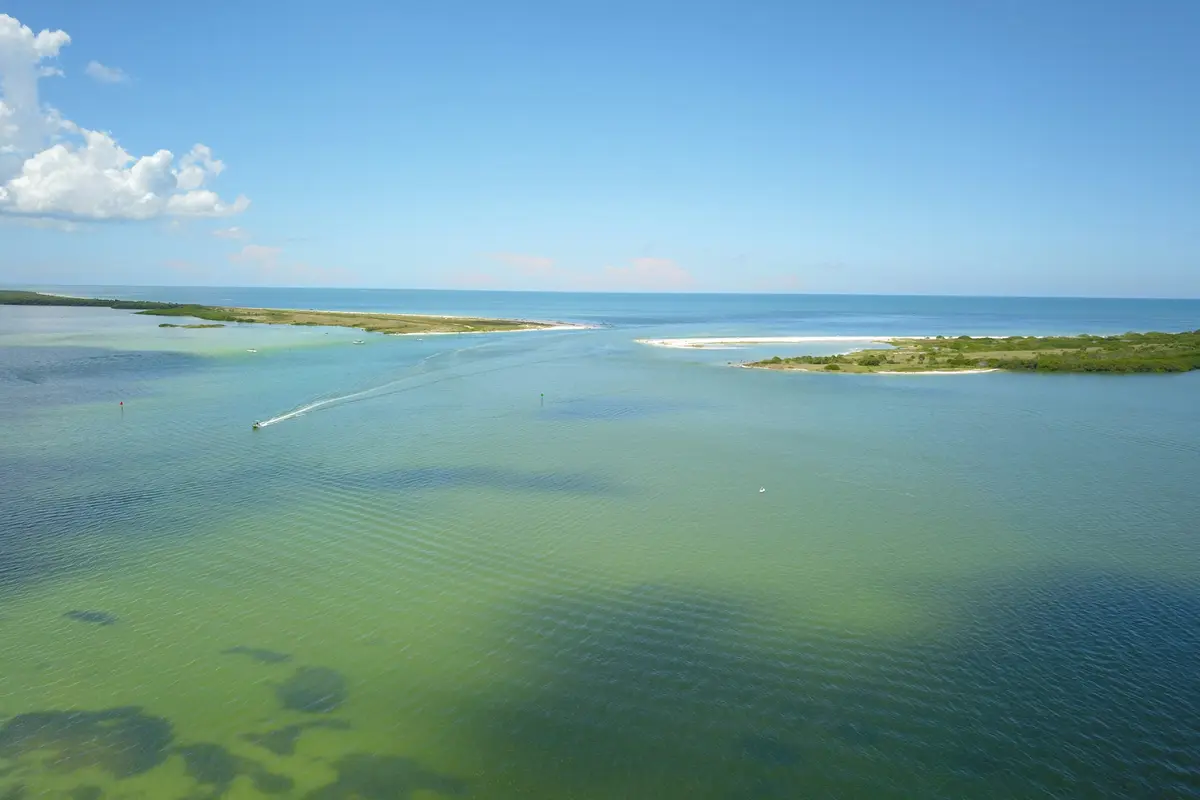
Dunedin sits on the Gulf side of northern Pinellas County, with a compact historic core, a long waterfront edge and residential streets running back from the coast.
Dunedin is an incorporated Pinellas County city with its own municipal code provisions covering trees. Requirements can vary by property and jurisdiction. Property owners should confirm current requirements with the relevant local authority before work begins.
Reasons removal ends up being the right answer
Where a mature tree stands over an older house, the expectation is often that it must come out. Where the problem is clearance rather than condition, pruning addresses it and keeps the tree, which is worth establishing before either is booked.
- Roots lifting a walkway, slab or wall where the conflict will only worsen.
- A species that has outgrown the space it was planted in and cannot be reduced sensibly.
- Structural decay in the lower trunk or root flare, where there is no pruning fix.
- Dieback concentrated on the exposed side of a tree rather than spread through the canopy.
- Dead material held aloft in an interlocking canopy rather than falling clear, above areas that are in daily use.
Removal or retention: how the decision is usually framed
Removal is permanent, so it is worth being clear about which problem it solves. A tree with a structural defect in the main stem is a different case to a healthy tree in an inconvenient place.
Points toward keeping the tree Reversible problems
- The conflict is with something movable — a shed, a bed, a path alignment.
- The issue is clearance, and pruning can create it without removing more than a modest share of the canopy.
Points toward removal Structural or spatial
- Root conflict with a slab, foundation or drain that will keep escalating.
- The tree is simply too large for the space at maturity and always will be.
How the work is kept safe
Service drops to a house are easy to miss in a canopy, and they are not always where you expect. Anything crossing the working radius changes the method or stops the job until the utility has been involved. That check happens before the first cut, not partway through.
Never approach, move or work near a downed or sagging power line, and do not assume a line is inactive. Keep people, pets and vehicles well clear, and report the line to your electric utility or emergency services before anyone goes near the area.
How a planned removal usually runs
- Site walk and decision
The tree, its target zone and the access route are looked at together. Sometimes the outcome is that removal is not the best option.
- Method selection
Straight felling, sectional dismantling or a lift-assisted approach, chosen by what is underneath and how much room there is to drop material.
- Stem sectioning
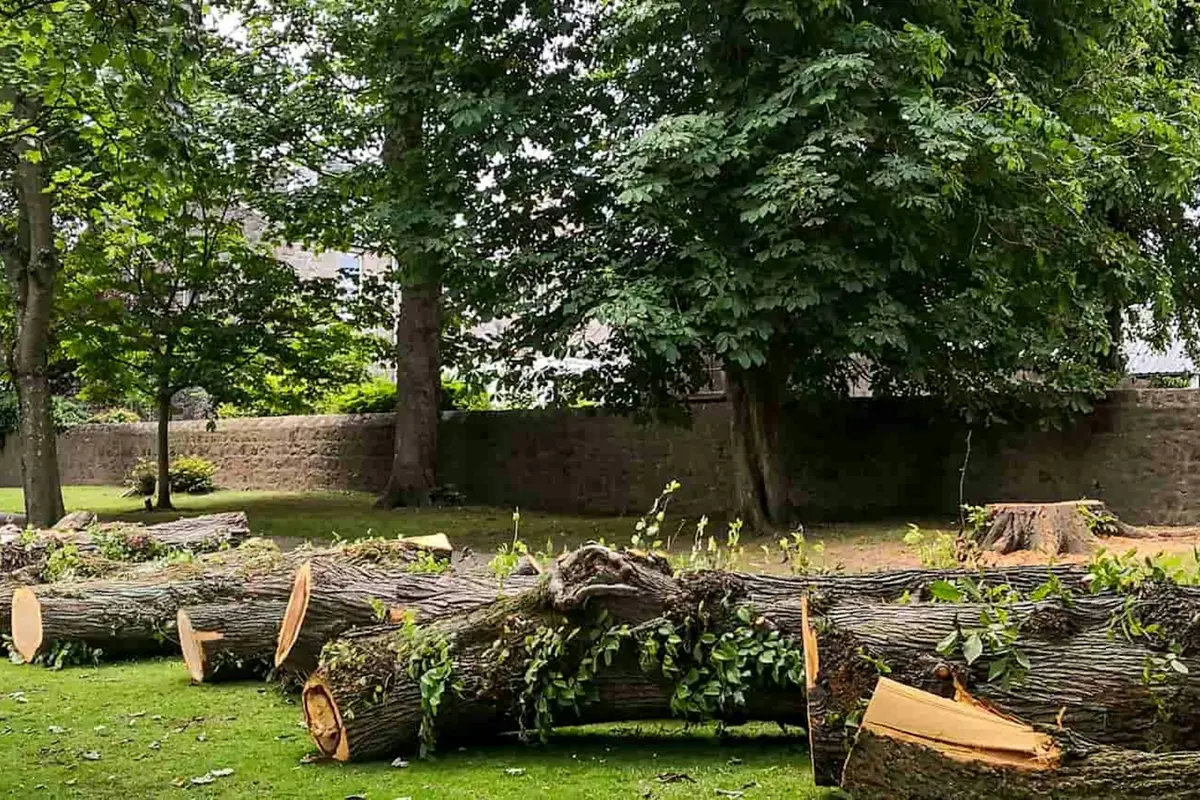
The trunk is taken in lengths that suit the drop zone and what can be moved out through the available access.
- Stump decision
Cut low, ground down, or left at a workable height for a later grind — this depends on what the space is going to become.
- Site finish
Material removed or staged, hard surfaces cleared, and the ground left in a state that matches what happens next on that spot.
What actually determines the work involved
- Whether the wood leaves the property or is cut and stacked on site.
- What sits under the canopy — open lawn is a completely different job to a courtyard.
- Whether limbs can be dropped freely or have to be rigged down piece by piece.
- Whether the tree stands sheltered or exposed. A tree that grew up inside surrounding canopy carries wind very differently once that shelter is gone.
- Whether coastal exposure has affected the tree's condition, which is assessed at the tree rather than assumed from the address.
- How much of the work is correcting years of growth rather than routine maintenance — the first visit to a long-unmanaged tree is normally the largest.
Questions worth answering before you call
- Whether you want the stump ground, and whether anything will be planted or built there.
- Whether any part of the canopy overhangs a neighbouring property.
- The width of the narrowest gate or side path on the access route.
- Note whether anything nearby has been removed or thinned recently — a tree that was sheltered and is now exposed is worth flagging.
- Note anything fixed on the route — an air-conditioning unit, meter box, irrigation head or low wall — that cannot simply be stepped over.
- Measure the narrowest gate or gap on the route to the tree and have that figure ready. It answers more questions than almost anything else you can tell us.
Debris and cleanup
You can usually choose what happens to the wood. Full haul-away leaves the cleanest site; leaving rounds or chip on site reduces the volume that has to be carried out and can be useful if you have a use for it. It is worth deciding before the day rather than during it.
- Where the carry is long or the route is narrow, brush is normally cut into smaller pieces than strictly necessary, because handling size matters more than trips.
- Long-unmanaged canopies carry more accumulated deadwood than expected, so the volume coming down on a first visit is often higher than on subsequent ones.
- Trunk wood is cut to a size the access will take rather than to the largest size the machine could handle.
Hauled away, chipped on site, or stacked in an agreed position — all three are normal, and they are different amounts of work. Whichever you want should be stated in the scope before the day rather than settled afterwards.
Tree Removal in Dunedin: common questions
Does Dunedin regulate tree removal?
The city's municipal code includes tree provisions, and what applies depends on the tree and the property. Unincorporated Pinellas areas nearby are governed differently. Requirements can vary by property and jurisdiction, so confirm with the relevant local authority before work begins.
Will you tell me if removal is unnecessary?
Yes, and it happens reasonably often here. If the problem is clearance or deadwood rather than the tree itself, pruning is the better answer and we will say so.
What about a tree on the boundary?
Ownership and responsibility for boundary trees depend on where the trunk stands and on local rules, and the neighbour's position matters. It is worth resolving that before work is scheduled rather than after.
I would rather keep the tree if possible. Is that worth saying?
Yes, and it changes the conversation usefully. Where the concern is branch-level — clearance, deadwood, a rubbing limb — pruning frequently resolves it without losing the tree. Where the problem is in the trunk or the root flare, it generally does not, and that is worth establishing before any work is scheduled.
The tree has not been touched in years. Where should it start?
Normally with deadwood and anything making direct contact with a structure, because those are the parts creating actual risk or damage. Shaping and reduction can follow once the tree's condition is clear. Trying to correct decades of growth in one visit tends to take more off the tree than is good for it.
Related tree services in Dunedin
Before committing to removal
Where the problem is clearance, deadwood or a rubbing limb, pruning usually solves it and keeps the tree. It is worth ruling that out first.
Compare tree removal with pruningWhat happens to the stump
Felling and grinding are separate operations with different equipment. If you want the stump gone, it has to be planned into the same visit.
Read about stump grindingIf condition is the reason
Where the removal is prompted by decay, a defect or a lean rather than by space or a planned change, the assessment comes first.
Read about hazardous tree assessmentRequest Tree Removal Information in Dunedin
Tell us what the tree is doing and what sits underneath. In Dunedin it is worth establishing whether removal is actually needed before scoping it.
- Phone: 877-269-2454
- Serving Tampa Bay, Florida
Information on this page is general guidance for property owners and managers in the Tampa Bay area. It is not an arboricultural assessment, a legal opinion, a permitting determination or an insurance decision. Tree condition and site risk can only be judged in person.