Town ’n’ Country, Florida
Tree Removal in Town ’n’ Country, FL
Removals here are usually driven by proximity rather than condition. A tree planted beside a new ranch home in 1968 now overhangs the roof, the carport and the screen room, and there is no realistic clearance pruning that changes that permanently — the tree simply reached a size the lot was not laid out for.
- Hillsborough County
- Near Old Tampa Bay
- Low elevation
What this means on Town ’n’ Country properties
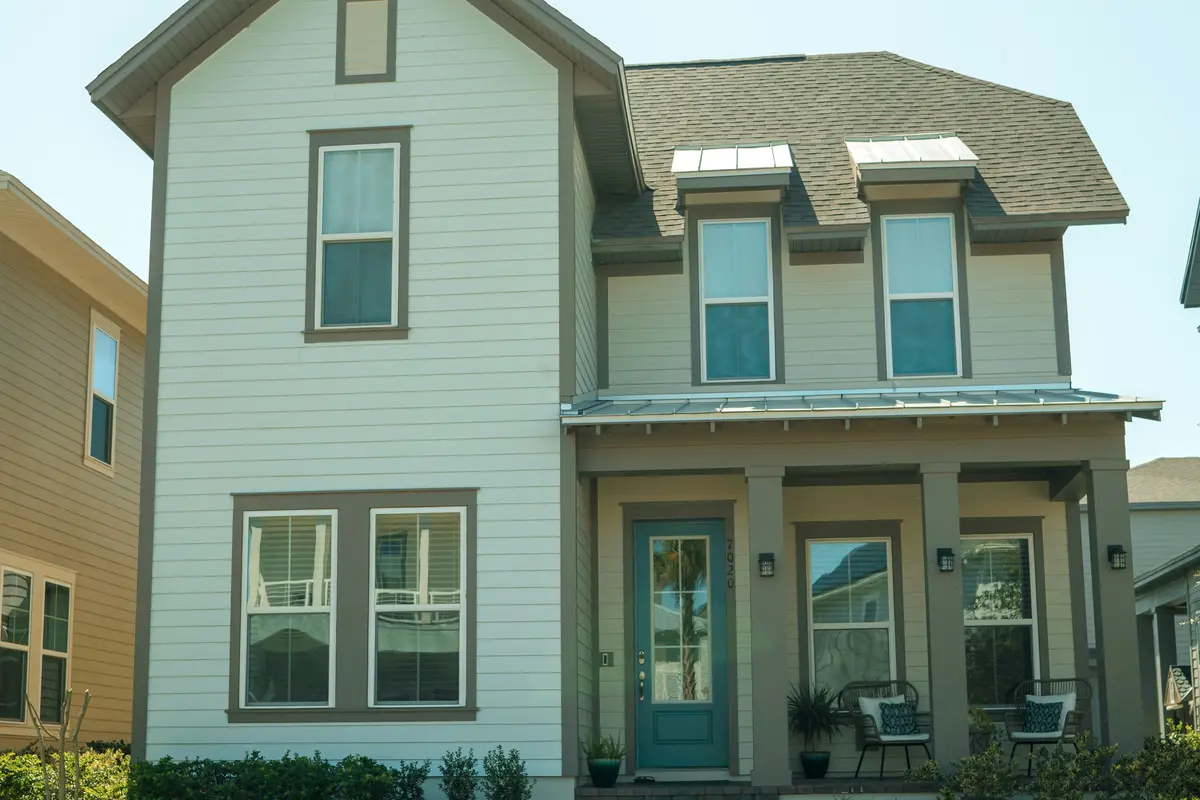
Screen enclosures shape the method. They are close to the house, they cover a significant footprint, and they are easily damaged, which means the available drop zone on a typical lot here is smaller than the yard suggests. Town ’n’ Country is unincorporated, so Hillsborough County provisions apply rather than a City of Tampa code — a distinction worth knowing given how close the city limits are.
Lots are regular and generally accessible, but low rooflines and screen enclosures sit close under canopies, which restricts where material can be dropped even when the yard itself looks open.
Town ’n’ Country is unincorporated, so Hillsborough County provisions apply. Requirements can vary by property and jurisdiction. Property owners should confirm current requirements with the relevant local authority before work begins.
Reasons removal ends up being the right answer
Where a mature tree stands between a low roofline and a screen enclosure, the only clear ground may be a narrow strip of lawn, and everything has to be lowered into it. That sets the section size and the pace.
- Roots lifting a walkway, slab or wall where the conflict will only worsen.
- Storm history that has left the tree with more wound than sound wood.
- Construction, an addition, a pool or a fence line that the tree sits directly in.
- A tree that has reached the roofline or the fence line decades after being planted for a smaller space.
- Ground at the base that has been under water, or has stayed saturated after rain.
Removal or retention: how the decision is usually framed
Removal is permanent, so it is worth being clear about which problem it solves. A tree with a structural defect in the main stem is a different case to a healthy tree in an inconvenient place.
Points toward keeping the tree Reversible problems
- The issue is clearance, and pruning can create it without removing more than a modest share of the canopy.
- The tree provides shade or screening that would be difficult and slow to replace.
Points toward removal Structural or spatial
- The tree is simply too large for the space at maturity and always will be.
- Decay, cavity or fungal fruiting bodies at the base or on the main stem.
How the work is kept safe
Service drops to a house are easy to miss in a canopy, and they are not always where you expect. Anything crossing the working radius changes the method or stops the job until the utility has been involved. That check happens before the first cut, not partway through.
Never approach, move or work near a downed or sagging power line, and do not assume a line is inactive. Keep people, pets and vehicles well clear, and report the line to your electric utility or emergency services before anyone goes near the area.
How a planned removal usually runs
- Site walk and decision
The tree, its target zone and the access route are looked at together. Sometimes the outcome is that removal is not the best option.
- Protect what stays
Beds, irrigation, paving, fencing and neighbouring plantings that could take incidental damage are identified and protected or worked around.
- Canopy reduction
Limbs are removed in a planned order so the tree stays balanced as it comes apart, rather than becoming top-heavy on one side.
- Stump decision
Cut low, ground down, or left at a workable height for a later grind — this depends on what the space is going to become.
- Site finish
Material removed or staged, hard surfaces cleared, and the ground left in a state that matches what happens next on that spot.
What actually determines the work involved
- Species and wood density, which change cutting time and the weight of each section.
- What sits under the canopy — open lawn is a completely different job to a courtyard.
- Trunk diameter and total height, which govern how much material there is to move.
- Whether roof or gutter clearance is part of the objective, which is a different scope from general canopy work.
- Whether machinery can reach the working position without leaving ruts that outlast the tree work.
- Whether the tree stands sheltered or exposed. A tree that grew up inside surrounding canopy carries wind very differently once that shelter is gone.
Questions worth answering before you call
- Any timing constraint — events, deliveries, other trades already booked.
- Whether you want the wood removed entirely or some of it left cut on site.
- Whether you want the stump ground, and whether anything will be planted or built there.
- Note anything mounted on the roof or wall within the working area: solar panels, satellite dishes, lighting, gutter guards or a carport roof.
- Decide how much clearance you actually want between the canopy and the roof — that number is more useful than asking for the tree to be 'cut back'.
- Say whether the area around the tree holds water after heavy rain. It affects the timing, the equipment and occasionally the assessment itself.
Debris and cleanup
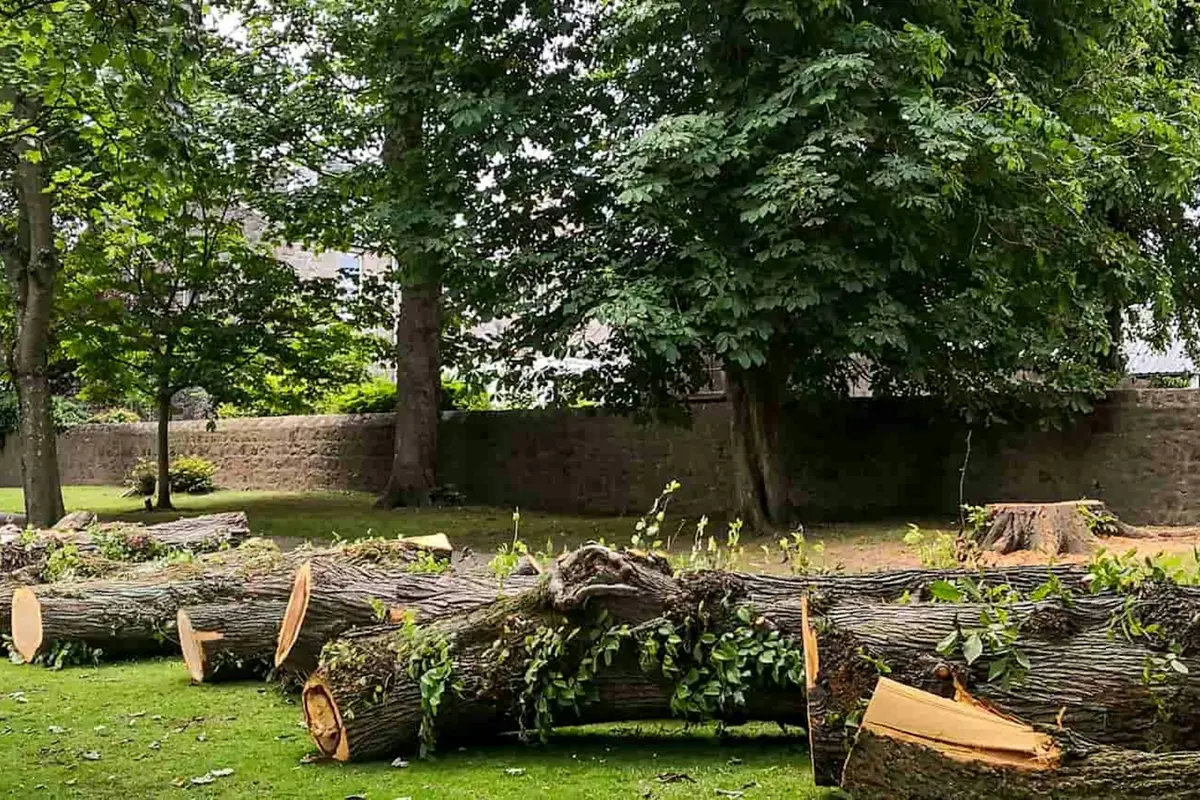
A removal generates far more volume than most people expect, because a standing canopy is deceptively compact. Brush is chipped, and trunk sections are cut to whatever length can be handled through the access available.
- Where a pool or enclosure sits beneath the work, keeping debris out of the water is part of the plan rather than an afterthought, and it usually means smaller cuts and more of them.
- Long-unmanaged canopies carry more accumulated deadwood than expected, so the volume coming down on a first visit is often higher than on subsequent ones.
- On ground that holds water, staging is normally kept to firm surfaces such as a drive or path rather than lawn, which sometimes lengthens the carry.
Hauled away, chipped on site, or stacked in an agreed position — all three are normal, and they are different amounts of work. Whichever you want should be stated in the scope before the day rather than settled afterwards.
Tree Removal in Town ’n’ Country: common questions
Do City of Tampa rules apply here?
No. Town ’n’ Country is unincorporated, so Hillsborough County provisions apply rather than the city code, even though the city limits are close. Requirements can vary by property and jurisdiction, so confirm with the relevant local authority before work begins.
Can the screen enclosure be protected?
It is planned around — sections lowered rather than dropped, and protection used where the frame is close. Where a canopy sits directly over a cage, some risk remains and it is better to acknowledge that before the work.
Is a permit needed to remove a tree?
It depends entirely on where the property sits and what the tree is. Some Tampa Bay municipalities protect trees by species, size or location, and unincorporated county areas follow different rules again. Requirements can vary by property and jurisdiction, so confirm with the relevant local authority before work begins.
A nearby tree came down and this one is now in the open. Is that a concern?
It is a legitimate reason to have it looked at. Trees that develop within a group share the wind load and grow accordingly; when that shelter is removed the remaining tree carries a load it never grew for. Whether it matters depends on the tree, which is an on-site question rather than a remote one.
The tree has not been touched in years. Where should it start?
Normally with deadwood and anything making direct contact with a structure, because those are the parts creating actual risk or damage. Shaping and reduction can follow once the tree's condition is clear. Trying to correct decades of growth in one visit tends to take more off the tree than is good for it.
Related tree services in Town ’n’ Country
Before committing to removal
Where the problem is clearance, deadwood or a rubbing limb, pruning usually solves it and keeps the tree. It is worth ruling that out first.
Compare tree removal with pruningWhat happens to the stump
Felling and grinding are separate operations with different equipment. If you want the stump gone, it has to be planned into the same visit.
Read about stump grindingIf condition is the reason
Where the removal is prompted by decay, a defect or a lean rather than by space or a planned change, the assessment comes first.
Read about hazardous tree assessmentRequest Tree Removal Information in Town ’n’ Country
Tell us what sits under the canopy — roof, carport, cage — and where the clear ground is. On these lots the drop zone is the constraint.
- Phone: 877-269-2454
- Serving Tampa Bay, Florida
Information on this page is general guidance for property owners and managers in the Tampa Bay area. It is not an arboricultural assessment, a legal opinion, a permitting determination or an insurance decision. Tree condition and site risk can only be judged in person.