Apollo Beach, Florida
Tree Removal in Apollo Beach, FL
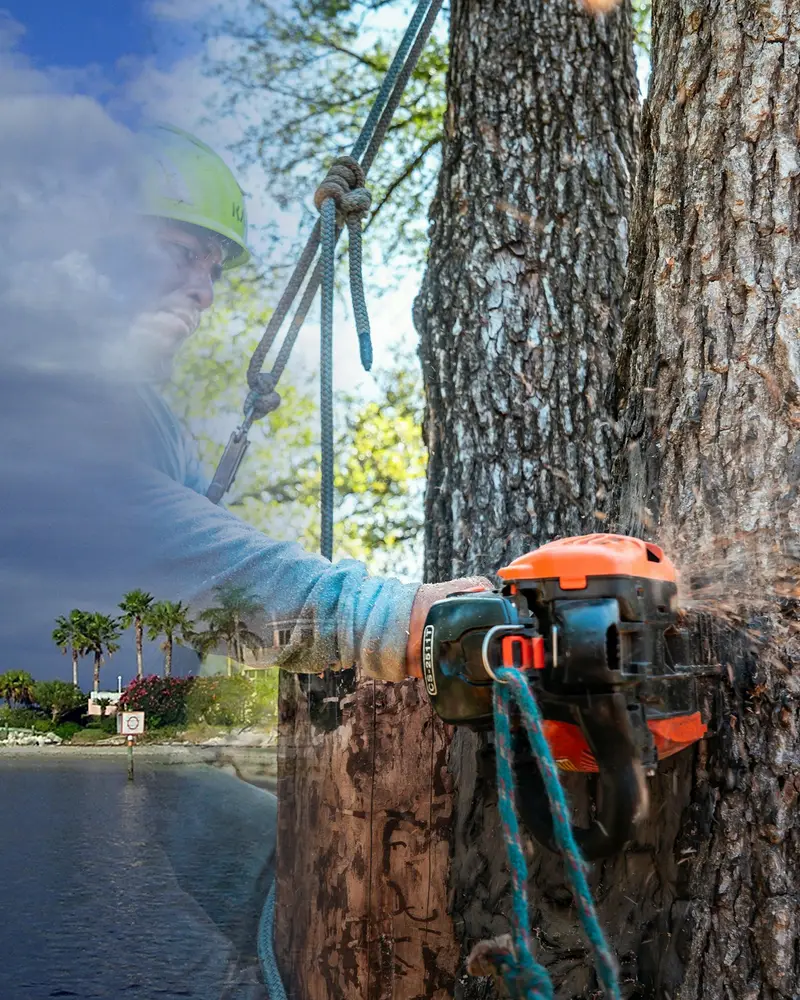
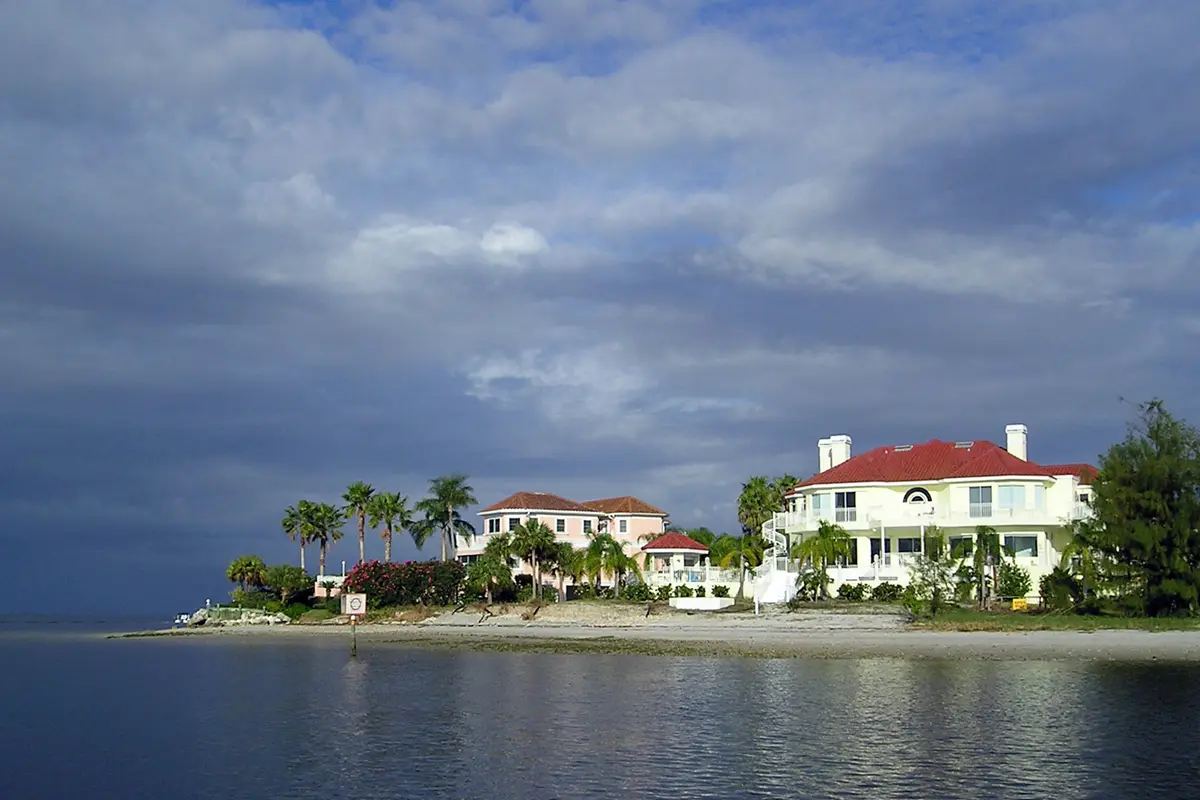
A removal on a canal lot here is defined entirely by what surrounds the tree. Between a pool enclosure, a deck, a seawall cap and a dock there may be no clear ground at all, so the tree comes apart in small sections, each one lowered into an agreed position and loaded rather than staged.
- Hillsborough County
- Canal-front community
- Direct bay exposure
What this means on Apollo Beach properties
Loads on the seawall are the specific local concern. Seawalls and the ground immediately behind them are not designed for concentrated point loads, and dropping sections onto a cap or dragging material across it is genuinely damaging. Apollo Beach is unincorporated, so Hillsborough County provisions apply rather than a city code.
Waterfront access is genuinely restrictive: work often has to happen between a house and a seawall, with pool cages, docks and lift equipment inside the same working radius.
Apollo Beach is unincorporated, so Hillsborough County provisions apply. Requirements can vary by property and jurisdiction. Property owners should confirm current requirements with the relevant local authority before work begins.
Reasons removal ends up being the right answer
Where a tree stands between a pool cage and a seawall, the only lowering position can be a strip of deck a few feet wide, with every section then carried through the house side to the street. The tree may be modest; the job will not be.
- A species that has outgrown the space it was planted in and cannot be reduced sensibly.
- Storm history that has left the tree with more wound than sound wood.
- Repeated limb failure from the same weak attachment despite previous pruning.
- Growth closing in over a narrow side route that is the only way in or out.
- Ground at the base that has been under water, or has stayed saturated after rain.
Removal or retention: how the decision is usually framed
Removal is permanent, so it is worth being clear about which problem it solves. A tree with a structural defect in the main stem is a different case to a healthy tree in an inconvenient place.
Points toward keeping the tree Reversible problems
- The conflict is with something movable — a shed, a bed, a path alignment.
- Decline followed a change in irrigation, grade or root-zone conditions that can be corrected.
Points toward removal Structural or spatial
- The tree is simply too large for the space at maturity and always will be.
- A planned build, pool or driveway occupies the space the tree stands in.
How the work is kept safe
A tree with genuine clear ground around it can often be felled in one piece, which is faster and safer. A tree with a roofline, cage or fence inside its reach has to come apart in sections that are lowered under control. Choosing the first method on a site that needs the second is where most avoidable property damage comes from.
Never approach, move or work near a downed or sagging power line, and do not assume a line is inactive. Keep people, pets and vehicles well clear, and report the line to your electric utility or emergency services before anyone goes near the area.
How a planned removal usually runs
- Site walk and decision
The tree, its target zone and the access route are looked at together. Sometimes the outcome is that removal is not the best option.
- Method selection
Straight felling, sectional dismantling or a lift-assisted approach, chosen by what is underneath and how much room there is to drop material.
- Canopy reduction
Limbs are removed in a planned order so the tree stays balanced as it comes apart, rather than becoming top-heavy on one side.
- Stem sectioning
The trunk is taken in lengths that suit the drop zone and what can be moved out through the available access.
- Site finish
Material removed or staged, hard surfaces cleared, and the ground left in a state that matches what happens next on that spot.
What actually determines the work involved
- Proximity to a boundary and the need to work without encroaching on a neighbour.
- Whether the wood leaves the property or is cut and stacked on site.
- Slope, soft ground or drainage features that limit machine positioning.
- Whether material can be dropped at all, or whether every piece has to be rigged and lowered into a small space — the difference between those two is substantial.
- Whether the tree stands sheltered or exposed. A tree that grew up inside surrounding canopy carries wind very differently once that shelter is gone.
- Whether coastal exposure has affected the tree's condition, which is assessed at the tree rather than assumed from the address.
Questions worth answering before you call
- Whether any part of the canopy overhangs a neighbouring property.
- The width of the narrowest gate or side path on the access route.
- Where a truck and chipper could realistically park and work.
- Mention anything that has changed since recent coastal weather — dieback on one side, thinning, or a lean that was not there before.
- Move loose furniture, covers and anything on the deck out of the working area, or agree in advance who is moving it.
- Move boats, lifts and anything on the dock clear of the working area if that is possible, or say what cannot be moved.
Debris and cleanup
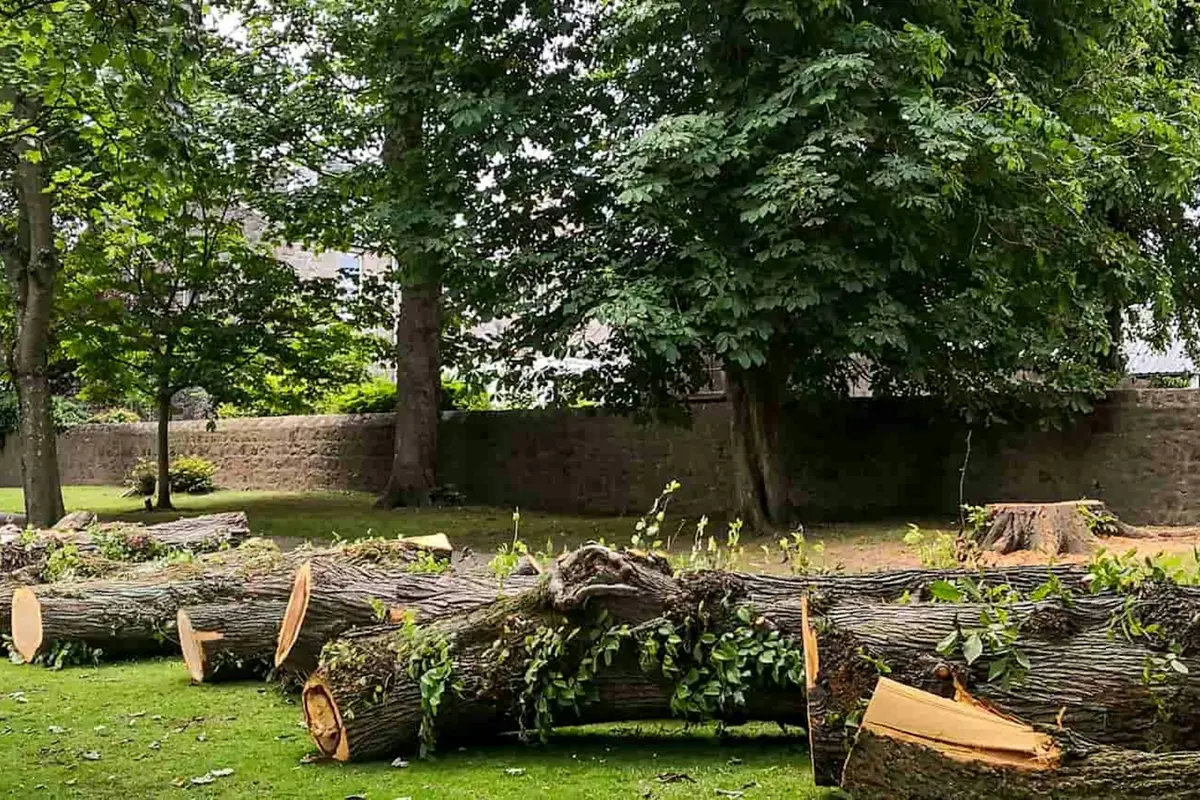
A removal generates far more volume than most people expect, because a standing canopy is deceptively compact. Brush is chipped, and trunk sections are cut to whatever length can be handled through the access available.
- On ground that holds water, staging is normally kept to firm surfaces such as a drive or path rather than lawn, which sometimes lengthens the carry.
- Staging space on a frontage lot is usually limited, so material tends to be loaded as it comes down rather than piled.
- Trunk wood is cut to a size the access will take rather than to the largest size the machine could handle.
Hauled away, chipped on site, or stacked in an agreed position — all three are normal, and they are different amounts of work. Whichever you want should be stated in the scope before the day rather than settled afterwards.
Tree Removal in Apollo Beach: common questions
Can material be dropped onto the seawall cap?
No. Seawalls are not built for point loads and the ground behind them is often the least stable on the property. Sections are lowered away from the wall, and material is not dragged across the cap.
Do county or city rules apply here?
Apollo Beach is unincorporated, so Hillsborough County provisions apply. Requirements can vary by property and jurisdiction, so confirm with the relevant local authority before work begins.
What about a tree on the boundary?
Ownership and responsibility for boundary trees depend on where the trunk stands and on local rules, and the neighbour's position matters. It is worth resolving that before work is scheduled rather than after.
How much room does a crew actually need?
Less than most people expect for the cutting and more than most people expect for the material. The working area around the tree matters, but so does somewhere to put what comes down and a route to move it. Describing both when you call gets you a more useful answer than describing the tree alone.
The ground around the tree stays wet. Does that make it less stable?
It can. Saturated soil holds a root plate less firmly, which is why trees with no visible defect sometimes move during sustained wet weather rather than during the strongest wind. Whether it applies to a particular tree needs someone at the base of it — soil movement is one of the few things that genuinely cannot be judged from a photograph.
Related tree services in Apollo Beach
Before committing to removal
Where the problem is clearance, deadwood or a rubbing limb, pruning usually solves it and keeps the tree. It is worth ruling that out first.
Compare tree removal with pruningWhat happens to the stump
Felling and grinding are separate operations with different equipment. If you want the stump gone, it has to be planned into the same visit.
Read about stump grindingIf condition is the reason
Where the removal is prompted by decay, a defect or a lean rather than by space or a planned change, the assessment comes first.
Read about hazardous tree assessmentRequest Tree Removal Information in Apollo Beach
Tell us what surrounds the tree — cage, deck, seawall, dock — and where the route to the street runs. That defines an Apollo Beach removal.
- Phone: 877-269-2454
- Serving Tampa Bay, Florida
Information on this page is general guidance for property owners and managers in the Tampa Bay area. It is not an arboricultural assessment, a legal opinion, a permitting determination or an insurance decision. Tree condition and site risk can only be judged in person.