After the weather
Storm and Hurricane Tree Removal in Tampa Bay, FL
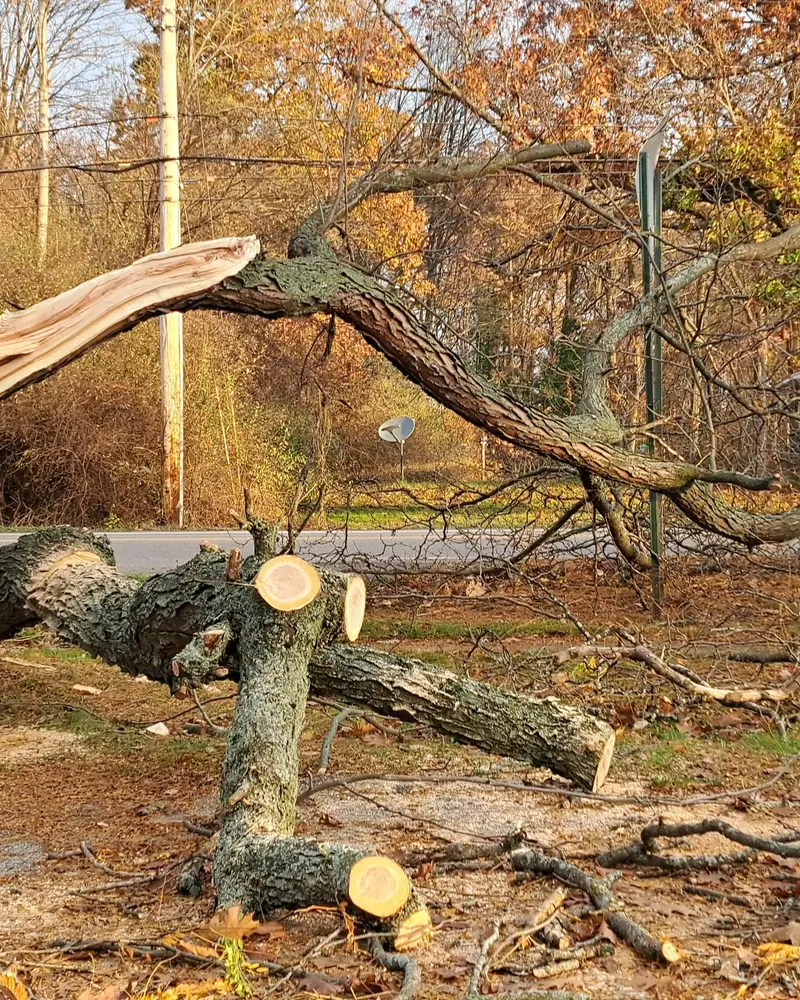
The most dangerous period after a storm is not the storm. It is the days that follow, when people walk back onto their properties and begin pulling at debris that is still holding load. Suspended limbs drop, saturated root plates keep moving, and pinned branches release when cut.
- Tampa Bay, Florida
- Hillsborough · Pinellas · Pasco
- Residential & commercial
If a tree is threatening people, an occupied building or your only access, call straight away rather than waiting.
What this service covers
Post-storm work therefore starts with triage rather than volume. The biggest pile on a property is rarely the most hazardous thing on it. What matters first is anything still overhead — torn limbs caught in a canopy, a split stem holding half a tree, a trunk that shifted and stopped — and anything whose base has moved.
Only after those are resolved does ground-level clearing make sense. Clearing brush while a hanger sits above the work area is a common and avoidable sequencing error, and it puts people directly beneath the material most likely to come down.
Safety before anything else
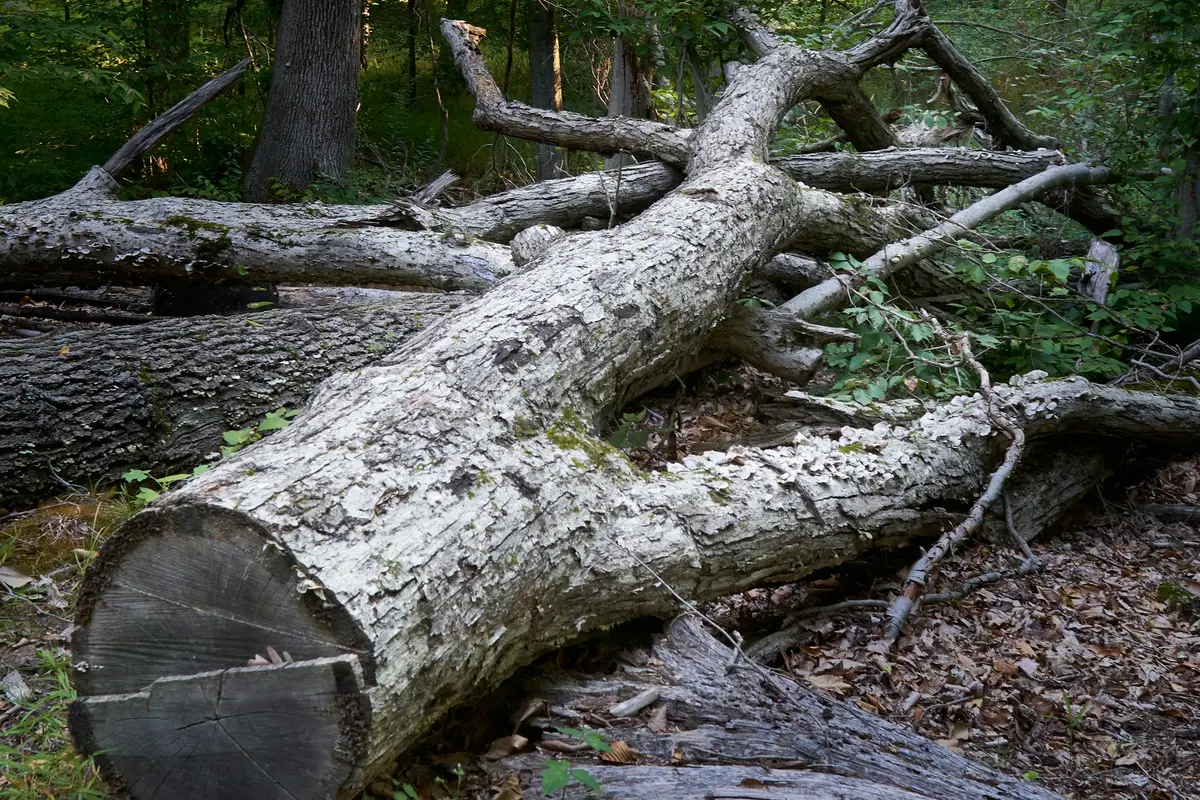
Most storm-related tree injuries happen during cleanup rather than during the storm. Partly detached limbs settle, saturated root plates keep moving, and cut material under tension springs. Treat the property as an active hazard zone until damaged trees have been dealt with, not just until the rain stops.
Never approach, move or work near a downed or sagging power line, and do not assume a line is inactive. Keep people, pets and vehicles well clear, and report the line to your electric utility or emergency services before anyone goes near the area.
Storm exposure across the Tampa Bay area
The Atlantic hurricane season runs from 1 June to 30 November, and the Tampa Bay area sits on Florida's Gulf coast where tropical systems, squall lines and strong summer convective storms all produce tree damage. Damage is not evenly distributed: coastal and low-lying areas take sustained onshore wind, while inland neighbourhoods with heavy mature canopy over close-set housing tend to see structural impacts from individual failures.
One regional pattern is worth understanding. Trees that grew up sheltered inside a group behave differently once that group is thinned by a storm. A tree that survived intact may be newly exposed to wind it has never carried alone, which is why the assessment after an event should cover what is still standing, not only what came down.
Requirements can vary by property and jurisdiction. Property owners should confirm current requirements with the relevant local authority before work begins.
Typical post-storm situations
These recur across the region after almost every significant weather event.
Residential situations
- Multiple trees damaged on one lot, with only one of them obviously down.
- A canopy half-stripped on the windward side, leaving the tree badly unbalanced.
- Torn limbs lodged high in a canopy above a driveway or walkway.
- Soil cracked in an arc behind a tree that now sits at a slightly different angle.
Commercial and site situations
- Damage spread across a multi-building site needing one coordinated clear rather than several visits.
- Debris occupying parking bays and drive aisles that have to be returned to use.
- Landscape trees down across a pedestrian route at a tenanted property.
- Material staged at a kerb that a municipal programme has not collected.
What to look for after the wind drops
- Torn limbs still caught in the canopy, sometimes called hangers, which can drop long after the storm passes.
- A fresh lean, or a trunk that no longer lines up with a fence post, wall or path it used to parallel.
- Soil heaved or cracked in an arc on the opposite side to the lean, indicating root plate movement.
- A split where two codominant stems meet, especially if you can see into the union.
- Bark stripped in a long vertical strip, exposing wood along the trunk.
- Whole sections of canopy missing from one side, leaving the tree badly unbalanced.
- Standing water that has not drained around the base days after the rain stopped.
- Trees that were sheltered by a neighbour's tree which has now gone, leaving them newly exposed.
- Branch stubs torn rather than cut, which decay differently and can fail again at the same point.
- Palms with a bent or kinked trunk, or a crown that has lost most of its fronds on one side.
After a storm: what to deal with now and what can wait
The days after a storm are more dangerous than the storm itself, largely because attention goes to the biggest pile rather than to what is still overhead. Sequencing matters more than speed.
Can wait for a scheduled visit On the ground, going nowhere
- Brush and limb debris lying on lawn, away from paths and drives.
- A tree already fully down in open ground with no tension in it.
- Fronds and light material stripped across a yard.
- Fence damage where no tree is still bearing on the panels.
- Cosmetic canopy damage on trees whose bases have not moved.
Deal with first Still loaded or still overhead
- Torn limbs lodged in a canopy — they come down on their own schedule, not yours.
- A split stem or a union that has opened but not failed completely.
- Any tree that is standing at a different angle than it was before the storm.
- Material bearing on a roof, cage, carport or vehicle.
- Anything at all involving a power line — that is the utility's call before it is ours.
How post-storm work is usually sequenced
- Triage by risk, not by size
The largest pile of debris is rarely the most dangerous thing on a property. Suspended limbs and destabilised trunks come before ground-level brush.
- Confirm utilities and access
Lines, meters and blocked routes are identified first. Nothing starts around a line that has not been confirmed safe by the utility.
- Document visible damage
Photographs taken from safe positions before anything is moved are useful for your own records and for any conversation you have with an insurer.
- Remove suspended material
Hangers and partly detached limbs are brought down under control, since these are the pieces most likely to fall on someone during cleanup.
- Deal with destabilised trunks
Trees with root movement or major splits are taken down or reduced rather than left to a second weather system.
- Reassess what is left standing
Surviving trees are looked at again with the storm's effects in mind, because exposure and load have changed across the whole property.
- Stage and clear debris
Material is cut down to manageable sizes and either hauled or staged where it does not block drainage, driveways or collection access.
What drives the size of a storm job
- How many trees were affected, and whether they failed into each other.
- Whether the damage is suspended in canopies or already down on the ground.
- Saturated ground, which limits what equipment can be driven onto a property.
- Whether debris is on structures, vehicles, pools or fences rather than open lawn.
- Access constraints created by the storm itself, including blocked side streets.
- Whether material has to leave the site or can be staged for a later collection.
- The mix of hardwood trunk sections and light brush, which handle very differently.
- Whether neighbouring properties are involved and who is responsible for what.
- How much of the work is removal versus making a damaged tree safe to keep.
- Whether the same site has repeat exposure that should shape what is planted or retained.
Worth doing before the crew arrives
- Photograph the damage from safe positions, including wide shots that show where the tree sat.
- Note the date and the storm, since that context matters for your own records.
- Check current instructions from your city or county about debris placement, which change after major events.
- Keep the affected area closed off, especially any route under a damaged canopy.
- List every affected tree, not only the obvious one, so nothing suspended is missed.
- Identify where a truck and chipper can get in, including any route the storm has blocked.
- Flag anything buried under debris — irrigation heads, low walls, septic lids, landscape lighting.
- Decide whether debris should be hauled away or staged, and where staging would be acceptable.
Debris and site finish
Storm debris divides into brush, which chips efficiently, and trunk wood, which does not. Separating the two early usually makes the whole clearance faster and keeps the pile from becoming one unmanageable mass.
If material is going to the kerb for municipal collection rather than being hauled, placement matters: clear of drains, hydrants, meters and mailboxes, and not under low lines. Collection rules and timelines differ between cities and counties and change after major events, so confirm the current instruction locally before building a pile.
Where a property is going to need more than one visit, it is usually better to remove the hazardous and structural material first and let lighter brush wait, rather than clearing the easy volume and leaving suspended limbs overhead.
Questions we are asked about this service
How soon after a storm should trees be looked at?
As soon as it is safe to walk the property. The urgent items are suspended limbs and any tree whose base has moved. Cosmetic damage can wait; a hanger over a walkway cannot.
My tree looks fine but lost half its canopy. Is it a problem?
It may be. A tree that has lost one side is unbalanced and newly exposed to wind it was previously sheltered from. That does not automatically mean removal, but it does mean it should be looked at rather than assumed to be fine.
Do you handle insurance claims?
No. What is covered, and on what terms, is between you and your insurer. Photographing damage before anything is moved and keeping your own record of what was done is generally useful, but we cannot make representations about a claim.
Can debris just go to the kerb?
Sometimes, and the rules are not the same everywhere. Cities and counties in the Tampa Bay area run different collection programmes, and after a major storm they often publish temporary instructions. Check the current guidance for your address before building a pile.
Why is a small leaning tree treated as more urgent than a big pile of branches?
Because the pile is not going anywhere and the tree might. Risk is about what could still move and what is underneath it, not about volume.
Should trees be pre-emptively cut back before hurricane season?
Sensible structural pruning to remove dead and poorly attached limbs is reasonable maintenance. Severe topping is not — it produces weak regrowth and typically leaves a tree less able to handle wind, not more.
How long do post-storm hazards last?
Longer than most people expect. Saturated ground can take days to drain, and a root plate that lifted will often keep moving during that time. Suspended limbs can sit in a canopy for weeks before dropping in an ordinary breeze.
Should the whole property be assessed or just the damaged tree?
The whole property, ideally. The storm changed exposure and load across every tree on the site, and the tree that failed is often the one that was sheltering others.
Get storm damage looked at before the next system
If there is material suspended in a canopy, a split stem, or a tree whose base has moved, those are the items worth resolving first. Tell us what you can see from a safe position and we will work through it.
- Phone: 877-269-2454
- Serving Tampa Bay, Florida
Information on this page is general guidance for property owners and managers in the Tampa Bay area. It is not an arboricultural assessment, a legal opinion, a permitting determination or an insurance decision. Tree condition and site risk can only be judged in person.