Town ’n’ Country, Florida
Dead and Hazardous Tree Removal in Town ’n’ Country, FL
The assessment here has to weight two local factors more heavily than usual. Ground that stays saturated reduces anchorage regardless of how sound the trunk looks, and the structures underneath — carports, screen rooms, low roofs — mean the consequence of even a modest failure is significant.
- Hillsborough County
- Low elevation
- Near Old Tampa Bay
If the tree is threatening people, an occupied building or your only access, call straight away rather than waiting.
What this means on Town ’n’ Country properties
That combination shifts the conclusion. A tree with moderate defects standing over open lawn on well-drained ground can often be monitored. The same tree over a screen enclosure on ground that holds water for days after rain is a different judgement, and the drainage history of the property is genuinely relevant information.
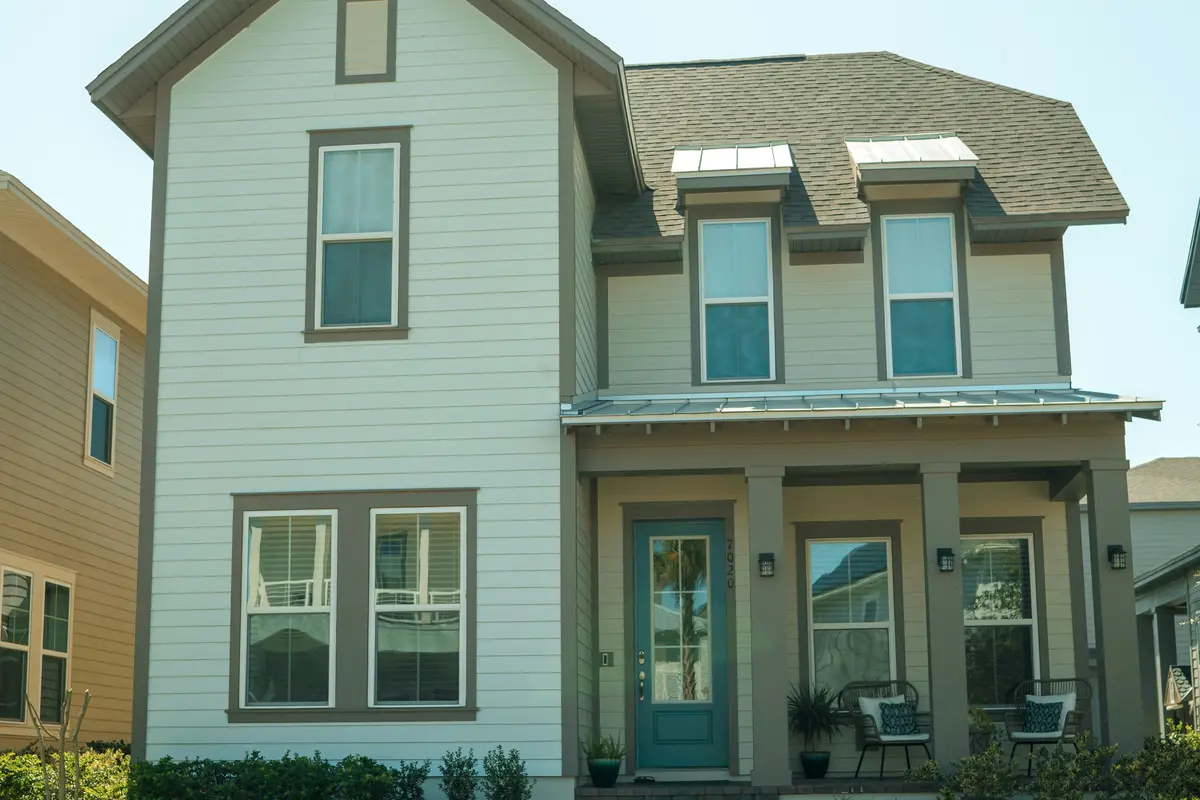
Single-storey ranch housing on regular lots predominates, with original landscape trees now well past the size intended for those setbacks. Carports, low rooflines and screened enclosures are common features directly under canopies.
Town ’n’ Country is unincorporated, so Hillsborough County provisions apply. Requirements can vary by property and jurisdiction. Property owners should confirm current requirements with the relevant local authority before work begins.
Before anyone goes near it
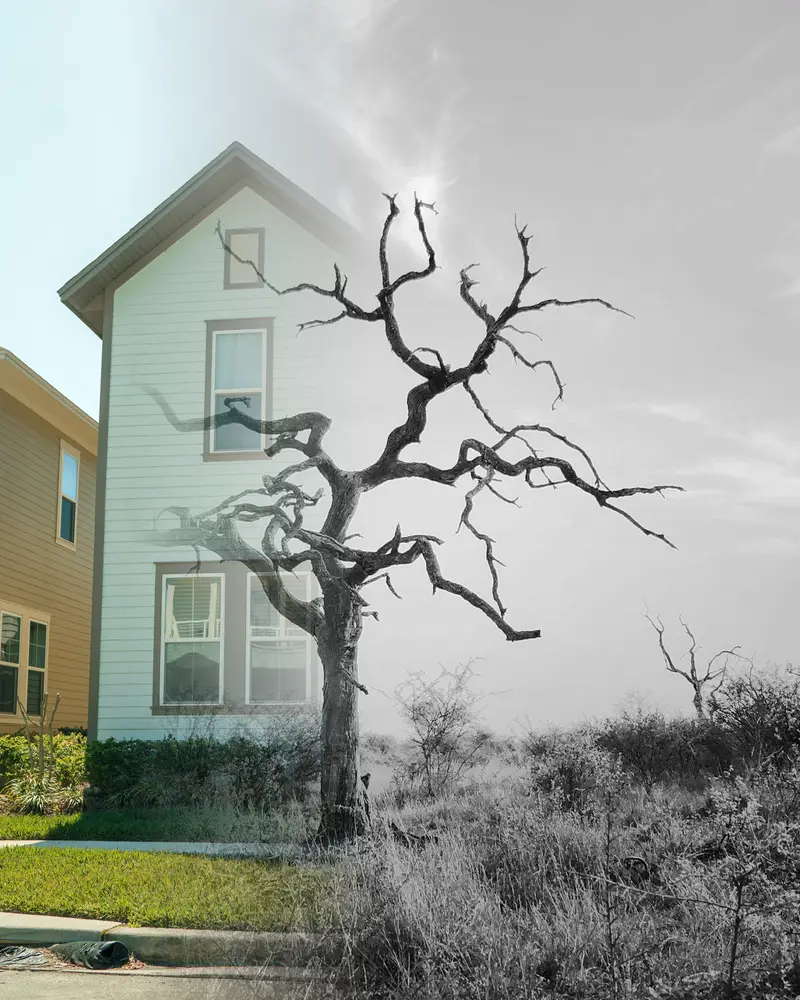
Decayed wood behaves unpredictably. Limbs shatter instead of hinging, stems fail below where a climber is tied in, and rigging points cannot be trusted. Dead trees frequently need more equipment and more caution than a living tree of the same size, not less.
Never approach, move or work near a downed or sagging power line, and do not assume a line is inactive. Keep people, pets and vehicles well clear, and report the line to your electric utility or emergency services before anyone goes near the area.
Observable indicators worth taking seriously
A tree with no obvious trunk defect, a slight lean and a base in ground that has been waterlogged more than once is worth assessing, particularly where it stands over a carport with a vehicle under it nightly.
- Leaves noticeably smaller, sparser or off-colour compared with previous seasons.
- Sprouts appearing along the trunk, which can signal a tree under significant stress.
- A cavity, hollow or soft area where a probe or a knuckle meets little resistance.
- Growth in contact with a low roofline, gutter run or carport, where the clearance was adequate when the tree was planted.
- A tree newly exposed because whatever sheltered it has gone.
What an on-site assessment actually looks at
- Whether the tree is a suitable candidate for monitoring rather than immediate action.
- Site history — construction, drainage change, root severance, previous heavy pruning.
- Branch attachments, especially unions where two stems of similar size meet.
- What lies within the potential fall zone, and whether people are under it regularly.
- The root flare and the soil around it, since most catastrophic failures start below eye level.
Remove it, or keep watching it?
Not every defective tree needs to come down, and removing a tree that could have been managed is a loss. Risk is a combination of how likely a failure is and what would be underneath it — both halves have to be looked at, in person.
Monitoring can be reasonable Defect present, target absent
- Deadwood is confined to individual limbs that can be removed on their own.
- The defect is real but nothing valuable or occupied sits within falling distance.
Removal is the honest answer Stem, base or repeated failure
- The defect sits directly above something occupied, and cannot be pruned away.
- A second limb has failed from the same kind of weak attachment.
From concern to resolution
- Describe what you are seeing
Which part of the tree, how long it has looked that way, and what has changed recently. Change over time is often more informative than a single symptom.
- Restrict use of the area
If people park, play or sit under the tree, moving that activity elsewhere is a sensible interim step while the tree is being looked at.
- Weigh the target
Risk is a combination of likelihood of failure and what is underneath. The same defect means different things over a shed and over a driveway.
- Plan the takedown
Compromised trees are dismantled differently, since a decayed stem cannot be assumed to hold a climber or take rigging loads.
- Complete and reassess
The stump is dealt with as agreed, and any neighbouring tree showing similar signs is noted.

Factors that shape a hazardous removal
- The extent of decay at the base, which affects how predictable the fall direction is.
- How urgent the situation is judged to be once the tree has been seen.
- Proximity to structures, boundaries and services.
- Whether machinery can reach the working position without leaving ruts that outlast the tree work.
- Whether material can be lowered clear of the enclosure or has to be taken out in pieces small enough to be handled over it.
- Whether the tree has outgrown the space it was planted in. Landscape trees chosen for a new plot frequently reach the roofline and the fence line decades later, and that is a different problem from a defect.
Useful information to gather
- Whether the tree has failed before, and which part failed.
- Whether the tree is close to a boundary or a shared structure.
- Photographs of the base, the trunk and the full canopy from a distance.
- If the tree has not been worked on for some years, say so. The first visit after a long gap is usually a bigger job than the ones that follow, and it is better to know that upfront.
- Move loose furniture, covers and anything on the deck out of the working area, or agree in advance who is moving it.
- Look at the ground at the base of the tree and mention anything unusual — cracking, lifting, or soil that has moved in an arc on one side.
Debris and cleanup
Dead and decayed wood breaks up differently from sound timber. It tends to shatter on impact and produce more fragments, so ground clearing after a hazardous removal usually takes proportionally longer than the felling itself.
- Where limbs sit directly over a roof, material is lowered rather than dropped, and gutters are worth checking afterwards for anything that has washed into them.
- On ground that holds water, staging is normally kept to firm surfaces such as a drive or path rather than lawn, which sometimes lengthens the carry.
- Long-unmanaged canopies carry more accumulated deadwood than expected, so the volume coming down on a first visit is often higher than on subsequent ones.
Hauled away, chipped on site, or stacked in an agreed position — all three are normal, and they are different amounts of work. Whichever you want should be stated in the scope before the day rather than settled afterwards.
Dead and Hazardous Tree Removal in Town ’n’ Country: common questions
Does poor drainage really affect tree stability?
It can meaningfully. Saturated soil offers less resistance at the root plate, and roots in persistently wet conditions can also be affected over time. On low-lying ground it is a factor worth reporting during an assessment.
The tree is only over a carport. Does that count as a target?
Yes, particularly a carport with a vehicle under it. Light structures are not lower-consequence targets — they offer no resistance, and anything parked or standing beneath is directly exposed.
Is a dead tree always dangerous?
Not necessarily. Risk depends on what is underneath it. A dead tree in the middle of an open field is a low-risk situation; the same tree over a driveway or a play area is not. The target matters as much as the tree.
The ground around the tree stays wet. Does that make it less stable?
It can. Saturated soil holds a root plate less firmly, which is why trees with no visible defect sometimes move during sustained wet weather rather than during the strongest wind. Whether it applies to a particular tree needs someone at the base of it — soil movement is one of the few things that genuinely cannot be judged from a photograph.
A nearby tree came down and this one is now in the open. Is that a concern?
It is a legitimate reason to have it looked at. Trees that develop within a group share the wind load and grow accordingly; when that shelter is removed the remaining tree carries a load it never grew for. Whether it matters depends on the tree, which is an on-site question rather than a remote one.
Related tree services in Town ’n’ Country
If the assessment points to removal
What a removal involves on a constrained property, and why access decides the method more often than the size of the tree.
Read about tree removalIf the defect turns out to be branch-level
Deadwood and poorly attached limbs can often be addressed without losing the tree. That is a better outcome where the stem is sound.
Compare with pruningIf it has already moved
A tree that has shifted, or soil that has lifted at the base, is not something to schedule around.
See what counts as urgentHave a Declining Tree Assessed in Town ’n’ Country
Describe the tree, the ground conditions and what sits underneath. Keep vehicles out from under it while it waits to be assessed.
- Phone: 877-269-2454
- Serving Tampa Bay, Florida
Information on this page is general guidance for property owners and managers in the Tampa Bay area. It is not an arboricultural assessment, a legal opinion, a permitting determination or an insurance decision. Tree condition and site risk can only be judged in person.