Wesley Chapel, Florida
Storm and Hurricane Damage Tree Removal in Wesley Chapel, FL
Post-storm damage across Wesley Chapel concentrates in the retained pines. Trees that came through earlier seasons intact can fail once the trees beside them are gone, because the shelter they grew up with has been removed in stages — first by construction, then by successive storms.
- Pasco County
- Master-planned communities
- Sandy soils
If the tree is threatening people, an occupied building or your only access, call straight away rather than waiting.
Before anyone goes near it
A tree that shifted and stopped has not necessarily finished moving. Saturated soil takes days to drain, and a root plate that lifted once will often lift further under the next gust or when weight is removed from the canopy. Keep people out of the lean direction and treat the tree as unresolved until it is assessed.
Never approach, move or work near a downed or sagging power line, and do not assume a line is inactive. Keep people, pets and vehicles well clear, and report the line to your electric utility or emergency services before anyone goes near the area.
What this means on Wesley Chapel properties
Root zone disturbance from construction compounds it. A pine standing in ground that was graded, compacted or trenched during a build has less anchorage than its height suggests, and that deficit only becomes visible in a strong wind. It is why post-storm assessment here should include pines that show no damage at all.
Community layouts generally allow reasonable vehicle access, but HOA-managed common areas, conservation easements behind lots and shared retention areas often complicate who authorises what.
Wesley Chapel is unincorporated, so Pasco County provisions apply, and community-level rules may apply on top of them. Requirements can vary by property and jurisdiction. Property owners should confirm current requirements with the relevant local authority before work begins.

What to look for after the wind drops
Where one pine on a lot line comes down, the others left standing are now exposed on the windward side without the shelter they grew up with. No visible damage does not mean no change.
- Soil heaved or cracked in an arc on the opposite side to the lean, indicating root plate movement.
- Palms with a bent or kinked trunk, or a crown that has lost most of its fronds on one side.
- Standing water that has not drained around the base days after the rain stopped.
- Clearance along a long driveway or approach where growth has closed in from both sides.
- Dead lower limbs on a tall stem, which shed as the tree grows.
After a storm: what to deal with now and what can wait
The days after a storm are more dangerous than the storm itself, largely because attention goes to the biggest pile rather than to what is still overhead. Sequencing matters more than speed.
Can wait for a scheduled visit On the ground, going nowhere
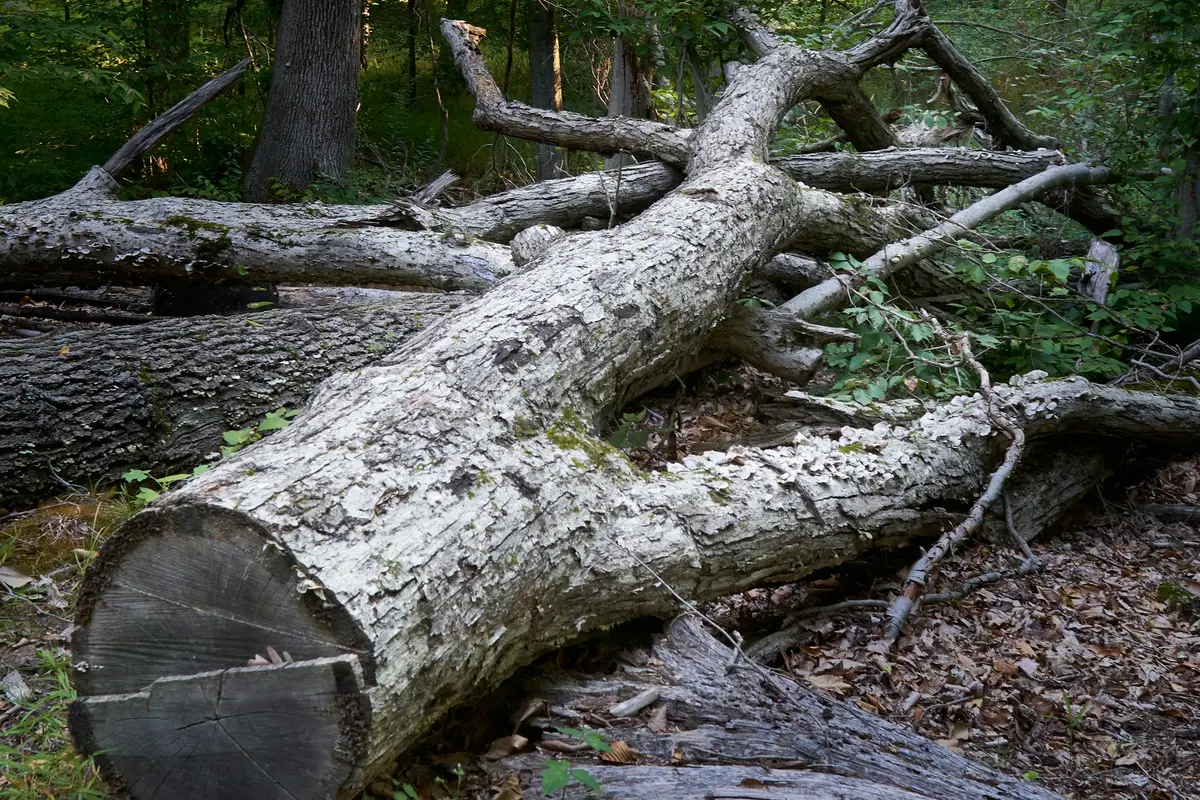
- A tree already fully down in open ground with no tension in it.
- Fence damage where no tree is still bearing on the panels.
Deal with first Still loaded or still overhead
- Material bearing on a roof, cage, carport or vehicle.
- Any tree that is standing at a different angle than it was before the storm.
How post-storm work is usually sequenced
- Triage by risk, not by size
The largest pile of debris is rarely the most dangerous thing on a property. Suspended limbs and destabilised trunks come before ground-level brush.
- Document visible damage
Photographs taken from safe positions before anything is moved are useful for your own records and for any conversation you have with an insurer.
- Remove suspended material
Hangers and partly detached limbs are brought down under control, since these are the pieces most likely to fall on someone during cleanup.
- Deal with destabilised trunks
Trees with root movement or major splits are taken down or reduced rather than left to a second weather system.
- Stage and clear debris
Material is cut down to manageable sizes and either hauled or staged where it does not block drainage, driveways or collection access.
Worth doing before the crew arrives
- Check current instructions from your city or county about debris placement, which change after major events.
- Photograph the damage from safe positions, including wide shots that show where the tree sat.
- Identify where a truck and chipper can get in, including any route the storm has blocked.
- Check whether your community has its own requirements or approval process. Confirm those with the association directly — they sit on top of county provisions, not instead of them.
- Walk the property before you call and count what actually needs attention, rather than describing the single tree that prompted it. Several trees in one visit is normally more efficient than separate calls.
- Establish who owns the tree before booking anything. Where it sits on common ground or a shared boundary, the association usually has to authorise the work rather than the resident.
What drives the size of a storm job
- Whether the damage is suspended in canopies or already down on the ground.
- Whether material has to leave the site or can be staged for a later collection.
- Whether neighbouring properties are involved and who is responsible for what.
- Whether there is a genuine drop zone. Open ground is the one thing that makes tree work straightforward, and where it exists the method changes completely.
- Whether the tree sits on the property, on common ground or on a managed boundary — that determines who authorises the work before anything else can be planned.
- Whether there is height clearance for sections to be taken down the stem, since a tall stem over a house has little margin for error.
Debris and cleanup
Storm debris divides into brush, which chips efficiently, and trunk wood, which does not. Separating the two early usually makes the whole clearance faster and keeps the pile from becoming one unmanageable mass.
- Where a community sets rules on where material may be placed or for how long, confirm those before a pile is built rather than after.
- Where there is room, chip and trunk rounds can often be left in an agreed position rather than hauled, which reduces what has to be carried and loaded.
- Larger parcels usually allow material to be staged near the working area, so the carry is short and the loading happens in one place.
Hauled away, chipped on site, or stacked in an agreed position — all three are normal, and they are different amounts of work. Whichever you want should be stated in the scope before the day rather than settled afterwards.
Storm and Hurricane Damage Tree Removal in Wesley Chapel: common questions
Where does storm debris go in Wesley Chapel?
Wesley Chapel is unincorporated, so Pasco County arrangements apply rather than a city programme, and community rules may govern placement within a development. Confirm the current county guidance and your HOA requirements before building a pile.
One pine fell and the rest look fine. Is that reassuring?
Not especially. The pine that fell may have been sheltering the others, and the ones now exposed on that side are carrying load they have not carried before. They are worth a look precisely because they appear untouched.
Can debris just go to the kerb?
Sometimes, and the rules are not the same everywhere. Cities and counties in the Tampa Bay area run different collection programmes, and after a major storm they often publish temporary instructions. Check the current guidance for your address before building a pile.
The tree may be on association land. What happens then?
The work has to be authorised by whoever is responsible for that ground, which is normally the association rather than the resident. Establishing ownership first saves a wasted visit. We can talk through what is involved either way, but we will not carry out work on ground you do not control.
Can several trees across the property be looked at in one visit?
Usually, and it is generally the more efficient way to do it because the setup, the access and the equipment move are shared. Whether it works in practice depends on whether the trees sit on the same access route or need separate positioning.
Related tree services in Wesley Chapel
For a tree already on the ground
Load and tension have to be read before anything is cut, particularly where the canopy is resting on a structure.
Read about fallen tree clearingFor trees left standing afterwards
A tree that moved but did not fall is the one most often overlooked in the clean-up.
Read about hazardous tree assessmentFor the material left behind
Post-storm piles are usually two or three loads rather than one once they are pulled apart.
See how debris hauling worksAsk About Storm-Damaged Tree Removal in Wesley Chapel
Tell us what came down and what pines are now standing alone. In Wesley Chapel the exposure change matters as much as the damage.
- Phone: 877-269-2454
- Serving Tampa Bay, Florida
Information on this page is general guidance for property owners and managers in the Tampa Bay area. It is not an arboricultural assessment, a legal opinion, a permitting determination or an insurance decision. Tree condition and site risk can only be judged in person.