Wesley Chapel, Florida
Dead and Hazardous Tree Removal in Wesley Chapel, FL
The assessment question here is usually anchorage rather than decay. A tall pine with an intact-looking stem can still be a serious risk if its root zone was graded, compacted or trenched during construction, because the deficit is entirely below ground and entirely invisible from the canopy.
- Pasco County
- Sandy soils
- Master-planned communities
If the tree is threatening people, an occupied building or your only access, call straight away rather than waiting.
Before anyone goes near it
While a tree is waiting to be assessed, the practical protection is keeping people and property out from under it. Move parking, relocate play equipment and furniture, and avoid the area in wind. A decayed tree that has stood for years can fail in a single gust, and there is no reliable way to predict the day.
Never approach, move or work near a downed or sagging power line, and do not assume a line is inactive. Keep people, pets and vehicles well clear, and report the line to your electric utility or emergency services before anyone goes near the area.
What this means on Wesley Chapel properties
Pine decline also shows differently. Where an oak thins gradually, a pine can go from apparently healthy to dead over a single season, particularly under stress. Needle colour change, resin flow at the trunk and thinning at the top are worth reporting promptly rather than watching, because the window between symptom and failure can be short.
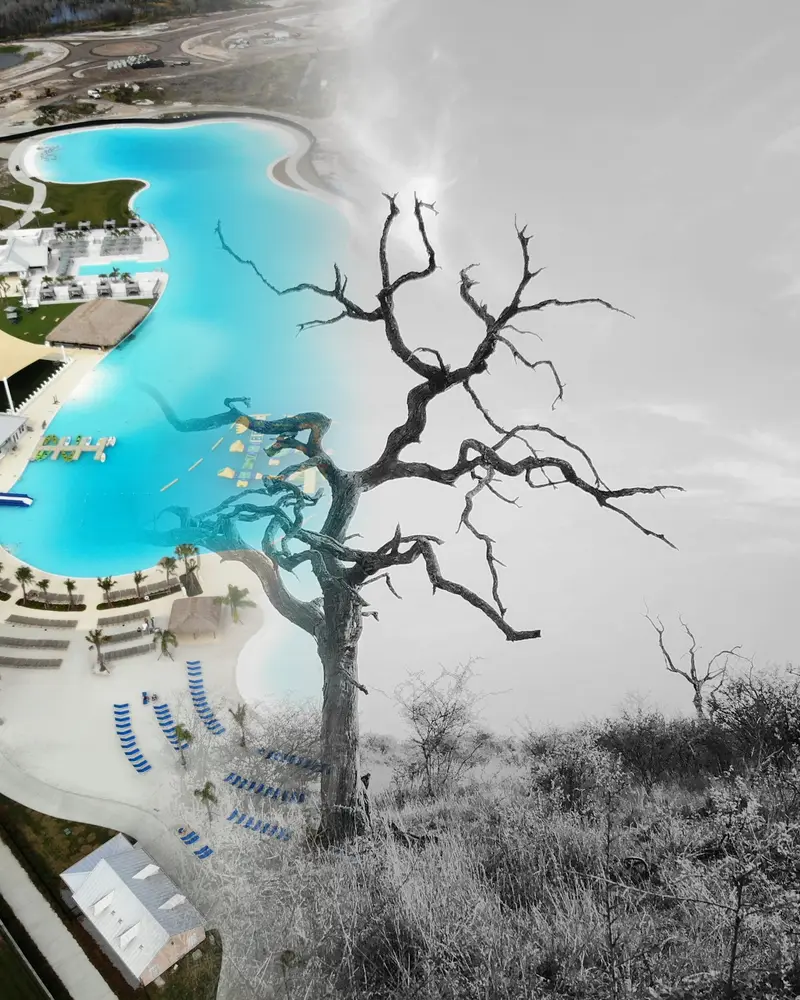
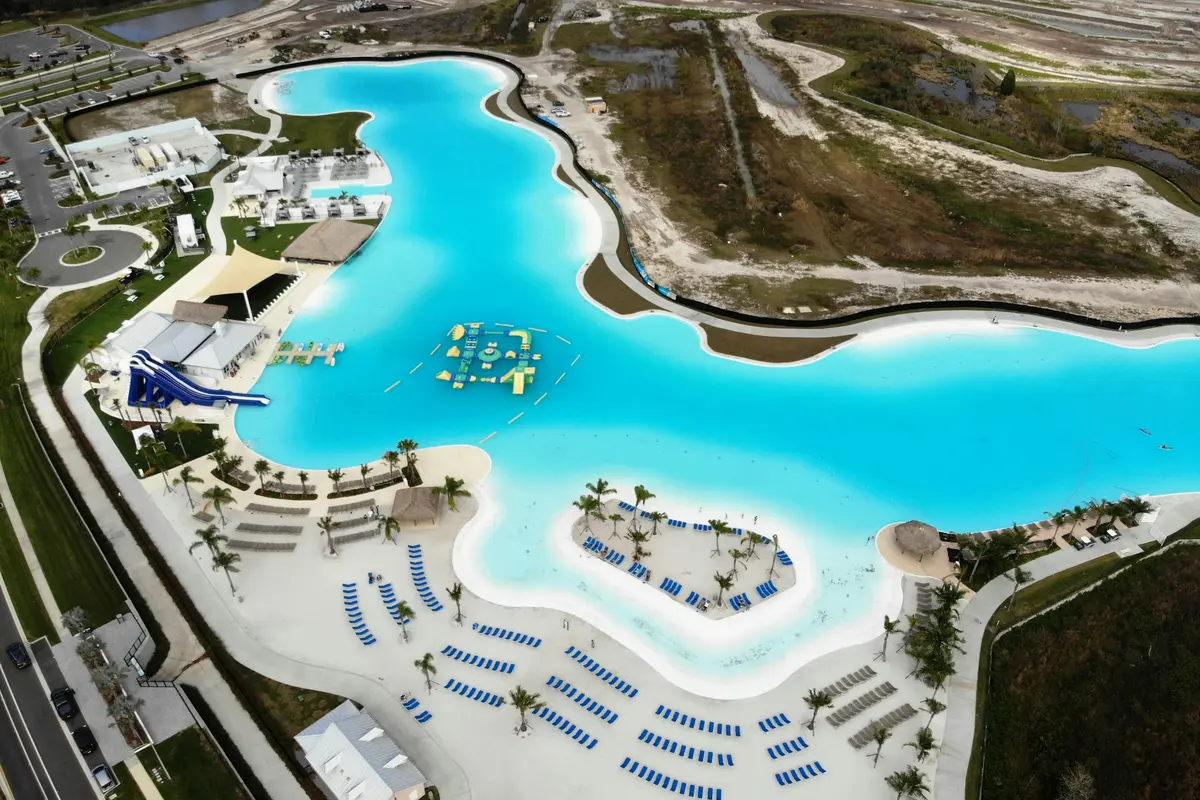
Development has often taken place on land that was previously pine flatwoods or pasture, so properties commonly retain mature pines left standing through construction alongside young ornamental planting installed at build.
Wesley Chapel is unincorporated, so Pasco County provisions apply, and community-level rules may apply on top of them. Requirements can vary by property and jurisdiction. Property owners should confirm current requirements with the relevant local authority before work begins.
Observable indicators worth taking seriously
Browning needles at the top of a retained pine, a lean that may or may not be new, and a service trench line visible in the turf are worth assessing together. Construction damage in a root zone shows in the canopy years later.
- Sawdust-like frass, exit holes or heavy insect activity at the base.
- Bark falling away in sheets to expose dead wood underneath.
- Recent trenching, paving or grade change within the root zone.
- Growth crossing a common-area or shared boundary line, where the standard applied is the community's rather than yours.
- Clearance along a long driveway or approach where growth has closed in from both sides.
What an on-site assessment actually looks at
- What lies within the potential fall zone, and whether people are under it regularly.
- Site history — construction, drainage change, root severance, previous heavy pruning.
- The main stem, checked for cavities, cracks, included bark and old wound response.
- Branch attachments, especially unions where two stems of similar size meet.
- The root flare and the soil around it, since most catastrophic failures start below eye level.
Remove it, or keep watching it?
Not every defective tree needs to come down, and removing a tree that could have been managed is a loss. Risk is a combination of how likely a failure is and what would be underneath it — both halves have to be looked at, in person.
Monitoring can be reasonable Defect present, target absent
- The defect is real but nothing valuable or occupied sits within falling distance.
- There is a documented starting point, so any change can actually be noticed.
Removal is the honest answer Stem, base or repeated failure
- A second limb has failed from the same kind of weak attachment.
- Extensive dieback from the top of the canopy downward.
From concern to resolution
- Describe what you are seeing
Which part of the tree, how long it has looked that way, and what has changed recently. Change over time is often more informative than a single symptom.
- Restrict use of the area
If people park, play or sit under the tree, moving that activity elsewhere is a sensible interim step while the tree is being looked at.
- On-site inspection
Base, stem, unions and canopy are examined in person. Photographs help a phone conversation but do not substitute for standing under the tree.
- Choose the response
Removal, reduction to lower the load, deadwood clearance, or planned monitoring. Not every declining tree needs to come out immediately.
- Complete and reassess
The stump is dealt with as agreed, and any neighbouring tree showing similar signs is noted.
Factors that shape a hazardous removal
- The size of the target zone and how much of it must stay usable.
- How much sound wood remains, which determines whether the stem can be climbed or rigged at all.
- Ground conditions for equipment positioning.
- Whether there is height clearance for sections to be taken down the stem, since a tall stem over a house has little margin for error.
- Whether the tree sits on the property, on common ground or on a managed boundary — that determines who authorises the work before anything else can be planned.
- Whether there is a genuine drop zone. Open ground is the one thing that makes tree work straightforward, and where it exists the method changes completely.
Useful information to gather
- Changes to irrigation or drainage in the root zone.
- Photographs of the base, the trunk and the full canopy from a distance.
- How long the symptoms have been visible and whether they are getting worse.
- Decide whether material can stay on the property. On a larger lot that is often a genuinely useful option, and it changes what the work involves.
- Walk the property before you call and count what actually needs attention, rather than describing the single tree that prompted it. Several trees in one visit is normally more efficient than separate calls.
- Establish who owns the tree before booking anything. Where it sits on common ground or a shared boundary, the association usually has to authorise the work rather than the resident.
Debris and cleanup
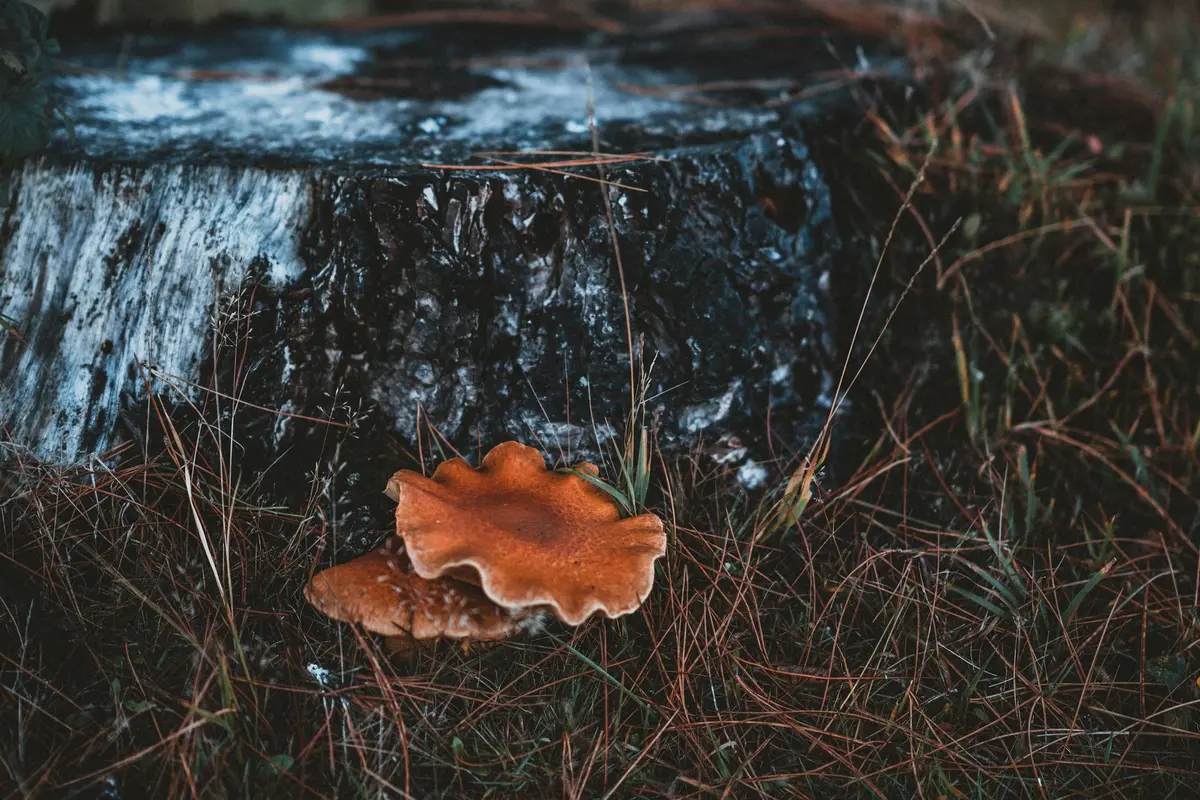
Dead and decayed wood breaks up differently from sound timber. It tends to shatter on impact and produce more fragments, so ground clearing after a hazardous removal usually takes proportionally longer than the felling itself.
- Where there is room, chip and trunk rounds can often be left in an agreed position rather than hauled, which reduces what has to be carried and loaded.
- Larger parcels usually allow material to be staged near the working area, so the carry is short and the loading happens in one place.
- Where a community sets rules on where material may be placed or for how long, confirm those before a pile is built rather than after.
Hauled away, chipped on site, or stacked in an agreed position — all three are normal, and they are different amounts of work. Whichever you want should be stated in the scope before the day rather than settled afterwards.
Dead and Hazardous Tree Removal in Wesley Chapel: common questions
My pine's needles are browning at the top. Is that serious?
It is worth looking at promptly. Pines can decline quickly compared with broadleaf trees, and top-down needle loss is a symptom that warrants attention rather than observation over a season.
The trunk looks fine. Can the roots still be the problem?
Yes, and on construction sites that is frequently where the problem sits. Grading, compaction and trenching reduce anchorage without leaving any sign in the stem or canopy for years.
What about protected trees?
Some Tampa Bay jurisdictions have provisions covering trees by size, species or condition, and some make allowance for trees assessed as hazardous. Requirements can vary by property and jurisdiction, so confirm with the relevant local authority before work begins.
The tree may be on association land. What happens then?
The work has to be authorised by whoever is responsible for that ground, which is normally the association rather than the resident. Establishing ownership first saves a wasted visit. We can talk through what is involved either way, but we will not carry out work on ground you do not control.
Is a tall pine handled differently from an oak?
Yes, in a way that matters. A pine carries most of its weight high on a comparatively slender stem and tends to fail as a whole stem rather than by shedding limbs, so the target assessment and the takedown sequence are both different. It is worth saying which you have when you call.
Related tree services in Wesley Chapel
If the assessment points to removal
What a removal involves on a constrained property, and why access decides the method more often than the size of the tree.
Read about tree removalIf the defect turns out to be branch-level
Deadwood and poorly attached limbs can often be addressed without losing the tree. That is a better outcome where the stem is sound.
Compare with pruningIf it has already moved
A tree that has shifted, or soil that has lifted at the base, is not something to schedule around.
See what counts as urgentHave a Declining Tree Assessed in Wesley Chapel
Tell us what has changed in the canopy, when it started, and what was built or dug nearby. Keep the area under the tree clear while it waits to be assessed.
- Phone: 877-269-2454
- Serving Tampa Bay, Florida
Information on this page is general guidance for property owners and managers in the Tampa Bay area. It is not an arboricultural assessment, a legal opinion, a permitting determination or an insurance decision. Tree condition and site risk can only be judged in person.