Brandon, Florida
Storm and Hurricane Damage Tree Removal in Brandon, FL
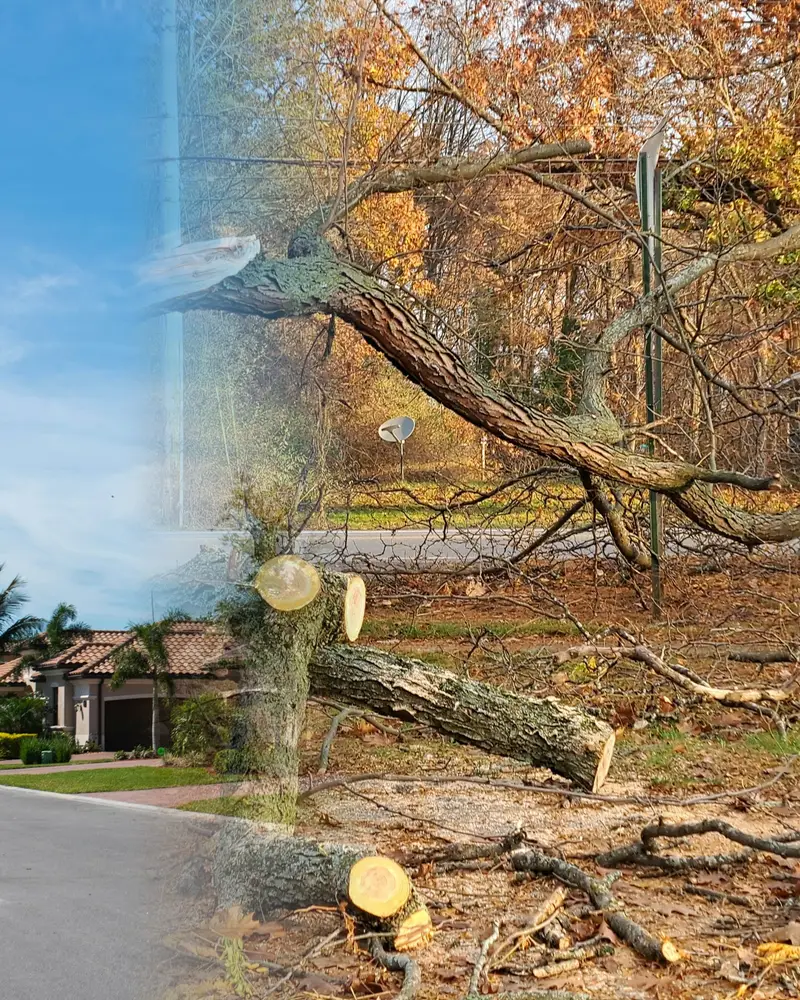
Being inland does not mean being sheltered. Brandon sees strong summer convective storms as well as tropical systems, and both regularly produce enough gust to break limbs out of mature canopy. Because that canopy is directly over houses, damage here tends to involve structures more often than it involves open ground.
- Hillsborough County
- Suburban
- 1970s–1990s subdivisions
If the tree is threatening people, an occupied building or your only access, call straight away rather than waiting.
Before anyone goes near it
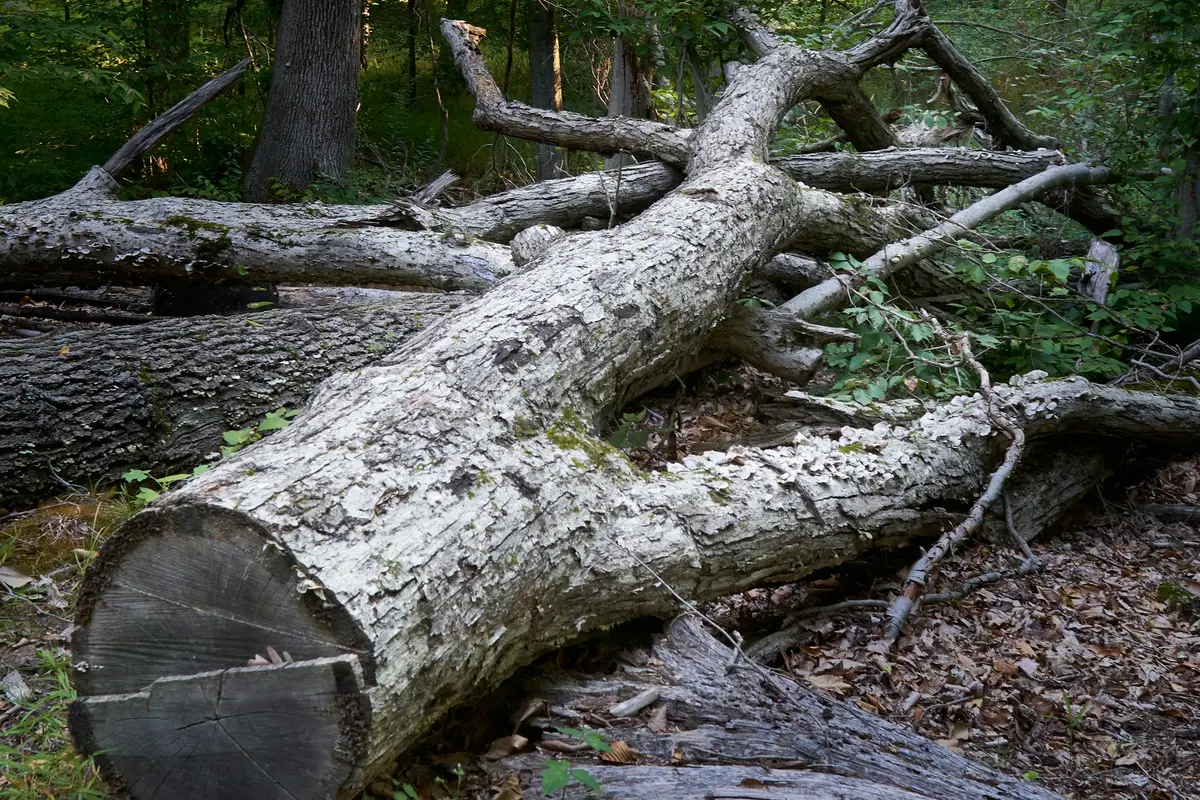
A tree that shifted and stopped has not necessarily finished moving. Saturated soil takes days to drain, and a root plate that lifted once will often lift further under the next gust or when weight is removed from the canopy. Keep people out of the lean direction and treat the tree as unresolved until it is assessed.
Never approach, move or work near a downed or sagging power line, and do not assume a line is inactive. Keep people, pets and vehicles well clear, and report the line to your electric utility or emergency services before anyone goes near the area.
What this means on Brandon properties
The pattern across these subdivisions is remarkably consistent because the trees were planted at the same time and are the same age. When one street loses limbs from a particular type of failure, neighbouring properties with the same planting frequently have the same weakness — which makes a post-storm look at the whole street worth more than a look at one tree.
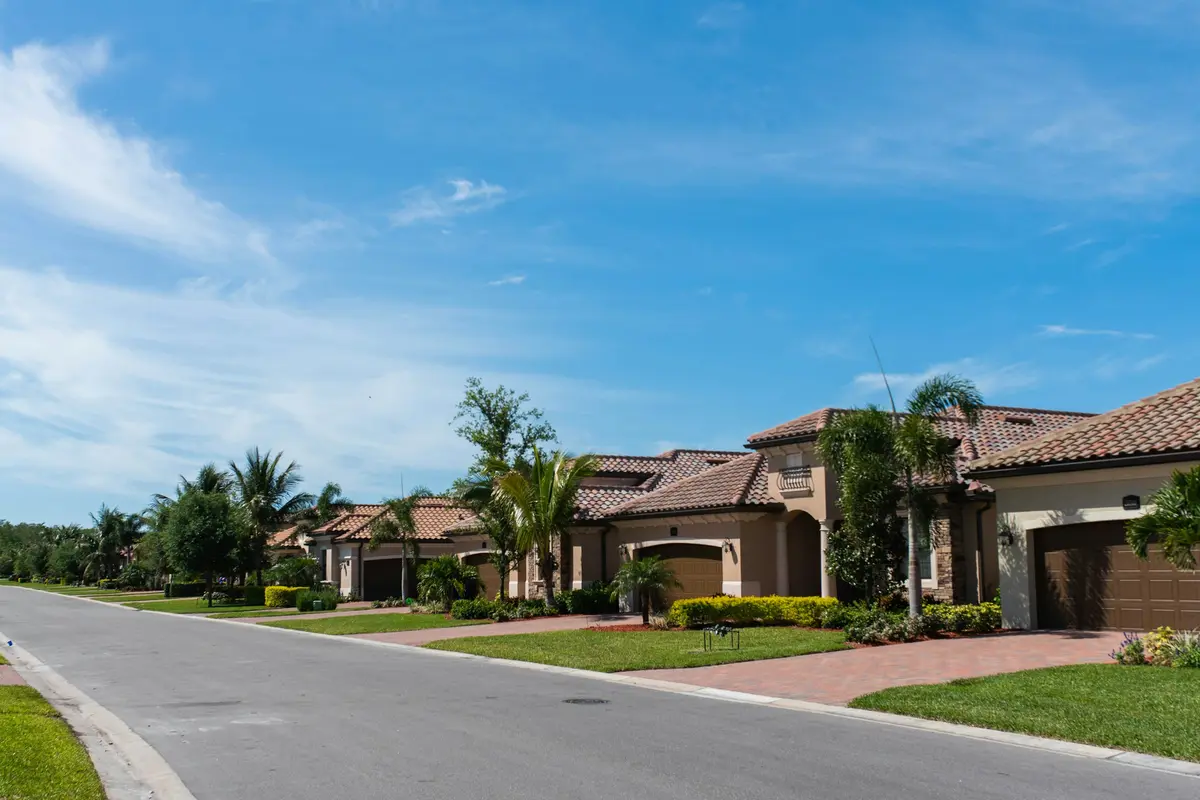
Much of the housing stock dates from the 1970s through the 1990s, which means original landscape plantings have now reached full size — trees chosen for a new yard are frequently pressed against rooflines, driveways and fence lines four decades later.
Brandon is unincorporated, so Hillsborough County provisions apply rather than a city code. Requirements can vary by property and jurisdiction. Property owners should confirm current requirements with the relevant local authority before work begins.
What to look for after the wind drops
Where a street was built out at one time, the trees along it tend to be the same age and the same species, so a single storm can produce the same failure — a split codominant union — on several properties at once.
- Standing water that has not drained around the base days after the rain stopped.
- A split where two codominant stems meet, especially if you can see into the union.
- Trees that were sheltered by a neighbour's tree which has now gone, leaving them newly exposed.
- Dead material held aloft in an interlocking canopy rather than falling clear, above areas that are in daily use.
- Growth closing in over a narrow side route that is the only way in or out.
After a storm: what to deal with now and what can wait
The days after a storm are more dangerous than the storm itself, largely because attention goes to the biggest pile rather than to what is still overhead. Sequencing matters more than speed.
Can wait for a scheduled visit On the ground, going nowhere
- Brush and limb debris lying on lawn, away from paths and drives.
- A tree already fully down in open ground with no tension in it.
Deal with first Still loaded or still overhead
- Any tree that is standing at a different angle than it was before the storm.
- Anything at all involving a power line — that is the utility's call before it is ours.
How post-storm work is usually sequenced
- Triage by risk, not by size
The largest pile of debris is rarely the most dangerous thing on a property. Suspended limbs and destabilised trunks come before ground-level brush.
- Confirm utilities and access
Lines, meters and blocked routes are identified first. Nothing starts around a line that has not been confirmed safe by the utility.
- Deal with destabilised trunks
Trees with root movement or major splits are taken down or reduced rather than left to a second weather system.
- Reassess what is left standing
Surviving trees are looked at again with the storm's effects in mind, because exposure and load have changed across the whole property.
- Stage and clear debris
Material is cut down to manageable sizes and either hauled or staged where it does not block drainage, driveways or collection access.
Worth doing before the crew arrives
- Identify where a truck and chipper can get in, including any route the storm has blocked.
- Keep the affected area closed off, especially any route under a damaged canopy.
- Decide whether debris should be hauled away or staged, and where staging would be acceptable.
- Measure the narrowest gate or gap on the route to the tree and have that figure ready. It answers more questions than almost anything else you can tell us.
- Note anything fixed on the route — an air-conditioning unit, meter box, irrigation head or low wall — that cannot simply be stepped over.
- Decide whether you want the work confined to one tree or the overlapping canopies looked at together — treating them separately can mean returning to reach the same area twice.
What drives the size of a storm job
- How much of the work is removal versus making a damaged tree safe to keep.
- Access constraints created by the storm itself, including blocked side streets.
- How many trees were affected, and whether they failed into each other.
- Whether adjacent trees have to be protected while this one is worked, which slows rigging but is usually cheaper than repairing what gets hit.
- Whether neighbouring canopies overlap the tree being worked on — where they interlock, material cannot always fall clear and has to be lowered instead of dropped.
- How much deadwood is held aloft rather than having fallen out. Dense canopy retains dead limbs, so the volume coming down is often larger than it looks from below.
Debris and cleanup
If material is going to the kerb for municipal collection rather than being hauled, placement matters: clear of drains, hydrants, meters and mailboxes, and not under low lines. Collection rules and timelines differ between cities and counties and change after major events, so confirm the current instruction locally before building a pile.
- Where a crown extends over a boundary, agree in advance which side brush will be brought down to — dragging it back under the tree is often the slower option.
- Overlapping canopies tend to produce more brush than expected, because material caught in a neighbouring crown comes down as well as the material that was cut.
- Where the carry is long or the route is narrow, brush is normally cut into smaller pieces than strictly necessary, because handling size matters more than trips.
Hauled away, chipped on site, or stacked in an agreed position — all three are normal, and they are different amounts of work. Whichever you want should be stated in the scope before the day rather than settled afterwards.
Storm and Hurricane Damage Tree Removal in Brandon: common questions
Where does storm debris go in Brandon?
Brandon is unincorporated, so Hillsborough County arrangements apply rather than a city programme, and temporary instructions are commonly issued after major events. Confirm the current guidance for your address before building a pile.
My neighbour's tree split. Should I check mine?
It is a reasonable prompt. Trees of the same age, species and situation planted at the same time often share the same structural weaknesses, and a union that failed next door is worth looking for in your own canopy.
Can debris just go to the kerb?
Sometimes, and the rules are not the same everywhere. Cities and counties in the Tampa Bay area run different collection programmes, and after a major storm they often publish temporary instructions. Check the current guidance for your address before building a pile.
There is no vehicle access to the back garden. Does that stop the work?
No, but it changes how it is done and how long it takes. Material comes out along whatever route exists, usually in smaller sections and by hand. Where a fence panel or a gate post can come out temporarily, that is sometimes faster overall — worth raising rather than assuming either way.
The tree has not been touched in years. Where should it start?
Normally with deadwood and anything making direct contact with a structure, because those are the parts creating actual risk or damage. Shaping and reduction can follow once the tree's condition is clear. Trying to correct decades of growth in one visit tends to take more off the tree than is good for it.
Related tree services in Brandon
For a tree already on the ground
Load and tension have to be read before anything is cut, particularly where the canopy is resting on a structure.
Read about fallen tree clearingFor trees left standing afterwards
A tree that moved but did not fall is the one most often overlooked in the clean-up.
Read about hazardous tree assessmentFor the material left behind
Post-storm piles are usually two or three loads rather than one once they are pulled apart.
See how debris hauling worksAsk About Storm-Damaged Tree Removal in Brandon
Tell us what is damaged and what is still suspended in a canopy. In Brandon the material left hanging is usually the more pressing problem.
- Phone: 877-269-2454
- Serving Tampa Bay, Florida
Information on this page is general guidance for property owners and managers in the Tampa Bay area. It is not an arboricultural assessment, a legal opinion, a permitting determination or an insurance decision. Tree condition and site risk can only be judged in person.