Brandon, Florida
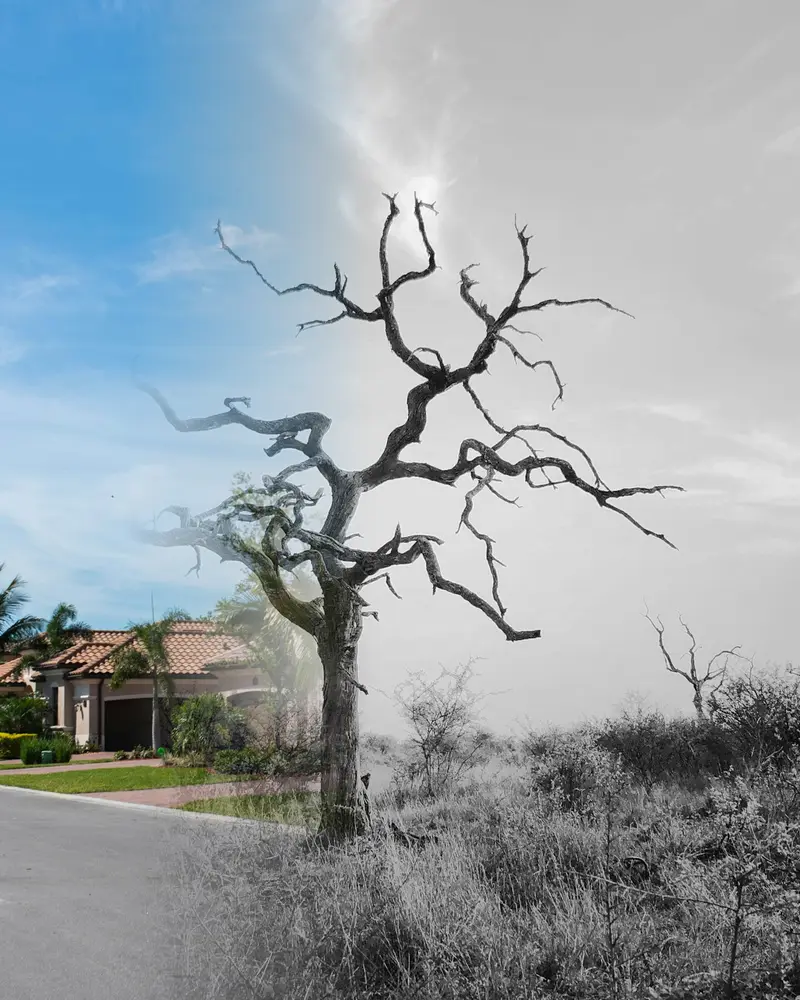
Dead and Hazardous Tree Removal in Brandon, FL
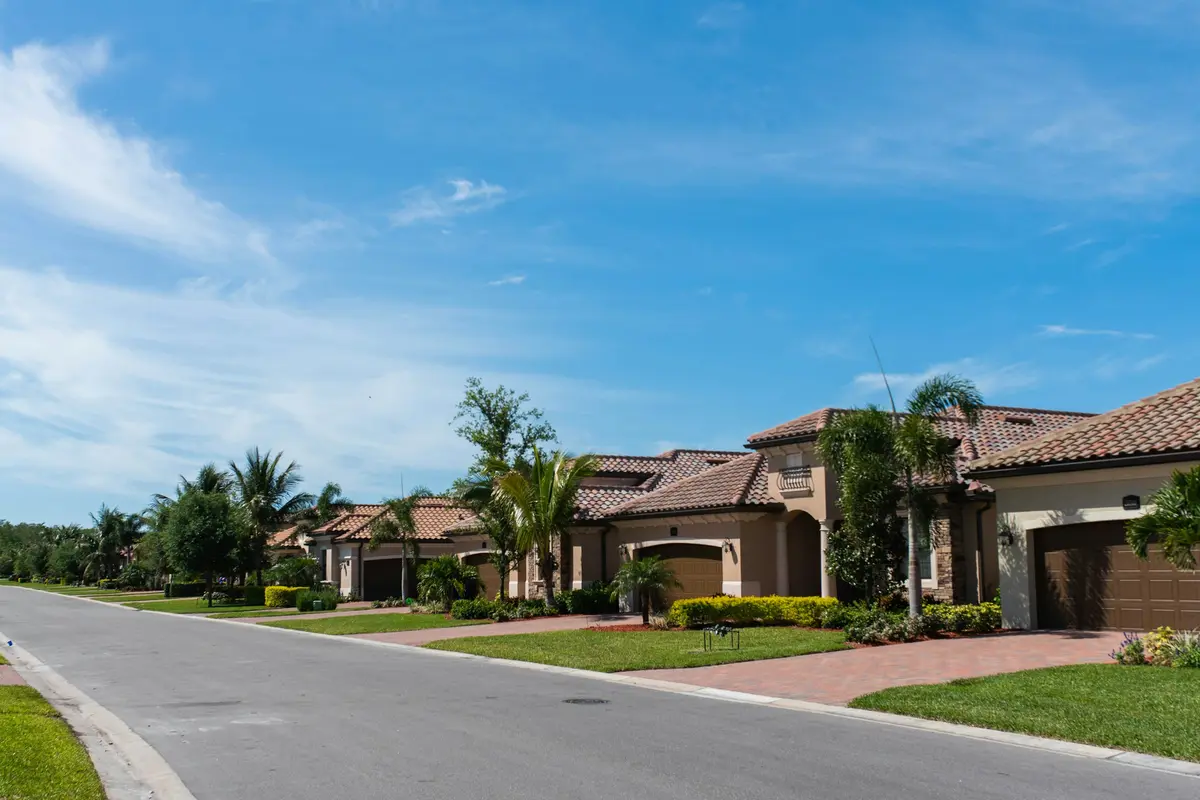
There is a cohort effect in Brandon that is worth understanding. Trees planted across a subdivision at the same time reach maturity, and then decline, on roughly the same schedule. That means a neighbourhood can go from having very few tree problems to having several within a few years, and it is not a coincidence.
- Hillsborough County
- Suburban
- 1970s–1990s subdivisions
If the tree is threatening people, an occupied building or your only access, call straight away rather than waiting.
Before anyone goes near it
A description over the phone is a useful start, but the things that most often matter — the state of the root flare, the sound of the stem, the extent of a cavity, movement in the soil — need someone standing at the tree. Nobody should be given a definitive verdict on a hazardous tree remotely, and we will not offer one.
Never approach, move or work near a downed or sagging power line, and do not assume a line is inactive. Keep people, pets and vehicles well clear, and report the line to your electric utility or emergency services before anyone goes near the area.
What this means on Brandon properties
Species choice from that planting era matters too. Laurel oaks were widely used across Tampa Bay subdivisions and are known for shorter useful lifespans and greater decay susceptibility than live oaks of similar age. That is a general pattern rather than a diagnosis of any particular tree, but it explains why so many assessments in these neighbourhoods find decay in trees that are not especially old.
Typical suburban access — a driveway, a side gate and a rear yard — which usually works, but rear-yard trees behind a narrow gate are a common constraint on what equipment can be used.
Brandon is unincorporated, so Hillsborough County provisions apply rather than a city code. Requirements can vary by property and jurisdiction. Property owners should confirm current requirements with the relevant local authority before work begins.
Observable indicators worth taking seriously
A fungal body at the base and dieback in the upper canopy are reasons for an assessment, not a diagnosis. Where other trees of the same age stand on the same lot, it is usually worth looking at those in the same visit.
- A lean that has changed, or soil cracked and lifted on the opposite side of the base.
- A vertical crack or seam running any significant distance up the trunk.
- A cavity, hollow or soft area where a probe or a knuckle meets little resistance.
- A tree that has reached the roofline or the fence line decades after being planted for a smaller space.
- Dead material held aloft in an interlocking canopy rather than falling clear, above areas that are in daily use.
What an on-site assessment actually looks at
- Site history — construction, drainage change, root severance, previous heavy pruning.
- Whether the tree is a suitable candidate for monitoring rather than immediate action.
- The root flare and the soil around it, since most catastrophic failures start below eye level.
- Whether the defect can be managed by reducing the canopy or only by removal.
- What lies within the potential fall zone, and whether people are under it regularly.
Remove it, or keep watching it?
Not every defective tree needs to come down, and removing a tree that could have been managed is a loss. Risk is a combination of how likely a failure is and what would be underneath it — both halves have to be looked at, in person.
Monitoring can be reasonable Defect present, target absent
- The defect is real but nothing valuable or occupied sits within falling distance.
- Deadwood is confined to individual limbs that can be removed on their own.
Removal is the honest answer Stem, base or repeated failure
- The defect sits directly above something occupied, and cannot be pruned away.
- Extensive dieback from the top of the canopy downward.
From concern to resolution
- Describe what you are seeing
Which part of the tree, how long it has looked that way, and what has changed recently. Change over time is often more informative than a single symptom.
- Restrict use of the area
If people park, play or sit under the tree, moving that activity elsewhere is a sensible interim step while the tree is being looked at.
- On-site inspection
Base, stem, unions and canopy are examined in person. Photographs help a phone conversation but do not substitute for standing under the tree.
- Weigh the target
Risk is a combination of likelihood of failure and what is underneath. The same defect means different things over a shed and over a driveway.
- Complete and reassess
The stump is dealt with as agreed, and any neighbouring tree showing similar signs is noted.

Factors that shape a hazardous removal
- The extent of decay at the base, which affects how predictable the fall direction is.
- Whether a lift or crane is needed because the tree cannot support a climber.
- Whether the tree can be felled in one piece or must be taken down in small sections.
- Whether material can be dropped at all, or whether every piece has to be rigged and lowered into a small space — the difference between those two is substantial.
- How much deadwood is held aloft rather than having fallen out. Dense canopy retains dead limbs, so the volume coming down is often larger than it looks from below.
- Whether neighbouring canopies overlap the tree being worked on — where they interlock, material cannot always fall clear and has to be lowered instead of dropped.
Useful information to gather
- Whether the tree is close to a boundary or a shared structure.
- Any work done near the tree in recent years — trenching, paving, fill, root cutting.
- Whether the tree has failed before, and which part failed.
- Measure the narrowest gate or gap on the route to the tree and have that figure ready. It answers more questions than almost anything else you can tell us.
- Note anything fixed on the route — an air-conditioning unit, meter box, irrigation head or low wall — that cannot simply be stepped over.
- Decide whether you want the work confined to one tree or the overlapping canopies looked at together — treating them separately can mean returning to reach the same area twice.
Debris and cleanup
Where decay involves fungal activity, it is reasonable to prefer that material leaves the property rather than being chipped and spread as mulch nearby. If you have a preference, say so before work starts.
- Long-unmanaged canopies carry more accumulated deadwood than expected, so the volume coming down on a first visit is often higher than on subsequent ones.
- Overlapping canopies tend to produce more brush than expected, because material caught in a neighbouring crown comes down as well as the material that was cut.
- Where the carry is long or the route is narrow, brush is normally cut into smaller pieces than strictly necessary, because handling size matters more than trips.
Hauled away, chipped on site, or stacked in an agreed position — all three are normal, and they are different amounts of work. Whichever you want should be stated in the scope before the day rather than settled afterwards.
Dead and Hazardous Tree Removal in Brandon: common questions
Several trees on my street look poor at once. Why?
Most likely because they were planted at the same time and are the same age and species. Trees in a subdivision cohort tend to decline on a similar timeline, which is why problems seem to arrive together.
Can a declining subdivision tree be kept?
Sometimes, by reducing the canopy to lower the load on a defective stem and removing deadwood. Whether that is enough depends on where the defect is. Decay in the trunk or root flare rarely leaves good options.
Is a dead tree always dangerous?
Not necessarily. Risk depends on what is underneath it. A dead tree in the middle of an open field is a low-risk situation; the same tree over a driveway or a play area is not. The target matters as much as the tree.
How much room does a crew actually need?
Less than most people expect for the cutting and more than most people expect for the material. The working area around the tree matters, but so does somewhere to put what comes down and a route to move it. Describing both when you call gets you a more useful answer than describing the tree alone.
Can dead limbs high in a dense canopy be seen from the ground?
Often not reliably. Under a heavy interlocking crown, dead material thirty or forty feet up is genuinely difficult to identify from below, and it tends to be held in place rather than falling clear. That is a reasonable reason to have someone look rather than to guess.
Related tree services in Brandon
If the assessment points to removal
What a removal involves on a constrained property, and why access decides the method more often than the size of the tree.
Read about tree removalIf the defect turns out to be branch-level
Deadwood and poorly attached limbs can often be addressed without losing the tree. That is a better outcome where the stem is sound.
Compare with pruningIf it has already moved
A tree that has shifted, or soil that has lifted at the base, is not something to schedule around.
See what counts as urgentHave a Declining Tree Assessed in Brandon
Describe what you are seeing and how long it has looked that way, and mention any similar trees on the lot. Keep people and vehicles out from under it meanwhile.
- Phone: 877-269-2454
- Serving Tampa Bay, Florida
Information on this page is general guidance for property owners and managers in the Tampa Bay area. It is not an arboricultural assessment, a legal opinion, a permitting determination or an insurance decision. Tree condition and site risk can only be judged in person.