Brandon, Florida
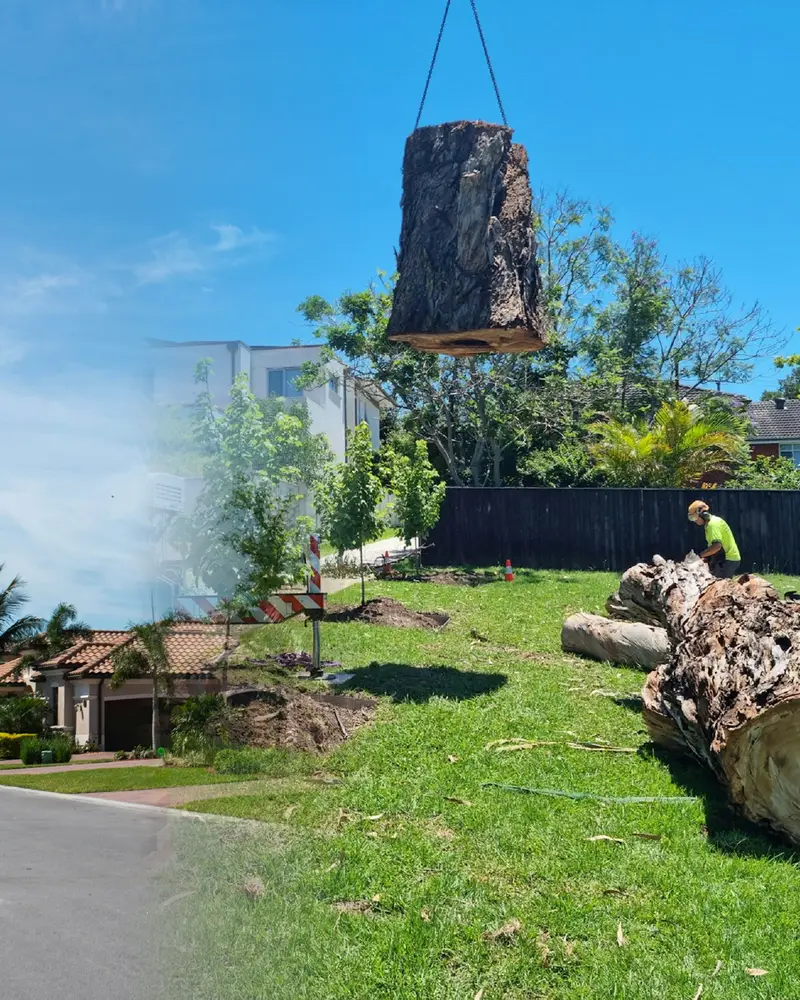
Large and Crane-Assisted Tree Removal in Brandon, FL
Brandon presents the opposite problem to the region's tighter urban lots. There is frequently a driveway that would take a machine — but the tree is in the back yard behind a house, and reach from the front is the question rather than setup space.
- Hillsborough County
- Suburban
- 1970s–1990s subdivisions
What this means on Brandon properties
That geometry is worth assessing properly. Where a rear-yard tree is within reach from a driveway or the street, a lift can turn a very long conventional dismantle into a manageable job. Where it is not, the honest answer is a conventional dismantle with everything carried out through the side gate, and knowing that in advance sets realistic expectations.
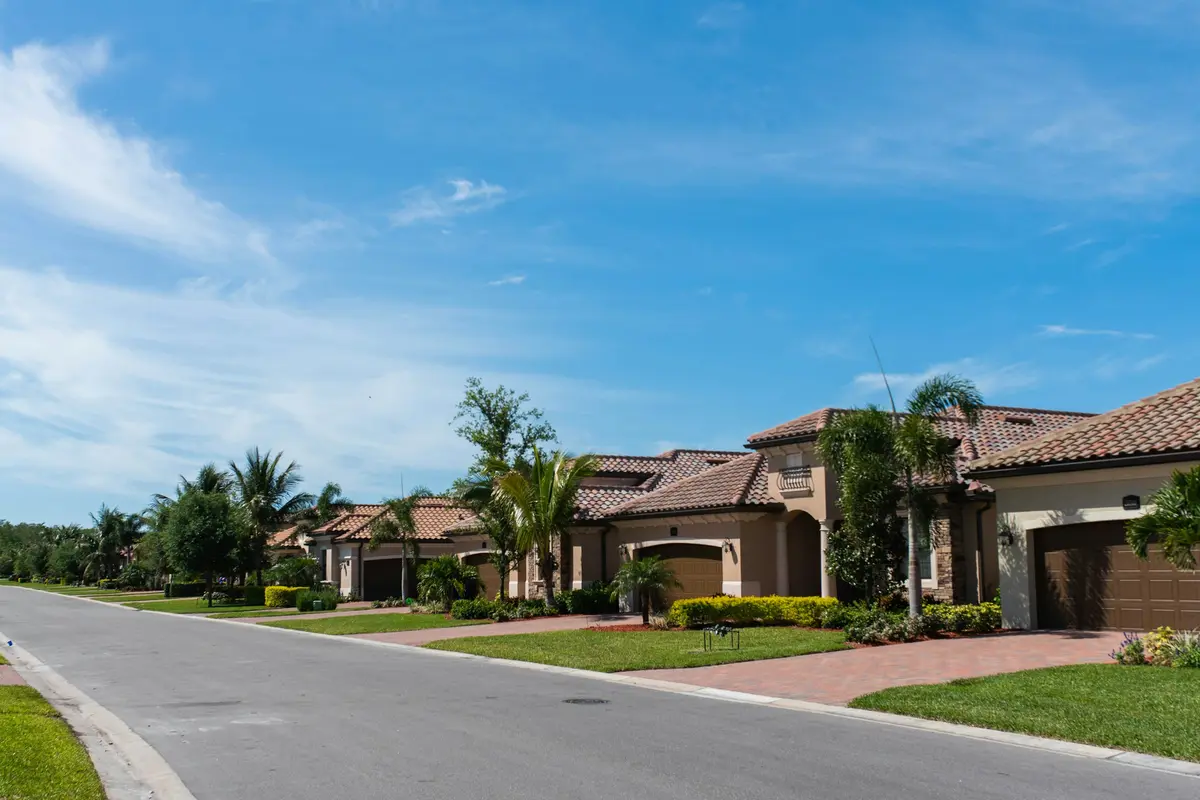
Brandon is a large unincorporated community east of Tampa, built out mainly as suburban subdivisions along and around the SR 60 corridor rather than as a single planned centre.
Brandon is unincorporated, so Hillsborough County provisions apply rather than a city code. Requirements can vary by property and jurisdiction. Property owners should confirm current requirements with the relevant local authority before work begins.
Constraints that point toward a lift-assisted approach
For a large tree in a back yard well back from the street, the whole question is whether the required reach at that radius is workable from the driveway. That is an on-site measurement rather than something to settle by phone.
- Decay or storm damage that makes the stem unsafe to climb or to rig against.
- No usable drop zone — the tree stands in a courtyard, between buildings or over a pool.
- A canopy spread over a roof, pool cage or conservatory where nothing can be dropped free.
- A very long carry from the tree to where a truck can stand.
- A trunk large enough that individual sections exceed what can be lowered by rope.
What has to be established before a lift is planned
- What sits between the setup point and the tree — lines, canopies, structures, kerbs.
- Whether the tree is sound enough for a climber to attach picks, or whether another method is needed.
- Where lifted sections will be set down and processed.
- Whether the machine's reach covers the tree from the only available position.
- Section weights, and whether they fall within capacity at the required radius.
A lift, or climb and rig?
A crane is a tool, never a default. It buys you reach and controlled set-down, and it costs setup space, a load-bearing position and money — so the question is whether the site actually needs what it buys.
Climbing and rigging is the right method Reachable and sound
- Material can be carried or dragged out along an existing route.
- The stem is sound enough to rig against with confidence.
A lift earns its place No drop zone or no trustworthy stem
- Sections have to travel up and over a structure rather than down through it.
- The stem's condition makes climbing it the wrong risk to take.
What has to be true before anything is lifted
Ground bearing, overhead clearance and the swing path matter more than the tree does. A position that looks adequate can fail on soft ground or turn out to put the load over a structure. That assessment happens before anything is rigged, and it can rule the method out entirely.
Never approach, move or work near a downed or sagging power line, and do not assume a line is inactive. Keep people, pets and vehicles well clear, and report the line to your electric utility or emergency services before anyone goes near the area.
How a lift-assisted removal is planned and run
- Site assessment
The tree, the setup area, the travel path and the landing zone are looked at as one system. Any of them can rule the approach out.
- Confirm the method is warranted
A crane is a tool, not a default. If the tree can be dismantled conventionally without unacceptable risk, that is usually the better answer.
- Pick sections in sequence
Each piece is rigged, cut and lifted clear in a planned order that keeps the remaining tree stable and predictable.
- Process at the landing zone
Sections are set down away from the structure and cut up there, which is faster and safer than processing in a confined space.
- Demobilise and finish
Ground protection lifted, surfaces inspected and cleared, and the stump handled as agreed.
What determines whether this approach is practical
- Whether neighbouring property access is needed and has been agreed.
- The size and accessibility of the landing zone.
- Whether a road, verge or shared drive is involved and who controls it.
- Whether adjacent trees have to be protected while this one is worked, which slows rigging but is usually cheaper than repairing what gets hit.
- Whether the canopy can be reached from one setup or needs repositioning. Overlapping crowns frequently mean several climbing or lifting positions for a single tree.
- Whether neighbouring canopies overlap the tree being worked on — where they interlock, material cannot always fall clear and has to be lowered instead of dropped.
Information that makes planning realistic
- The position of overhead lines anywhere near the tree or the approach.
- Whether a shared drive, verge or neighbouring property would be involved.
- The width of the driveway or street frontage and any height restriction on the approach.
- Decide whether you want the work confined to one tree or the overlapping canopies looked at together — treating them separately can mean returning to reach the same area twice.
- If the tree has not been worked on for some years, say so. The first visit after a long gap is usually a bigger job than the ones that follow, and it is better to know that upfront.
- Measure the narrowest gate or gap on the route to the tree and have that figure ready. It answers more questions than almost anything else you can tell us.
Debris and cleanup
Because material is handled in larger pieces, volume leaves the site faster than in a conventional dismantle, but truck movements are heavier. Where those trucks can turn and park is part of the same planning conversation.
- Where the carry is long or the route is narrow, brush is normally cut into smaller pieces than strictly necessary, because handling size matters more than trips.
- Where a crown extends over a boundary, agree in advance which side brush will be brought down to — dragging it back under the tree is often the slower option.
- Long-unmanaged canopies carry more accumulated deadwood than expected, so the volume coming down on a first visit is often higher than on subsequent ones.
Hauled away, chipped on site, or stacked in an agreed position — all three are normal, and they are different amounts of work. Whichever you want should be stated in the scope before the day rather than settled afterwards.
Large and Crane-Assisted Tree Removal in Brandon: common questions
Can a machine reach a back-yard tree from the driveway?
Sometimes, and it depends on the distance and on section weight at that radius — reach and capacity fall off together. It is exactly the kind of thing that has to be measured on site rather than estimated from a photograph.
Is a lift worth it for a rear-yard tree?
Where it works, it often converts several days of carrying material through a gate into a much shorter job. Where reach is marginal, conventional dismantling is usually the more sensible route.
Will my tree definitely need a crane?
Not necessarily, and it should not be assumed. Plenty of very large trees are removed conventionally by dismantling and rigging. A lift becomes the sensible choice when there is nowhere to put material, or when the stem cannot be trusted.
Can dead limbs high in a dense canopy be seen from the ground?
Often not reliably. Under a heavy interlocking crown, dead material thirty or forty feet up is genuinely difficult to identify from below, and it tends to be held in place rather than falling clear. That is a reasonable reason to have someone look rather than to guess.
How much room does a crew actually need?
Less than most people expect for the cutting and more than most people expect for the material. The working area around the tree matters, but so does somewhere to put what comes down and a route to move it. Describing both when you call gets you a more useful answer than describing the tree alone.
Related tree services in Brandon
If a lift is not actually needed
A crane is a tool for trees with no usable drop zone or a stem that cannot be climbed — not a default.
Compare with conventional removalIf the stem cannot be trusted
Where decay or storm damage rules out climbing, the assessment drives the method.
Read about hazardous tree assessmentOn an operating site
Street or car park positioning, exclusion zones and permitted hours usually decide the day.
Read about commercial tree workDiscuss a Large Tree Removal in Brandon
Send photographs from the street through to the tree, plus the approximate distance from the driveway. In Brandon the reach question decides it.
- Phone: 877-269-2454
- Serving Tampa Bay, Florida
Information on this page is general guidance for property owners and managers in the Tampa Bay area. It is not an arboricultural assessment, a legal opinion, a permitting determination or an insurance decision. Tree condition and site risk can only be judged in person.