Brandon, Florida
Commercial Tree Removal in Brandon, FL
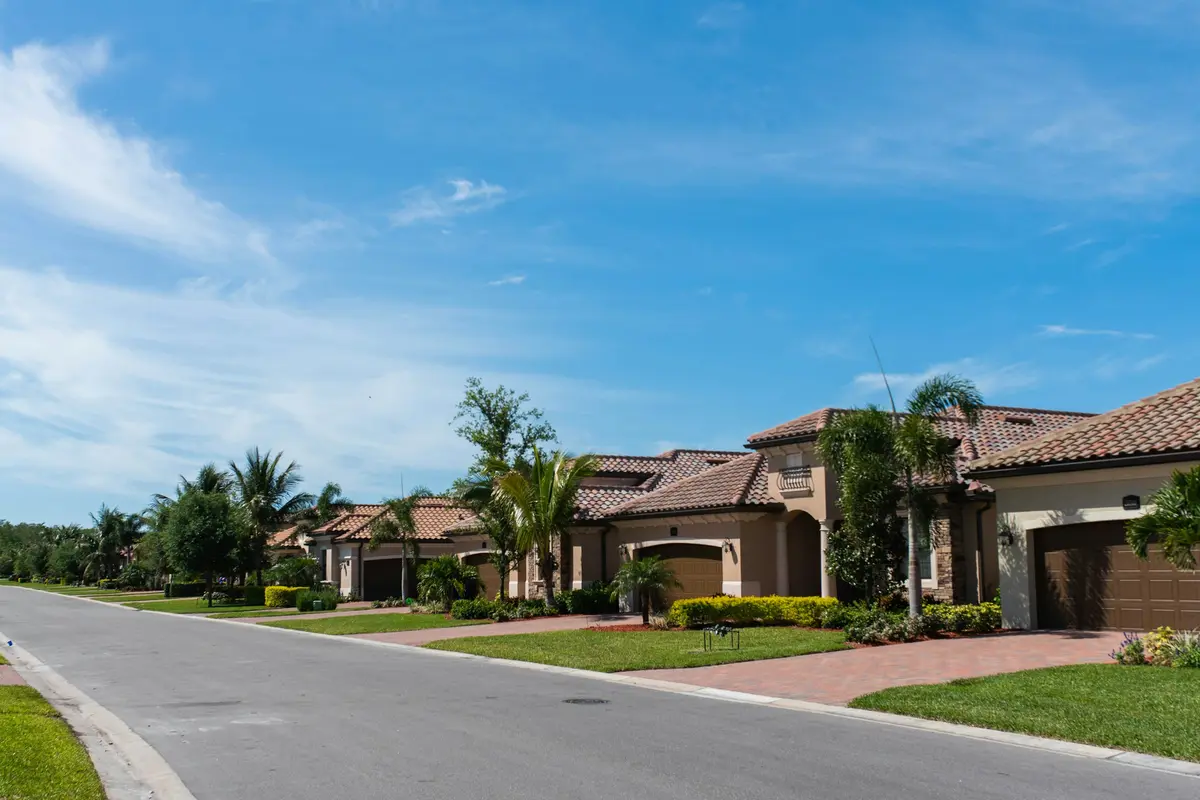
Brandon's commercial property is largely suburban in form — retail centres, office parks and multifamily developments with their own parking — which usually means there is somewhere to set up. The constraint is not space but circulation: keeping bays, drive aisles and pedestrian routes working while the exclusion zone moves across the site.
- Hillsborough County
- 1970s–1990s subdivisions
- Suburban
What this means on Brandon properties
Parking island trees are the recurring subject. Planted into confined beds when these centres were built, they have outgrown them, and the result is lifted kerbs, cracked surfacing and canopies interfering with lighting columns and signage. Handling several across one site in a single mobilisation is usually far more efficient than reactive one-off calls.
Much of the housing stock dates from the 1970s through the 1990s, which means original landscape plantings have now reached full size — trees chosen for a new yard are frequently pressed against rooflines, driveways and fence lines four decades later.
Brandon is unincorporated, so Hillsborough County provisions apply rather than a city code. Requirements can vary by property and jurisdiction. Property owners should confirm current requirements with the relevant local authority before work begins.
Typical commercial triggers
Parking-island trees at a retail centre are normally sequenced so only a bay or two is out of use at a time, with the programme fitted around delivery windows rather than around the trees.
- Storm damage across a multi-building site needing a single coordinated response.
- A boundary tree affecting a neighbouring commercial occupier.
- Roots lifting a footpath, kerb or accessible route across a site.
- Dead material held aloft in an interlocking canopy rather than falling clear, above areas that are in daily use.
- A tree that has reached the roofline or the fence line decades after being planted for a smaller space.
Access and coordination questions that come first
- Where a chipper and truck can stand without blocking a fire lane or loading area.
- Whether parking bays or drive aisles need to be taken out of use, and for how long.
- Whether adjoining tenants or neighbouring businesses need notice.
- Which hours the work can occupy the site without disrupting trading or tenants.
- How pedestrians will be routed around an exclusion zone, and who signs off on that.
In hours or out of hours?
On an operating site the cutting is rarely the constraint. What decides the plan is how much of the site can be out of use at once, and when the people who use it are not there.
Normal hours usually work Low-traffic footprint
- Nobody needs the affected area during the working day.
- The tree sits away from entrances, accessible routes and delivery paths.
Out of hours earns its cost Access or occupancy pressure
- Several trees need doing and the site cannot lose them all at once.
- The exclusion zone would cross the site's main pedestrian desire line.
Keeping a working site safe
Sites change during the day: a delivery arrives, a fire route needs clearing, a tenant objects. Establishing beforehand who on your side can pause or redirect the crew avoids decisions being made by whoever happens to be standing there.
Never approach, move or work near a downed or sagging power line, and do not assume a line is inactive. Keep people, pets and vehicles well clear, and report the line to your electric utility or emergency services before anyone goes near the area.
How a commercial job is normally organised
- Site walk with the responsible person
Trees, access, service routes and operating constraints are reviewed together, so the plan reflects how the site actually runs.
- Define the working window
Early mornings, off-peak hours or closed days often cost less disruption than a mid-day start, and that is usually the deciding factor.
- Sequence multi-tree work
On larger sites the order is chosen so that no more of the site is out of use at once than necessary.
- Execute with the zone controlled
Work proceeds inside a maintained boundary, with the zone reduced or relocated as the job moves across the site.
- Hand the area back clean
Surfaces cleared, bays reopened, and the site walked with the responsible person before the crew leaves.
What drives cost and duration on commercial sites
- Documentation and sign-off expected by a managing agent.
- Coordination with other trades already working on the site.
- Restricted working hours, which lengthen the calendar even when the work is small.
- Whether adjacent trees have to be protected while this one is worked, which slows rigging but is usually cheaper than repairing what gets hit.
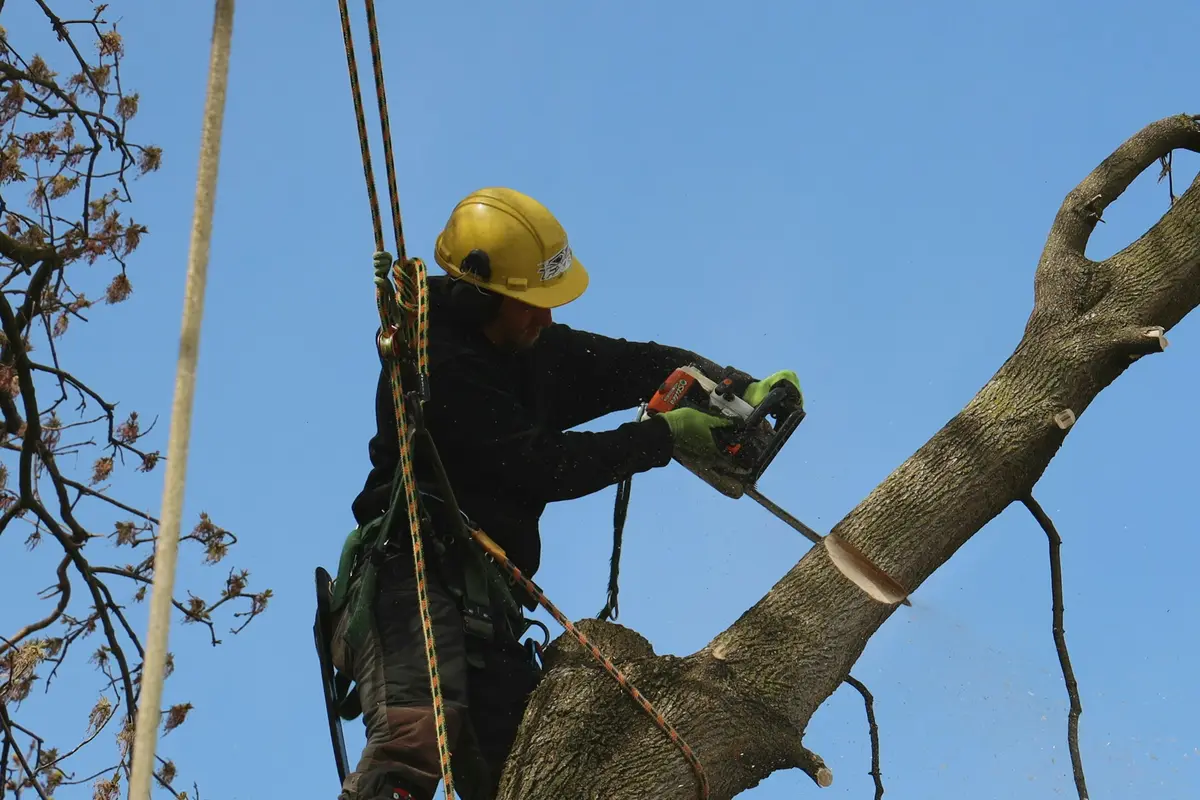
- Whether neighbouring canopies overlap the tree being worked on — where they interlock, material cannot always fall clear and has to be lowered instead of dropped.
- Whether material can be dropped at all, or whether every piece has to be rigged and lowered into a small space — the difference between those two is substantial.
Debris and cleanup
On an operating site, debris handling is a logistics problem as much as a clearing one. Material is normally taken directly to the truck rather than piled, because a pile on a commercial property blocks something — a bay, a lane, an accessible route.
- Long-unmanaged canopies carry more accumulated deadwood than expected, so the volume coming down on a first visit is often higher than on subsequent ones.
- Where the carry is long or the route is narrow, brush is normally cut into smaller pieces than strictly necessary, because handling size matters more than trips.
- Overlapping canopies tend to produce more brush than expected, because material caught in a neighbouring crown comes down as well as the material that was cut.
Hauled away, chipped on site, or stacked in an agreed position — all three are normal, and they are different amounts of work. Whichever you want should be stated in the scope before the day rather than settled afterwards.
What speeds up a commercial quote
- Any prior reports, inspections or contractor notes about the trees.
- Permitted working hours and any restricted dates.
- Whether any bays or routes can be closed, and who arranges that.
- If the tree has not been worked on for some years, say so. The first visit after a long gap is usually a bigger job than the ones that follow, and it is better to know that upfront.
- Decide whether you want the work confined to one tree or the overlapping canopies looked at together — treating them separately can mean returning to reach the same area twice.
- Note anything fixed on the route — an air-conditioning unit, meter box, irrigation head or low wall — that cannot simply be stepped over.
Commercial Tree Removal in Brandon: common questions
Can several parking island trees be done in one visit?
Usually, and it is normally the sensible approach. The planning question is sequencing, so the site loses as few bays at a time as possible rather than closing a whole area.
Will the asphalt be damaged by equipment?
It is a real consideration, particularly in hot weather with heavier machines. Protection and positioning can manage it, and where a surface is a known concern it should come up during the site walk.
What about trees on a boundary with another business?
Those need agreement before work starts. Access, timing and responsibility all get more complicated across a commercial boundary, and it is much easier to resolve in advance than mid-job.
How much room does a crew actually need?
Less than most people expect for the cutting and more than most people expect for the material. The working area around the tree matters, but so does somewhere to put what comes down and a route to move it. Describing both when you call gets you a more useful answer than describing the tree alone.
Several trees on the property have grown together. Is that one job or several?
Usually one, and it is generally more efficient that way. Where crowns interlock, working on one tree means moving through or protecting the others anyway, so treating them in a single visit shares the setup and the access. Whether that applies depends on whether they are reachable from the same position.
Related tree services in Brandon
For a single tree on the site
Where one tree drives the job, the method question is the same as on a residential property.
Read about tree removalFor a parcel rather than a tree
Scoped by area and by outcome, with retention decided before work starts.
Read about land and lot clearingFor volume across the site
Staging position and carry distance usually matter more than total volume.
See how debris hauling worksDiscuss Commercial Tree Removal Needs in Brandon
Send the site layout, permitted hours and who authorises bay closures. On Brandon commercial sites the sequencing conversation is where the plan actually gets made.
- Phone: 877-269-2454
- Serving Tampa Bay, Florida
Information on this page is general guidance for property owners and managers in the Tampa Bay area. It is not an arboricultural assessment, a legal opinion, a permitting determination or an insurance decision. Tree condition and site risk can only be judged in person.