Town ’n’ Country, Florida
Emergency Tree Removal in Town ’n’ Country, FL
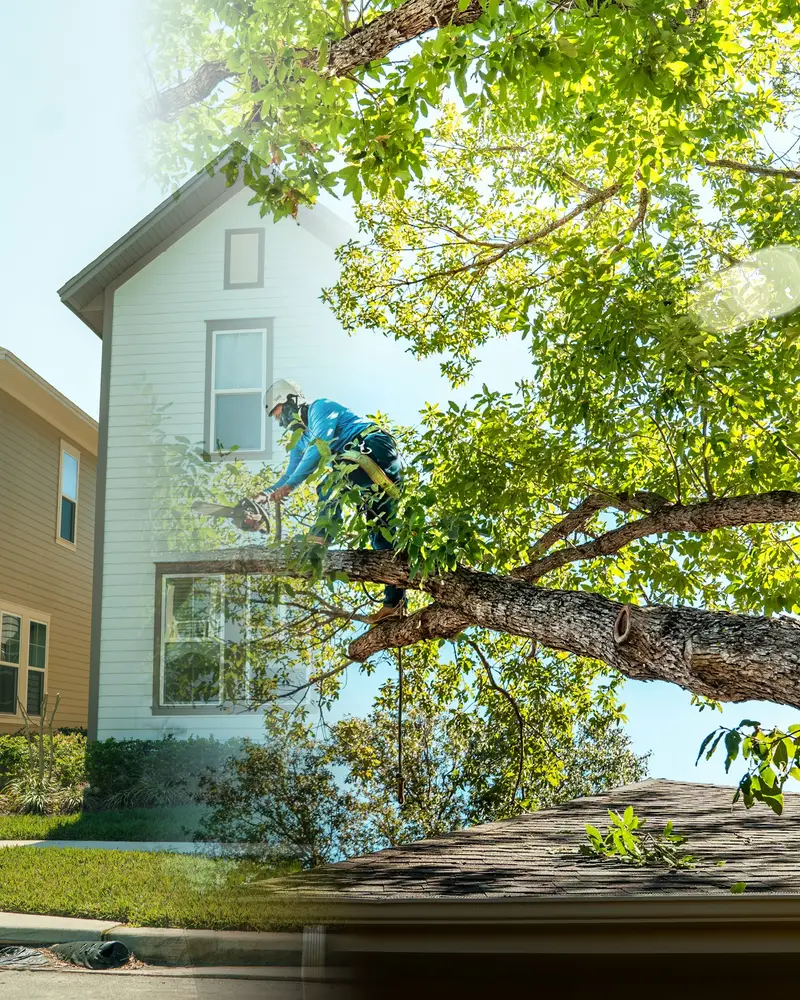
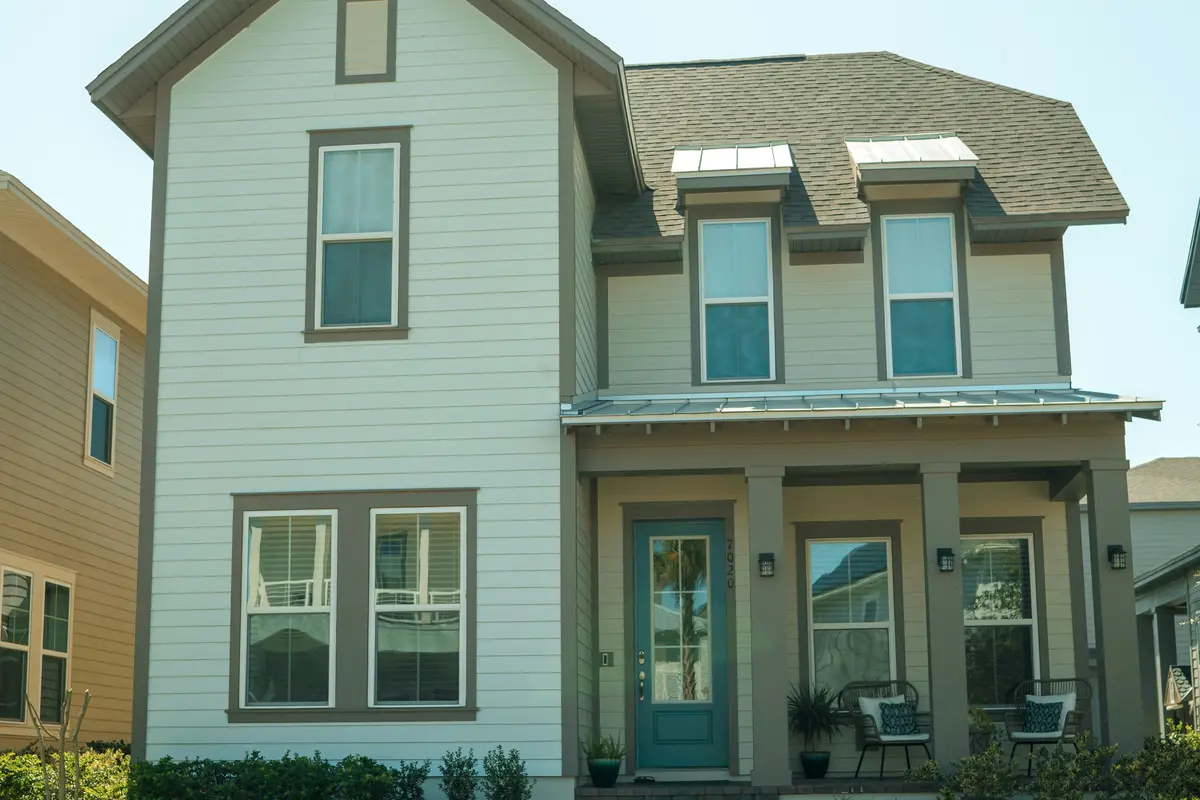
The urgent pattern in Town ’n’ Country is shaped by the housing. Single-storey ranch homes with low rooflines, attached carports and screen rooms mean a failing limb has very little distance to fall before it reaches a structure, and the structures themselves are light — carport roofs and screen frames offer almost no resistance.
- Hillsborough County
- Near Old Tampa Bay
- Low elevation
If the tree is threatening people, an occupied building or your only access, call straight away rather than waiting.
Before anyone goes near it
The most common avoidable injuries in this situation happen to people who walk under a hanging limb to look at it, or who try to pull debris away from a fence or gate. Keep children and pets indoors, park vehicles elsewhere, and rope off or block the affected route rather than relying on people to remember to avoid it.
Never approach, move or work near a downed or sagging power line, and do not assume a line is inactive. Keep people, pets and vehicles well clear, and report the line to your electric utility or emergency services before anyone goes near the area.
What this means on Town ’n’ Country properties
Low elevation across much of the area adds the second factor. Ground here drains slowly, and after a period of onshore weather a root plate sitting in saturated soil has considerably less holding capacity than the tree's healthy appearance suggests. The two together explain why a modest tree can produce a serious result.
Low elevation and proximity to Old Tampa Bay mean parts of the area drain slowly and are exposed to onshore wind, so both root plate saturation and direct wind loading are relevant here.
Town ’n’ Country is unincorporated, so Hillsborough County provisions apply. Requirements can vary by property and jurisdiction. Property owners should confirm current requirements with the relevant local authority before work begins.
Situations that are usually treated as urgent
Where a limb or stem is down across a carport with the structure partly collapsed, the load may now be bearing on a support post that is no longer vertical. Nothing should be moved until that has been looked at.
- Storm damage left a stub or torn branch suspended in the canopy rather than on the ground.
- A limb failed once already and neighbouring limbs on the same side show similar attachment.
- The only vehicle access to a property is blocked and cannot be cleared by hand.
- A tree that has reached the roofline or the fence line decades after being planted for a smaller space.
- A tree newly exposed because whatever sheltered it has gone.
Is this actually an emergency, or can it be scheduled?
Calling it an emergency when it is not costs you money; calling it routine when it is not can cost a great deal more. The dividing line is not how alarming the tree looks — it is what sits underneath it and whether anything is still moving.
Can reasonably be scheduled Serious, but stable
- Deadwood high in a canopy that nobody walks or parks under.
- A tree touching a roofline without bearing weight on it.
Should not wait Load, access or occupancy
- The only vehicle access to the property is blocked.
- Material suspended in a canopy over a driveway, walkway or doorway in daily use.
How an urgent call usually proceeds
- Describe the hazard by phone
Location, what the tree is touching, whether anyone is inside the affected part of the building, and whether access is blocked. This determines how the visit is prioritised.
- On-site hazard assessment
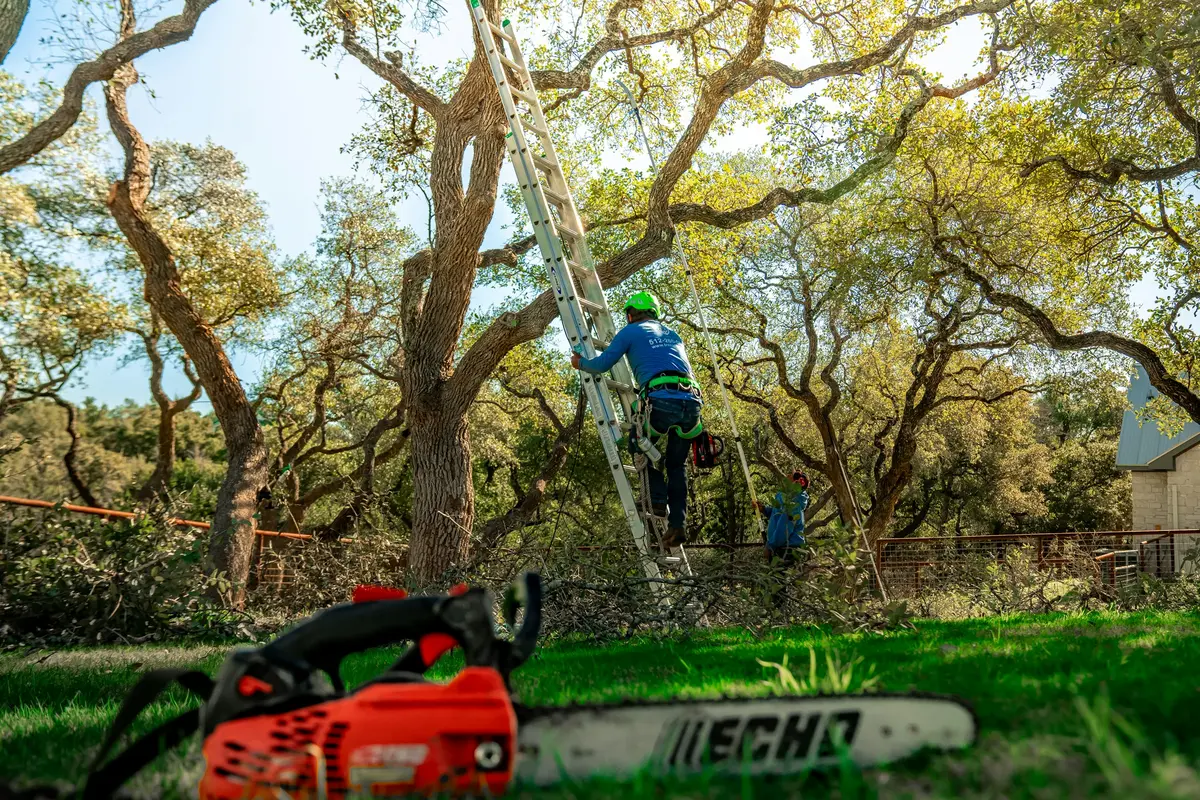
The crew reads lean, load, tension in bent limbs, ground condition and what sits underneath before choosing a method.
- Set up the work zone
Exclusion area, drop zone, access route and rigging points are set before cutting starts, and the zone stays closed while work is active.
- Release load in a controlled sequence
Weight is taken off in stages so the remaining structure does not shift unpredictably onto what it is resting against.
- Clear access, then finish the site
Blocked routes are usually opened first so the property can function again, followed by the remaining cut-up and cleanup.
Useful to have ready when you call
- The property address and the closest cross street or gate a truck should use.
- Whether there is a gate, code, dog or parking restriction the crew needs to know about.
- Whether the driveway is blocked and whether there is a second way in.
- Decide how much clearance you actually want between the canopy and the roof — that number is more useful than asking for the tree to be 'cut back'.
- Where a screened enclosure, pool deck or spa sits under the canopy, say so when you call — it changes the rigging plan more than the size of the tree does.
- Note anything mounted on the roof or wall within the working area: solar panels, satellite dishes, lighting, gutter guards or a carport roof.
What changes the shape of an emergency job
- Whether the failed section is on the ground or still suspended in the canopy.
- Whether a machine can reach the tree or every piece has to be lowered by rope.
- Whether the work zone can be closed off, or whether people need to keep passing through it.
- Whether material can be lowered clear of the enclosure or has to be taken out in pieces small enough to be handled over it.
- Whether the tree has outgrown the space it was planted in. Landscape trees chosen for a new plot frequently reach the roofline and the fence line decades later, and that is a different problem from a defect.
- How close the canopy sits to the roofline, gutters and any carport. Low single-storey roofs sit well inside the fall radius of limbs that look comfortably clear from the ground.
Debris and cleanup
Urgent visits usually separate two things: opening what has to be usable again, and clearing everything else. Access routes, doorways and driveways are typically cleared first, with the remaining trunk sections and brush handled once the immediate hazard is down.
- Long-unmanaged canopies carry more accumulated deadwood than expected, so the volume coming down on a first visit is often higher than on subsequent ones.
- On ground that holds water, staging is normally kept to firm surfaces such as a drive or path rather than lawn, which sometimes lengthens the carry.
- Where limbs sit directly over a roof, material is lowered rather than dropped, and gutters are worth checking afterwards for anything that has washed into them.
Hauled away, chipped on site, or stacked in an agreed position — all three are normal, and they are different amounts of work. Whichever you want should be stated in the scope before the day rather than settled afterwards.
Emergency Tree Removal in Town ’n’ Country: common questions
The carport is holding it up. Is that a problem?
Yes — a distorted carport post is a support that is already failing. Nothing should be parked underneath and nobody should be working near it. Removing the load in the right sequence is the whole job.
The tree looks healthy. Why did it move?
On low-lying ground, saturated soil offers much less resistance at the root plate, and a perfectly healthy tree can shift without any trunk defect. Cracked or raised soil at the base is the sign to act on.
What counts as an emergency rather than an urgent job?
Broadly, it is an emergency when the tree is actively threatening people, an occupied structure or the only way in and out. A leaning tree over open lawn is serious but can usually be scheduled. A limb resting on a bedroom roof cannot.
How is pruning planned around a screened pool enclosure?
By treating the cage as something that cannot take any load at all. Limbs above it are normally rigged and lowered rather than dropped, cut sizes are kept small enough to control, and the sequence works outward so nothing swings back over the screen. It is slower than open-ground work, and that is the point of it.
The tree has not been touched in years. Where should it start?
Normally with deadwood and anything making direct contact with a structure, because those are the parts creating actual risk or damage. Shaping and reduction can follow once the tree's condition is clear. Trying to correct decades of growth in one visit tends to take more off the tree than is good for it.
Related tree services in Town ’n’ Country
If the tree is already down
Material on the ground is still holding load, and the first cut is a reading problem before it is a cutting problem.
Read about fallen tree clearingIf several trees are involved
Damage across a property after a storm is triaged differently from a single failure.
Read about storm damage responseOnce the hazard is cleared
What remains on the ground afterwards is usually a larger volume than it looks.
See how debris hauling worksDiscuss a Dangerous Tree in Town ’n’ Country
Tell us what it landed on, whether a carport or screen frame is bearing load and how wet the ground is. That sets the response here.
- Phone: 877-269-2454
- Serving Tampa Bay, Florida
Information on this page is general guidance for property owners and managers in the Tampa Bay area. It is not an arboricultural assessment, a legal opinion, a permitting determination or an insurance decision. Tree condition and site risk can only be judged in person.