Town ’n’ Country, Florida
Tree Debris Removal and Hauling in Town ’n’ Country, FL
Debris calls here often follow a familiar sequence: material was moved to the kerb expecting collection, the collection did not take it, and now it has been sitting long enough to settle and be grown through. Older piles are more work than fresh ones, and the reason for the original refusal is usually what was mixed in.
- Hillsborough County
- Low elevation
- Near Old Tampa Bay
What this means on Town ’n’ Country properties
This is unincorporated Hillsborough County, so county arrangements apply rather than a City of Tampa programme — a distinction that catches people out given how close the city limits are. Temporary instructions are commonly issued after major events, and checking the guidance for your specific address is more reliable than a neighbour's experience.
Town ’n’ Country is a large unincorporated area west of Tampa extending toward Old Tampa Bay, developed principally through the 1960s and 1970s.
Town ’n’ Country is unincorporated, so Hillsborough County provisions apply. Requirements can vary by property and jurisdiction. Property owners should confirm current requirements with the relevant local authority before work begins.
Situations this covers
A kerbside pile of mixed woody material and fence panels is frequently left by county collection, and once it has settled into the verge it is harder to remove than it was when fresh.
- Storm material staged at a kerb that now needs removing privately.
- Debris blocking a driveway, gate, swale or parking area.
- Material from work you or another contractor carried out.
- Growth in contact with a low roofline, gutter run or carport, where the clearance was adequate when the tree was planted.
- Material overhanging a screened enclosure or pool deck, which cannot take anything that lands on it.
What determines how a haul-out runs
- Whether the route runs through a gate, a side path or across turf.
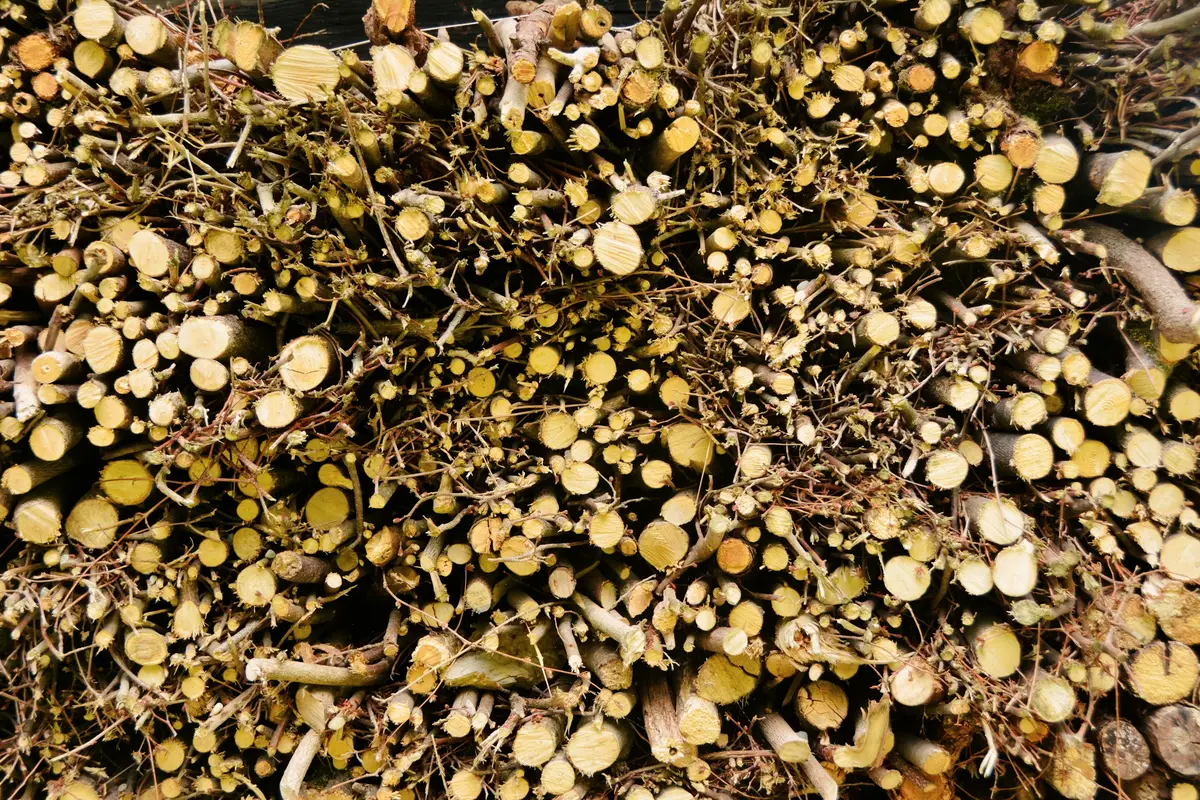
- Whether the pile is loose brush, cut rounds, or a mixed heap of both.
- Whether the property has to stay usable while loading is in progress.
- Whether material is stacked and reachable or tangled and buried.
- Ground conditions along the carry route after rain.
Is this a hauling job, or does something still need cutting?
This service moves material that is already on the ground. If anything is still standing, still suspended or still holding load, that is tree work first and hauling afterwards — and the two are priced and planned differently.
A haul-away job Already down and safe to handle
- A storm pile that has settled with nothing suspended above it.
- Chip or rounds left on site from earlier work.
Needs cutting before hauling Still loaded or still standing
- Limbs lodged in a canopy above the pile.
- Anything still attached to a standing tree.
Handling a settled pile safely
Material that has been down for a while interlocks, and pulling one limb can shift the rest. Older piles are worked from the outside in rather than by dragging pieces from the middle, which is also why they take longer than they look.
Never approach, move or work near a downed or sagging power line, and do not assume a line is inactive. Keep people, pets and vehicles well clear, and report the line to your electric utility or emergency services before anyone goes near the area.
How a haul-out is normally handled
- Sight the pile
Volume from a photograph is unreliable — piles compress and tangle. Where possible the material is looked at, or described in terms of area and height rather than 'a few branches'.
- Separate woody from non-woody
Soil, rubble, fencing, wire and general waste change what can be done with the load, and are best identified before the truck arrives.
- Plan the carry
Where the truck and chipper stand, and how material travels from pile to truck, is the main determinant of how long the job takes.
- Load heavy sections
Rounds and trunk wood are cut to a handleable size and loaded separately from chip.
- Clear the ground
The footprint of the pile is raked and blown down, since a long-standing pile leaves a mat of decomposed material behind it.
What sets the size of a debris job
- Access width and whether a chipper can get close.
- How long the material has been there and how tangled it has become.
- Actual volume, which is usually more than it looks from one angle.
- How close the canopy sits to the roofline, gutters and any carport. Low single-storey roofs sit well inside the fall radius of limbs that look comfortably clear from the ground.
- Whether a screened enclosure sits within the working radius. A cage offers almost no resistance to a falling limb and cannot be used as a drop zone at any size.
- Whether material can be lowered clear of the enclosure or has to be taken out in pieces small enough to be handled over it.
Debris and cleanup
Municipal storm-debris programmes are not the same across the Tampa Bay area, and after major events cities and counties often publish temporary rules on placement, separation and timing. Confirm the current instruction for your address before assuming kerbside collection will take a pile.
- Where a pool or enclosure sits beneath the work, keeping debris out of the water is part of the plan rather than an afterthought, and it usually means smaller cuts and more of them.
- On ground that holds water, staging is normally kept to firm surfaces such as a drive or path rather than lawn, which sometimes lengthens the carry.
- Long-unmanaged canopies carry more accumulated deadwood than expected, so the volume coming down on a first visit is often higher than on subsequent ones.
Hauled away, chipped on site, or stacked in an agreed position — all three are normal, and they are different amounts of work. Whichever you want should be stated in the scope before the day rather than settled afterwards.
Makes the visit quicker
- Flag irrigation heads and soft ground on the carry route.
- Separate anything non-woody out beforehand if you can.
- Confirm where a truck can park without blocking access.
- Decide whether the objective is storm preparation or general maintenance. They lead to different work on the same tree.
- Say whether the area around the tree holds water after heavy rain. It affects the timing, the equipment and occasionally the assessment itself.
- Decide how much clearance you actually want between the canopy and the roof — that number is more useful than asking for the tree to be 'cut back'.
Tree Debris Removal and Hauling in Town ’n’ Country: common questions
Why did collection skip my pile?
Mixed non-woody material is the usual reason — fencing, wire, treated timber and general waste all change how a load can be handled. Check the current county instructions for your address, and if the pile has been declined, a private haul-out is the practical route.
Does it matter that the pile is on the verge?
It can. Material on a verge over drains, meters or under low lines is a problem in its own right, and a pile that has settled into soft ground is more work to lift than one on a hard surface.
How is volume worked out?
By footprint and height, adjusted for how tightly the material is packed. Loose brush occupies far more space than the same weight of rounds. Measuring the pile against something recognisable — a car length, a fence panel — helps a great deal when you describe it.
A nearby tree came down and this one is now in the open. Is that a concern?
It is a legitimate reason to have it looked at. Trees that develop within a group share the wind load and grow accordingly; when that shelter is removed the remaining tree carries a load it never grew for. Whether it matters depends on the tree, which is an on-site question rather than a remote one.
Can branches over the roof be removed without cutting the whole tree back?
Usually, yes. Clearance work targets the specific limbs creating the problem and leaves the rest of the canopy intact, which is both better for the tree and less work than a general reduction. What it cannot do is create clearance that the tree will not simply regrow into, so it is worth agreeing how much you want and how often you would accept revisiting it.
Related tree services in Town ’n’ Country
If the pile came from a storm
Material still suspended in a canopy matters more than the pile at ground level.
Read about storm damage responseIf a stump is part of it
Grinding spoil is a separate volume from brush and trunk wood.
Read about stump grindingIf it is an area rather than a pile
Larger volumes across a parcel are scoped by area rather than by load.
Read about land and lot clearingArrange Debris Removal in Town ’n’ Country
Tell us the footprint, roughly how much is heavy wood and what non-woody material is mixed in. That covers debris work here.
- Phone: 877-269-2454
- Serving Tampa Bay, Florida
Information on this page is general guidance for property owners and managers in the Tampa Bay area. It is not an arboricultural assessment, a legal opinion, a permitting determination or an insurance decision. Tree condition and site risk can only be judged in person.