Dunedin, Florida
Tree Trimming and Pruning in Dunedin, FL
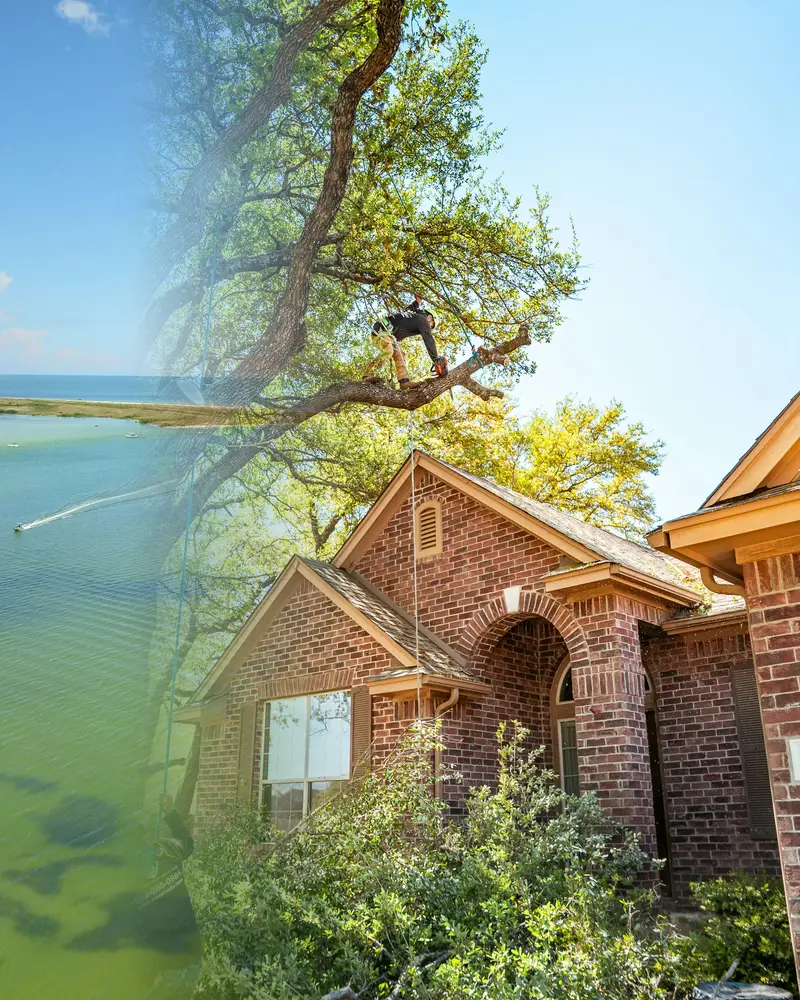
Pruning is the primary tree work in Dunedin, and it is where the value is. A mature canopy over an older house needs clearance from the roof, deadwood removed from above the areas people use, and occasional structural correction — all of which extends the tree's useful life rather than shortening it.
- Pinellas County
- Gulf coast city
- Historic residential core
What this means on Dunedin properties
Conservative is the operative word on this coast. Trees here carry Gulf exposure, and taking large amounts of live canopy off a mature specimen produces a flush of weakly attached regrowth that is worse in wind than what it replaced. Dunedin's canopy has generally been looked after; the sensible approach is continuing that rather than intervening heavily.
Narrow older streets, limited kerbside space and small lot frontages restrict where trucks and chippers can stand, and the carry distance from tree to truck is frequently the governing factor.
Dunedin is an incorporated Pinellas County city with its own municipal code provisions covering trees. Requirements can vary by property and jurisdiction. Property owners should confirm current requirements with the relevant local authority before work begins.
Common reasons to prune
Roof and porch clearance plus deadwood removal on a mature tree over an older house is best kept deliberately modest. Taking too much at once pushes the tree into stress regrowth, which creates more work later rather than less.
- Storm-torn stubs that should be cut back to a proper point rather than left ragged.
- Low growth over a driveway or footpath that catches vehicles and pedestrians.
- A canopy grown lopsided toward light, putting most of its weight on one side.
- Dieback concentrated on the exposed side of a tree rather than spread through the canopy.
- Growth over a street frontage or footpath where vehicles and pedestrians pass beneath.
Pruning versus removal
Pruning solves branch problems. It does not solve trunk problems, and it cannot make a tree fit a space that is fundamentally too small for it.
Pruning is the right tool Branch-level issues
- Clearance can be achieved by removing a limited share of the canopy.
- The problems are dead, broken, crossing or poorly placed branches.
Pruning will not fix it Whole-tree issues
- The tree's mature size is simply wrong for the position.
- Decay is in the main stem or root flare, not in the branches.
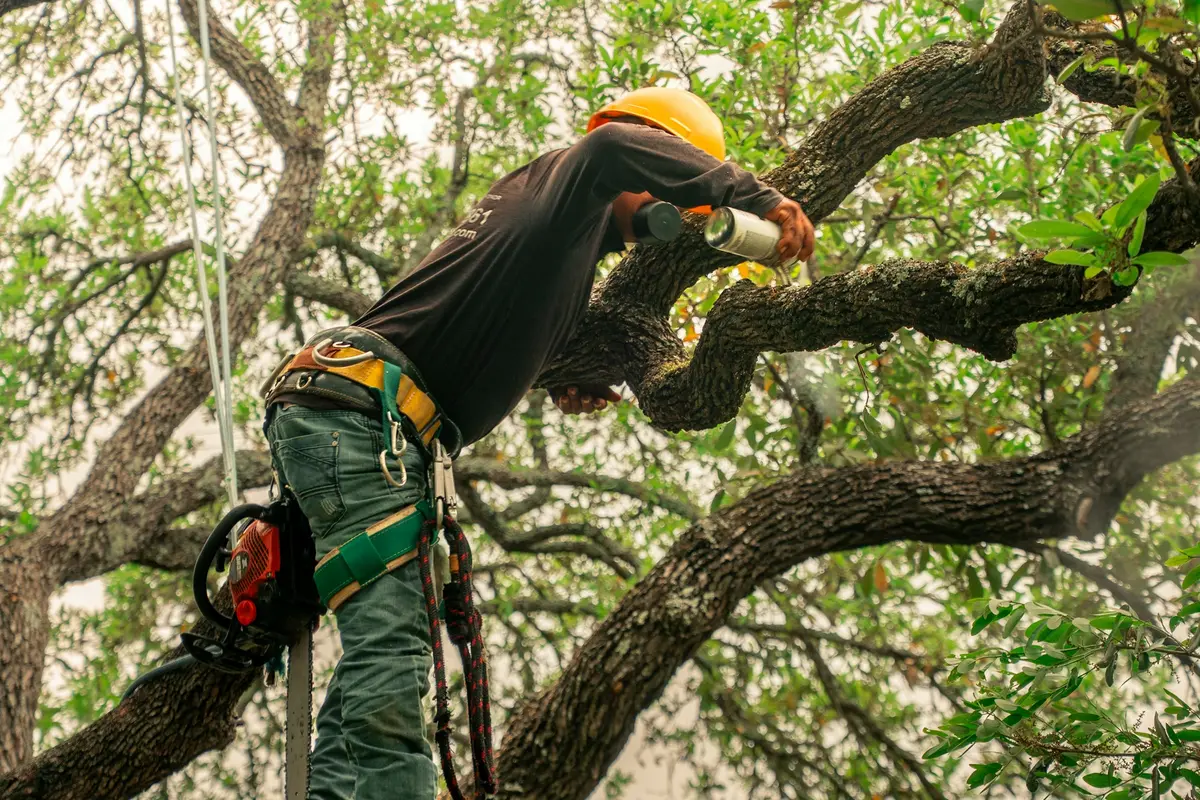
Working aloft, and why it is the risk
Stripping a canopy back hard produces a flush of weakly attached regrowth, which is exactly what fails in the next strong wind. It also removes the leaf area the tree needs. Restraint here is a safety decision as much as an arboricultural one.
Never approach, move or work near a downed or sagging power line, and do not assume a line is inactive. Keep people, pets and vehicles well clear, and report the line to your electric utility or emergency services before anyone goes near the area.
How pruning work is normally approached
- Agree the objective
Clearance, deadwood, structure or sightlines. Pruning without a stated objective is how trees end up over-cut.
- Set the limit
How much live canopy comes off is decided before cutting starts, and kept modest. Removing too much at once weakens the tree and triggers stress regrowth.
- Deadwood and hazards first
Dead, broken and hanging material is taken out before any live reduction, since that is the part with an actual safety function.
- Balance the canopy
Where weight is one-sided, reduction is spread rather than concentrated, so the tree is not left with a new imbalance.
- Clear and check
Debris removed, cuts reviewed from the ground, and any follow-up interval discussed if the work is staged.
What sets the size of a pruning job
- What is underneath — an open lawn allows dropping, a courtyard needs everything lowered.
- The volume of brush generated and how far it has to be carried to the chipper.
- How long since the last prune, since neglected canopies need more work to bring back.
- The width of the narrowest point on the route in. A side gate frequently decides which machine can be used, and machine size then decides how long the work takes.
- Whether neighbouring canopies overlap the tree being worked on — where they interlock, material cannot always fall clear and has to be lowered instead of dropped.
- Whether adjacent trees have to be protected while this one is worked, which slows rigging but is usually cheaper than repairing what gets hit.
Decide these before the visit
- Which specific branches concern you, so nothing gets missed and nothing extra gets cut.
- Where brush can be staged while the chipper works.
- Whether beds, pots or delicate plantings need protecting underneath.
- Mention anything that has changed since recent coastal weather — dieback on one side, thinning, or a lean that was not there before.
- Where kerbside space is shared or contested, letting immediate neighbours know in advance usually prevents the awkward conversation happening mid-job.
- Decide whether the objective is storm preparation or general maintenance. They lead to different work on the same tree.
Debris and cleanup
Chip can be taken away or left for use as mulch, which some property owners prefer. If you want it kept, decide where it goes before the day, since a chip pile in the wrong place is awkward to move later.
- Overlapping canopies tend to produce more brush than expected, because material caught in a neighbouring crown comes down as well as the material that was cut.
- Long-unmanaged canopies carry more accumulated deadwood than expected, so the volume coming down on a first visit is often higher than on subsequent ones.
- Where the carry is long or the route is narrow, brush is normally cut into smaller pieces than strictly necessary, because handling size matters more than trips.
Hauled away, chipped on site, or stacked in an agreed position — all three are normal, and they are different amounts of work. Whichever you want should be stated in the scope before the day rather than settled afterwards.
Tree Trimming and Pruning in Dunedin: common questions
How much can be taken off a mature tree?
Less than most people expect, and on an exposed coastal tree less still. Removing a large share of living canopy in one visit causes stress and stress regrowth. Where a big change is wanted, staging it across visits is the better route.
Is regular pruning worth it for an old tree?
Generally yes. Removing deadwood and keeping clearance from structures reduces the material likely to fall and prevents the rubbing and wounding that shortens a mature tree's life.
When is the best time to prune?
Dead, broken and hazardous material can be removed at any time. Timing for structural work depends on the species and on what you are trying to achieve, and in a subtropical climate the growing season is long, so the window is wider than in colder regions.
Can a tree be pruned to make it safer in a storm?
Selective work can reduce specific risks — removing deadwood, addressing a poorly attached limb, clearing material from directly above something that matters. What it cannot do is make a tree storm-proof, and heavy topping generally makes a tree less stable rather than more. Anyone promising a storm-proof tree is overstating what pruning does.
Several trees on the property have grown together. Is that one job or several?
Usually one, and it is generally more efficient that way. Where crowns interlock, working on one tree means moving through or protecting the others anyway, so treating them in a single visit shares the setup and the access. Whether that applies depends on whether they are reachable from the same position.
Related tree services in Dunedin
When pruning will not be enough
Where the concern is in the trunk or the root flare rather than the branches, pruning cannot resolve it. This is the comparison worth making before booking either.
Compare pruning with tree removalIf the tree looks unwell rather than overgrown
Fungal growth at the base, a cavity, dieback at the top of the canopy or a lean that has changed are condition questions, not clearance questions.
Read about hazardous tree assessmentIf it is mostly the brush you want gone
Where material is already on the ground from earlier work or a storm, hauling is a separate job from cutting.
See how debris removal is handledDiscuss Trimming Your Trees in Dunedin
Tell us what needs clearing and which limbs concern you. In Dunedin conservative, regular work does more for a mature tree than occasional heavy cutting.
- Phone: 877-269-2454
- Serving Tampa Bay, Florida
Information on this page is general guidance for property owners and managers in the Tampa Bay area. It is not an arboricultural assessment, a legal opinion, a permitting determination or an insurance decision. Tree condition and site risk can only be judged in person.