Brandon, Florida
Tree Trimming and Pruning in Brandon, FL
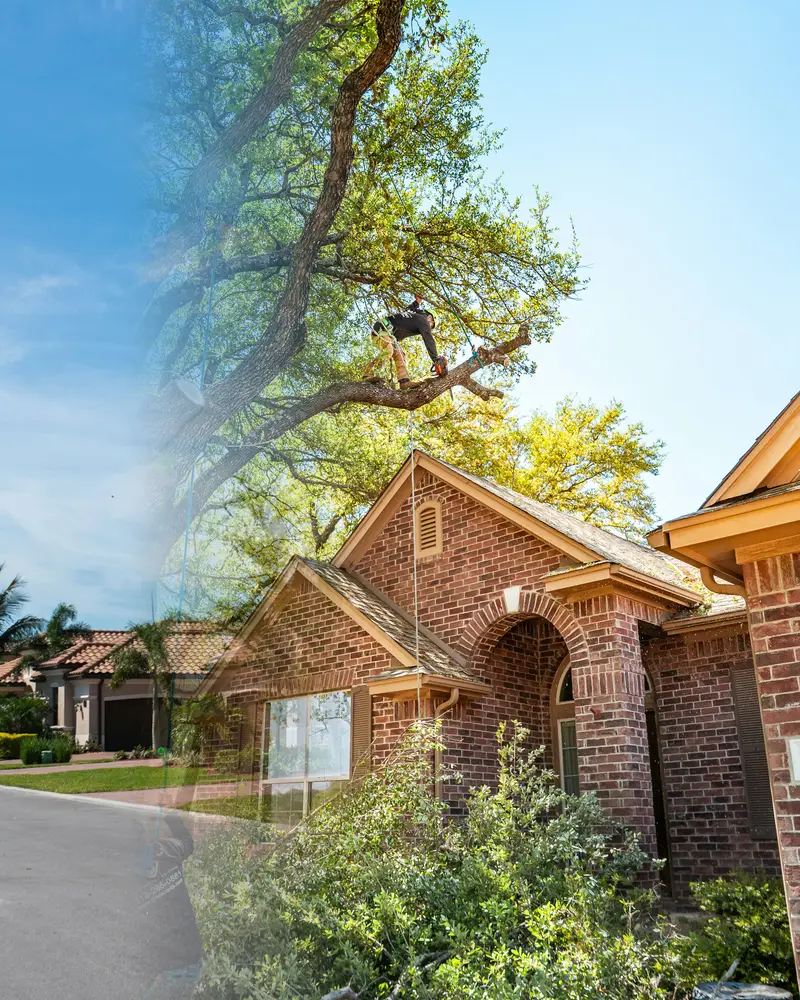
Brandon pruning is mostly clearance work on trees that have grown past their setting. Getting a canopy off a roofline, out of a gutter run and back from a pool cage covers a large share of the requests, and the recurring decision is how much clearance to take given how quickly it will close again.
- Hillsborough County
- 1970s–1990s subdivisions
- Suburban
What this means on Brandon properties
There is a maintenance history question specific to these neighbourhoods. Many trees here have been cut back repeatedly over decades, sometimes badly, and a canopy of weakly attached regrowth from previous heavy cutting needs a different approach than a tree that has been left alone. The work becomes about reducing that risk gradually rather than restoring a form that is no longer achievable.
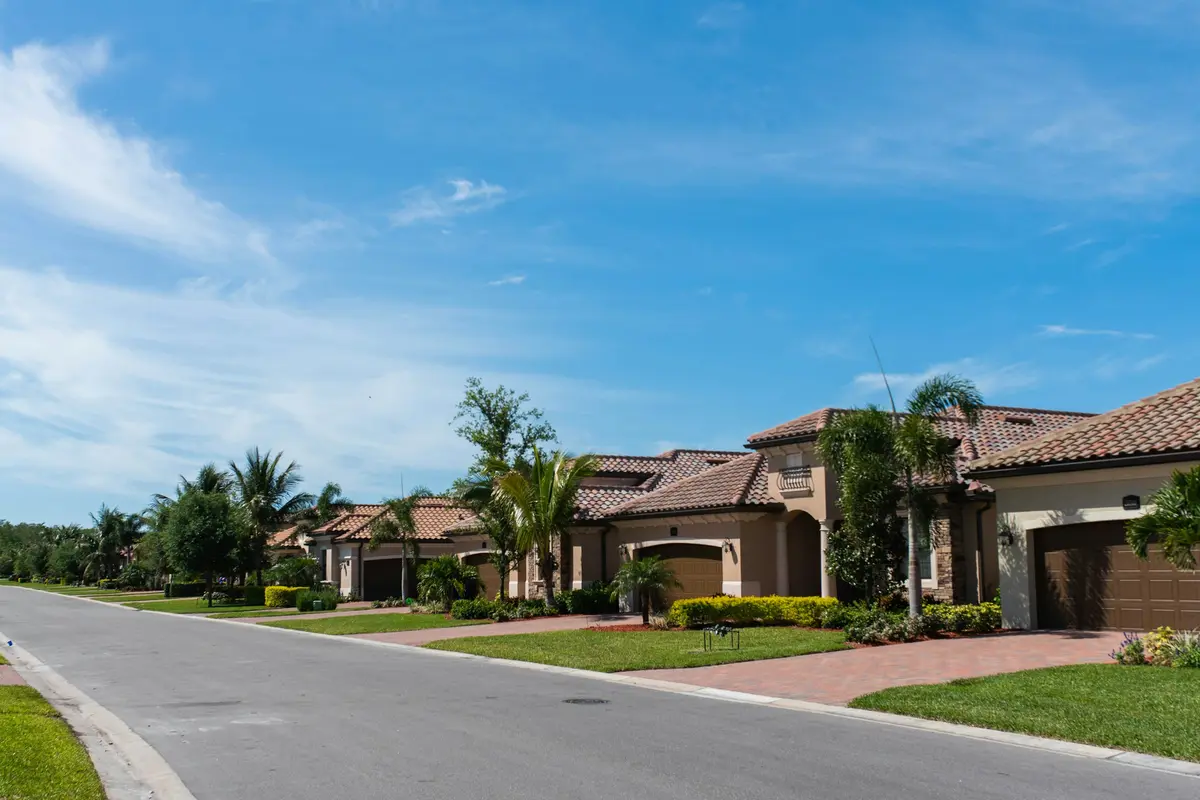
Brandon is a large unincorporated community east of Tampa, built out mainly as suburban subdivisions along and around the SR 60 corridor rather than as a single planned centre.
Brandon is unincorporated, so Hillsborough County provisions apply rather than a city code. Requirements can vary by property and jurisdiction. Property owners should confirm current requirements with the relevant local authority before work begins.
Common reasons to prune
Where a mature oak has been topped once already, the regrowth is a dense mass of vertical shoots, heavier and more poorly attached than it looks. Roof and gutter clearance on that tree is a different job from clearance on one that has never been topped.
- A canopy grown lopsided toward light, putting most of its weight on one side.
- Sprouts and suckers from the base or along the main stem taking energy from the canopy.
- A young tree with two competing leaders that will become a weak union later.
- Growth closing in over a narrow side route that is the only way in or out.
- Dead material held aloft in an interlocking canopy rather than falling clear, above areas that are in daily use.
Pruning versus removal
Pruning solves branch problems. It does not solve trunk problems, and it cannot make a tree fit a space that is fundamentally too small for it.
Pruning is the right tool Branch-level issues
- The trunk and root flare are sound.
- Clearance can be achieved by removing a limited share of the canopy.
Pruning will not fix it Whole-tree issues
- Repeated heavy cutting has already left a canopy of weakly attached regrowth.
- Decay is in the main stem or root flare, not in the branches.
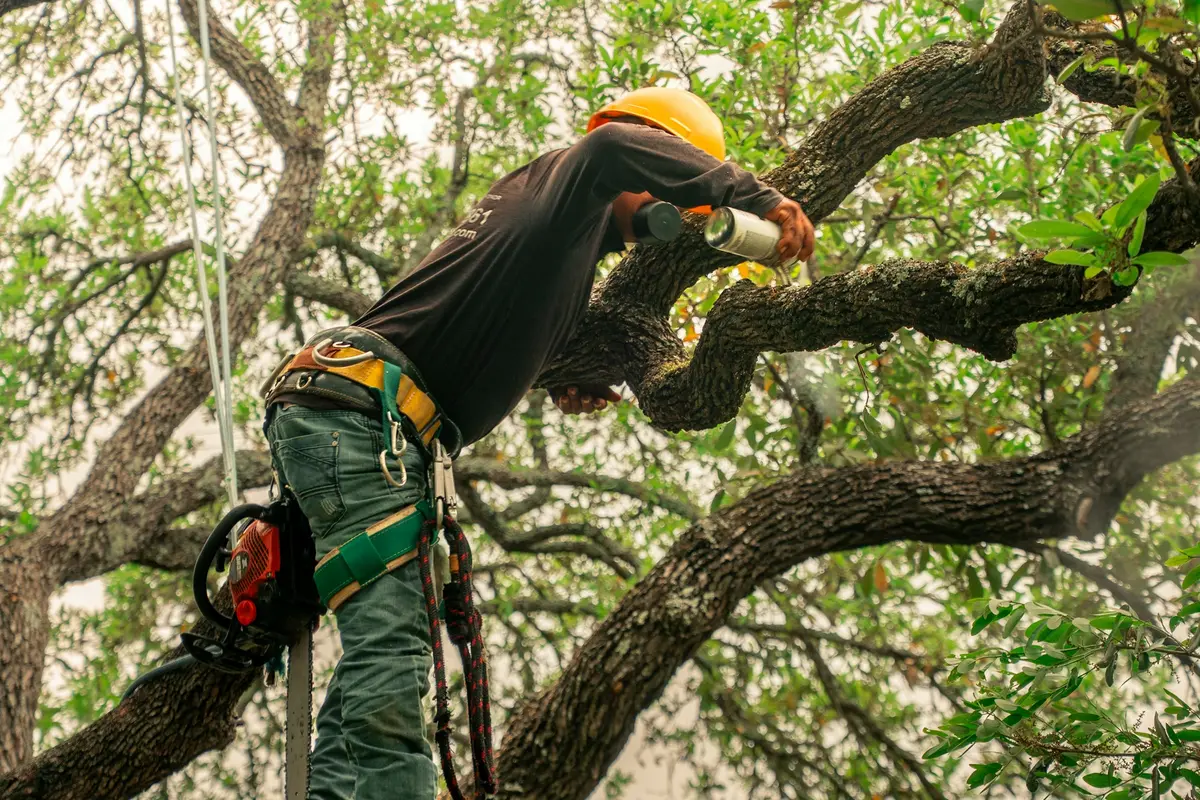
Working aloft, and why it is the risk
Stripping a canopy back hard produces a flush of weakly attached regrowth, which is exactly what fails in the next strong wind. It also removes the leaf area the tree needs. Restraint here is a safety decision as much as an arboricultural one.
Never approach, move or work near a downed or sagging power line, and do not assume a line is inactive. Keep people, pets and vehicles well clear, and report the line to your electric utility or emergency services before anyone goes near the area.
How pruning work is normally approached
- Agree the objective
Clearance, deadwood, structure or sightlines. Pruning without a stated objective is how trees end up over-cut.
- Set the limit
How much live canopy comes off is decided before cutting starts, and kept modest. Removing too much at once weakens the tree and triggers stress regrowth.
- Work to the branch collar
Cuts are made at the right point so the wound can close properly, rather than leaving stubs or cutting flush into the stem.
- Deadwood and hazards first
Dead, broken and hanging material is taken out before any live reduction, since that is the part with an actual safety function.
- Clear and check
Debris removed, cuts reviewed from the ground, and any follow-up interval discussed if the work is staged.
What sets the size of a pruning job
- Species growth habit, which affects both cut placement and how fast it will regrow.
- The volume of brush generated and how far it has to be carried to the chipper.
- Canopy size and the number of cuts needed to meet the objective.
- Whether material can be dropped at all, or whether every piece has to be rigged and lowered into a small space — the difference between those two is substantial.
- Whether the canopy can be reached from one setup or needs repositioning. Overlapping crowns frequently mean several climbing or lifting positions for a single tree.
- Whether neighbouring canopies overlap the tree being worked on — where they interlock, material cannot always fall clear and has to be lowered instead of dropped.
Decide these before the visit
- Whether beds, pots or delicate plantings need protecting underneath.
- Whether any part of the canopy crosses a boundary.
- Whether you want the same trees revisited on a cycle or looked at once.
- Note anything fixed on the route — an air-conditioning unit, meter box, irrigation head or low wall — that cannot simply be stepped over.
- Decide whether you want the work confined to one tree or the overlapping canopies looked at together — treating them separately can mean returning to reach the same area twice.
- Decide whether vehicles can be moved off the driveway for the day, and whether a gate or side access can be unlocked and left open.
Debris and cleanup
Chip can be taken away or left for use as mulch, which some property owners prefer. If you want it kept, decide where it goes before the day, since a chip pile in the wrong place is awkward to move later.
- Where a crown extends over a boundary, agree in advance which side brush will be brought down to — dragging it back under the tree is often the slower option.
- Long-unmanaged canopies carry more accumulated deadwood than expected, so the volume coming down on a first visit is often higher than on subsequent ones.
- Overlapping canopies tend to produce more brush than expected, because material caught in a neighbouring crown comes down as well as the material that was cut.
Hauled away, chipped on site, or stacked in an agreed position — all three are normal, and they are different amounts of work. Whichever you want should be stated in the scope before the day rather than settled afterwards.
Tree Trimming and Pruning in Brandon: common questions
My tree was topped years ago. What can be done now?
Not a restoration to its original form, but the risk can be reduced. The regrowth from topping is weakly attached and often overloaded, so the work is about thinning that load gradually over more than one visit rather than cutting hard again.
How much roof clearance is sensible?
Enough that nothing touches in wind, plus room for a season or two of growth. Asking for the bare minimum means asking again soon; asking for a great deal means removing more live canopy than the tree should lose at once.
Is topping ever appropriate?
Cutting a canopy back to stubs is widely regarded as poor practice. It creates large wounds, produces weakly attached regrowth and generally leaves a tree less able to handle wind, not more. Reduction to appropriate lateral branches is the alternative.
Can dead limbs high in a dense canopy be seen from the ground?
Often not reliably. Under a heavy interlocking crown, dead material thirty or forty feet up is genuinely difficult to identify from below, and it tends to be held in place rather than falling clear. That is a reasonable reason to have someone look rather than to guess.
How much room does a crew actually need?
Less than most people expect for the cutting and more than most people expect for the material. The working area around the tree matters, but so does somewhere to put what comes down and a route to move it. Describing both when you call gets you a more useful answer than describing the tree alone.
Related tree services in Brandon
When pruning will not be enough
Where the concern is in the trunk or the root flare rather than the branches, pruning cannot resolve it. This is the comparison worth making before booking either.
Compare pruning with tree removalIf the tree looks unwell rather than overgrown
Fungal growth at the base, a cavity, dieback at the top of the canopy or a lean that has changed are condition questions, not clearance questions.
Read about hazardous tree assessmentIf it is mostly the brush you want gone
Where material is already on the ground from earlier work or a storm, hauling is a separate job from cutting.
See how debris removal is handledDiscuss Trimming Your Trees in Brandon
Tell us which branches concern you and whether the tree has been cut back before. In Brandon the maintenance history usually shapes what is sensible now.
- Phone: 877-269-2454
- Serving Tampa Bay, Florida
Information on this page is general guidance for property owners and managers in the Tampa Bay area. It is not an arboricultural assessment, a legal opinion, a permitting determination or an insurance decision. Tree condition and site risk can only be judged in person.