St. Petersburg, Florida
Tree Debris Removal and Hauling in St. Petersburg, FL
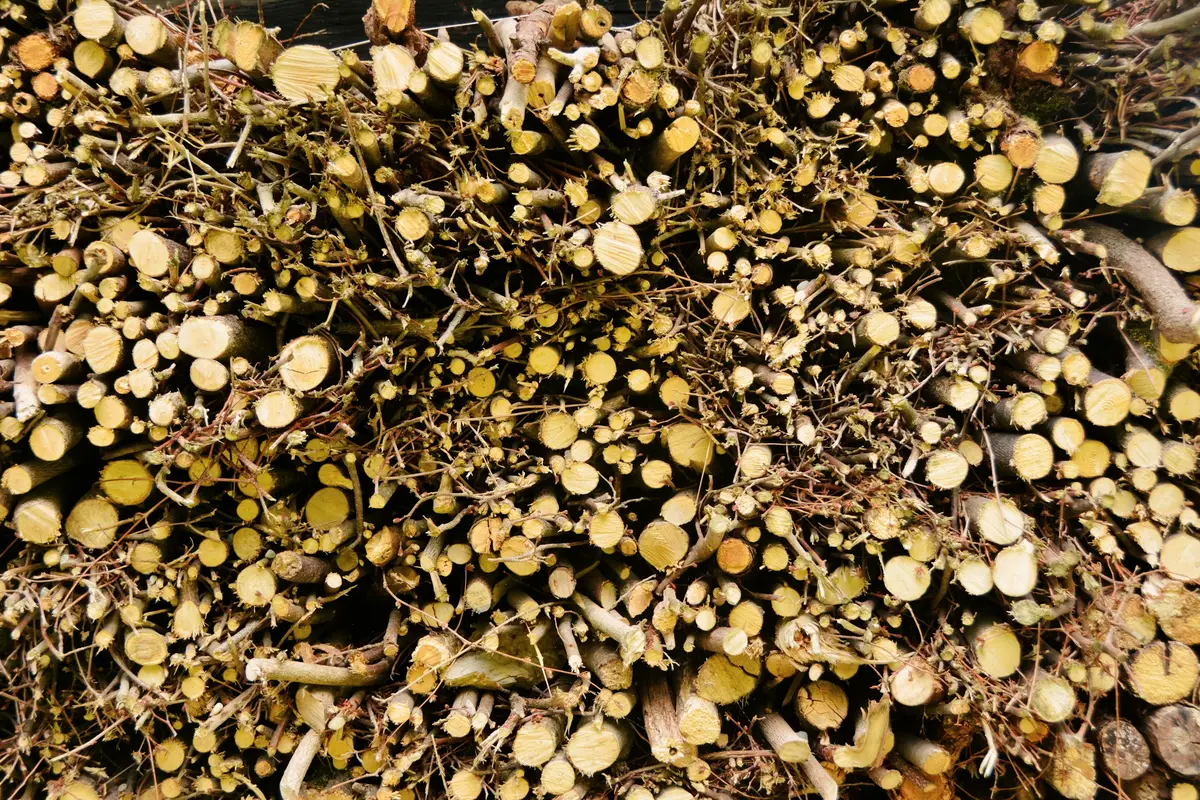
Most debris calls here are about material that has stopped moving — a storm pile the programme did not take, or brush stacked in an alley that has since settled, tangled and been grown through. What determines the job is the mix and the carry, not the height of the pile.
- Pinellas County
- Coastal exposure
- Peninsula city
What this means on St. Petersburg properties
St. Petersburg runs its own collection arrangements, separate from unincorporated Pinellas County, and publishes temporary instructions after significant events. Because alley-served blocks are common here, where a pile sits matters as much as what is in it: an alley pile blocks access for several properties, which changes how urgent removing it becomes.
St. Petersburg occupies the lower Pinellas peninsula with Tampa Bay on one side and the Gulf approaches on the other, which means a large share of the city is within a few miles of open water in at least one direction.
St. Petersburg is an incorporated Pinellas County city administering its own code provisions for trees. Requirements can vary by property and jurisdiction. Property owners should confirm current requirements with the relevant local authority before work begins.
Situations this covers
A pile in an alley mixing woody material with fence panels and general yard waste is frequently left by collection programmes because of the contamination. Separating it is normally what makes it removable.
- Cleared vegetation from a lot that needs to go before the next trade starts.
- A pile that has become a harbourage concern close to a building.
- Storm material staged at a kerb that now needs removing privately.
- A tree that has reached the roofline or the fence line decades after being planted for a smaller space.
- Growth over a street frontage or footpath where vehicles and pedestrians pass beneath.
What determines how a haul-out runs
- Whether the property has to stay usable while loading is in progress.
- Whether material is stacked and reachable or tangled and buried.
- Whether a chipper can be positioned near the material or has to stay at the kerb.
- Whether the route runs through a gate, a side path or across turf.
- Whether the pile is loose brush, cut rounds, or a mixed heap of both.
Is this a hauling job, or does something still need cutting?
This service moves material that is already on the ground. If anything is still standing, still suspended or still holding load, that is tree work first and hauling afterwards — and the two are priced and planned differently.
A haul-away job Already down and safe to handle
- Chip or rounds left on site from earlier work.
- Material another contractor cut and left behind.
Needs cutting before hauling Still loaded or still standing
- A trunk still bearing on a fence, structure or vehicle.
- Sections too large to move without being cut down further first.
Handling a settled pile safely
Fence panels, wire, soil, rubble and treated timber in a woody pile change how it must be handled and where it can legally go. Identifying that beforehand avoids a part-loaded truck and a second visit, and keeps sharp material out of the loading process.
Never approach, move or work near a downed or sagging power line, and do not assume a line is inactive. Keep people, pets and vehicles well clear, and report the line to your electric utility or emergency services before anyone goes near the area.
How a haul-out is normally handled
- Sight the pile
Volume from a photograph is unreliable — piles compress and tangle. Where possible the material is looked at, or described in terms of area and height rather than 'a few branches'.
- Separate woody from non-woody
Soil, rubble, fencing, wire and general waste change what can be done with the load, and are best identified before the truck arrives.
- Plan the carry
Where the truck and chipper stand, and how material travels from pile to truck, is the main determinant of how long the job takes.
- Protect the route
Turf, paving and irrigation along the carry path are considered before repeated trips start wearing a track into them.
- Clear the ground
The footprint of the pile is raked and blown down, since a long-standing pile leaves a mat of decomposed material behind it.
What sets the size of a debris job
- Access width and whether a chipper can get close.
- Whether the work has to fit around site operations or trading hours.
- How long the material has been there and how tangled it has become.
- Overhead clearance along the approach as well as above the tree — a route that works at ground level does not always work with a chipper behind a truck.
- Where the truck and chipper can legally and practically stand. On narrow older streets that position, rather than the tree, often sets the shape of the day.
- Whether material can be dropped at all, or whether every piece has to be rigged and lowered into a small space — the difference between those two is substantial.
Debris and cleanup
Volume is almost always underestimated. A pile that looks like one truckload from the driveway frequently turns out to be two or three once it is pulled apart, because branch material interlocks and hides its own depth.
- Where an alley is the only route, material is loaded as it comes down rather than staged, because there is usually nowhere to stage it.
- On ground that holds water, staging is normally kept to firm surfaces such as a drive or path rather than lawn, which sometimes lengthens the carry.
- Where the carry is long or the route is narrow, brush is normally cut into smaller pieces than strictly necessary, because handling size matters more than trips.
Hauled away, chipped on site, or stacked in an agreed position — all three are normal, and they are different amounts of work. Whichever you want should be stated in the scope before the day rather than settled afterwards.
Makes the visit quicker
- Estimate the footprint in feet and the height at the tallest point.
- Confirm where a truck can park without blocking access.
- Clear the carry route of vehicles, furniture and obstacles.
- Where kerbside space is shared or contested, letting immediate neighbours know in advance usually prevents the awkward conversation happening mid-job.
- If the tree has not been worked on for some years, say so. The first visit after a long gap is usually a bigger job than the ones that follow, and it is better to know that upfront.
- Note whether anything nearby has been removed or thinned recently — a tree that was sheltered and is now exposed is worth flagging.
Tree Debris Removal and Hauling in St. Petersburg: common questions
The city has not collected my pile. Why?
Mixed material is the usual reason — soil, fencing, wire, treated timber and general waste all change how a load can be handled. Check the current instructions for your address, and if the pile has been passed over, a private haul-out is normally the practical route.
Can you collect from the alley?
Usually, if it is passable. Alley width and condition vary considerably across the city grid, so a quick description of yours helps us arrive with the right vehicle.
What if the pile has been there a long time?
Older piles are usually more work, not less. Material settles and interlocks, vegetation grows through it, and there is often a decomposed mat underneath that needs clearing separately.
There is no vehicle access to the back garden. Does that stop the work?
No, but it changes how it is done and how long it takes. Material comes out along whatever route exists, usually in smaller sections and by hand. Where a fence panel or a gate post can come out temporarily, that is sometimes faster overall — worth raising rather than assuming either way.
There is nowhere obvious to park a truck. Is that a problem?
It is a planning question rather than a blocker. What matters is whether a chipper can be positioned within a workable carry of the tree, and whether that position can be held for the day. Tell us what the street is like when you call and it can be worked out beforehand rather than on arrival.
Related tree services in St. Petersburg
If the pile came from a storm
Material still suspended in a canopy matters more than the pile at ground level.
Read about storm damage responseIf a stump is part of it
Grinding spoil is a separate volume from brush and trunk wood.
Read about stump grindingIf it is an area rather than a pile
Larger volumes across a parcel are scoped by area rather than by load.
Read about land and lot clearingArrange Debris Removal in St. Petersburg
Give us the footprint, the height, roughly how much is heavy wood and whether anything non-woody is mixed through it. A photo with something for scale is worth more than a load estimate.
- Phone: 877-269-2454
- Serving Tampa Bay, Florida
Information on this page is general guidance for property owners and managers in the Tampa Bay area. It is not an arboricultural assessment, a legal opinion, a permitting determination or an insurance decision. Tree condition and site risk can only be judged in person.