St. Petersburg, Florida
Storm and Hurricane Damage Tree Removal in St. Petersburg, FL
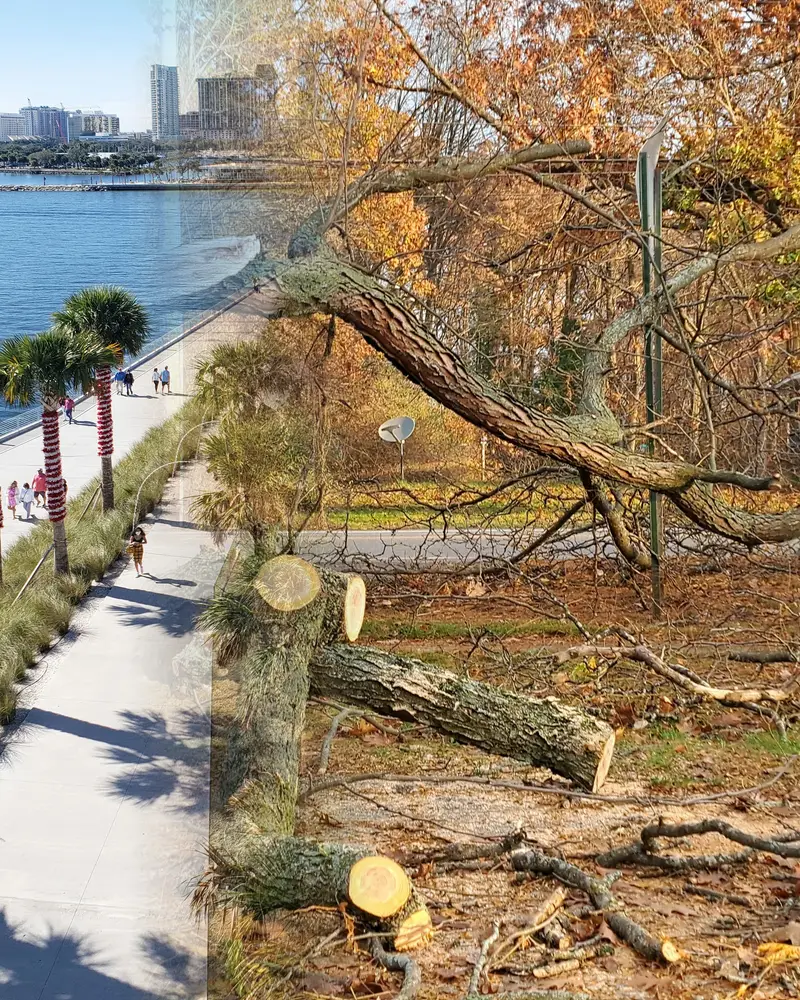
The damage that matters most after a storm here is often not on the ground. Trees left standing on a peninsula that has just lost part of its canopy are carrying wind they never carried before, and a tree that came through one system untouched can be the first to fail in the next.
- Pinellas County
- Coastal exposure
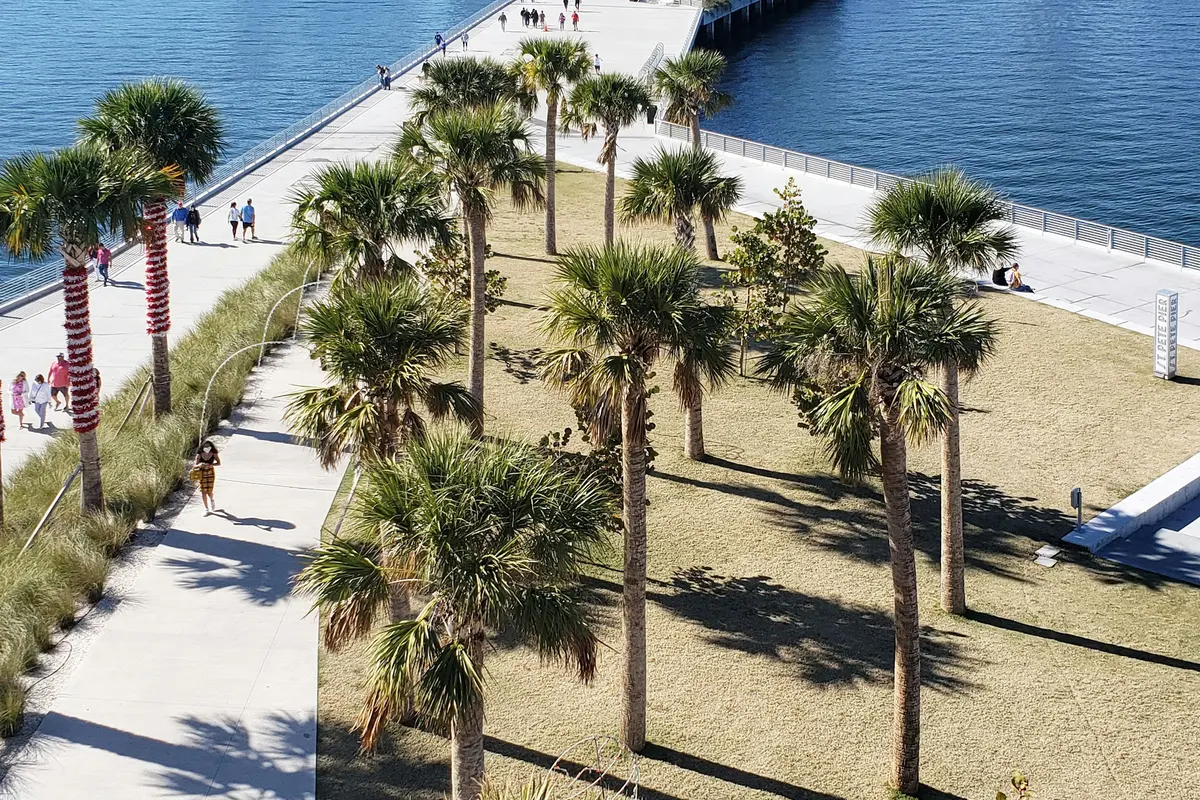
- Peninsula city
If the tree is threatening people, an occupied building or your only access, call straight away rather than waiting.
What this means on St. Petersburg properties
Neighbourhood canopy across St. Petersburg works as a group. Adjacent trees shelter each other, and when one is removed or badly damaged the rest are suddenly exposed on that side. That is why a post-storm walk here should cover the whole property rather than only the tree that visibly failed — the change in exposure is the real legacy of the event.
Alley access is common in the older grid, which sometimes helps and sometimes hurts — a rear alley can be the only way in, or it can be too narrow and too congested to use at all.
St. Petersburg is an incorporated Pinellas County city administering its own code provisions for trees. Requirements can vary by property and jurisdiction. Property owners should confirm current requirements with the relevant local authority before work begins.
Before anyone goes near it
Most storm-related tree injuries happen during cleanup rather than during the storm. Partly detached limbs settle, saturated root plates keep moving, and cut material under tension springs. Treat the property as an active hazard zone until damaged trees have been dealt with, not just until the rain stops.
Never approach, move or work near a downed or sagging power line, and do not assume a line is inactive. Keep people, pets and vehicles well clear, and report the line to your electric utility or emergency services before anyone goes near the area.
What to look for after the wind drops
After a storm the trees worth looking at are often the ones still standing, particularly any now exposed on the windward side with unions that were never tested because something else was taking the load.
- Torn limbs still caught in the canopy, sometimes called hangers, which can drop long after the storm passes.
- Branch stubs torn rather than cut, which decay differently and can fail again at the same point.
- Trees that were sheltered by a neighbour's tree which has now gone, leaving them newly exposed.
- Ground at the base that has been under water, or has stayed saturated after rain.
- Growth over a street frontage or footpath where vehicles and pedestrians pass beneath.
After a storm: what to deal with now and what can wait
The days after a storm are more dangerous than the storm itself, largely because attention goes to the biggest pile rather than to what is still overhead. Sequencing matters more than speed.
Can wait for a scheduled visit On the ground, going nowhere
- Brush and limb debris lying on lawn, away from paths and drives.
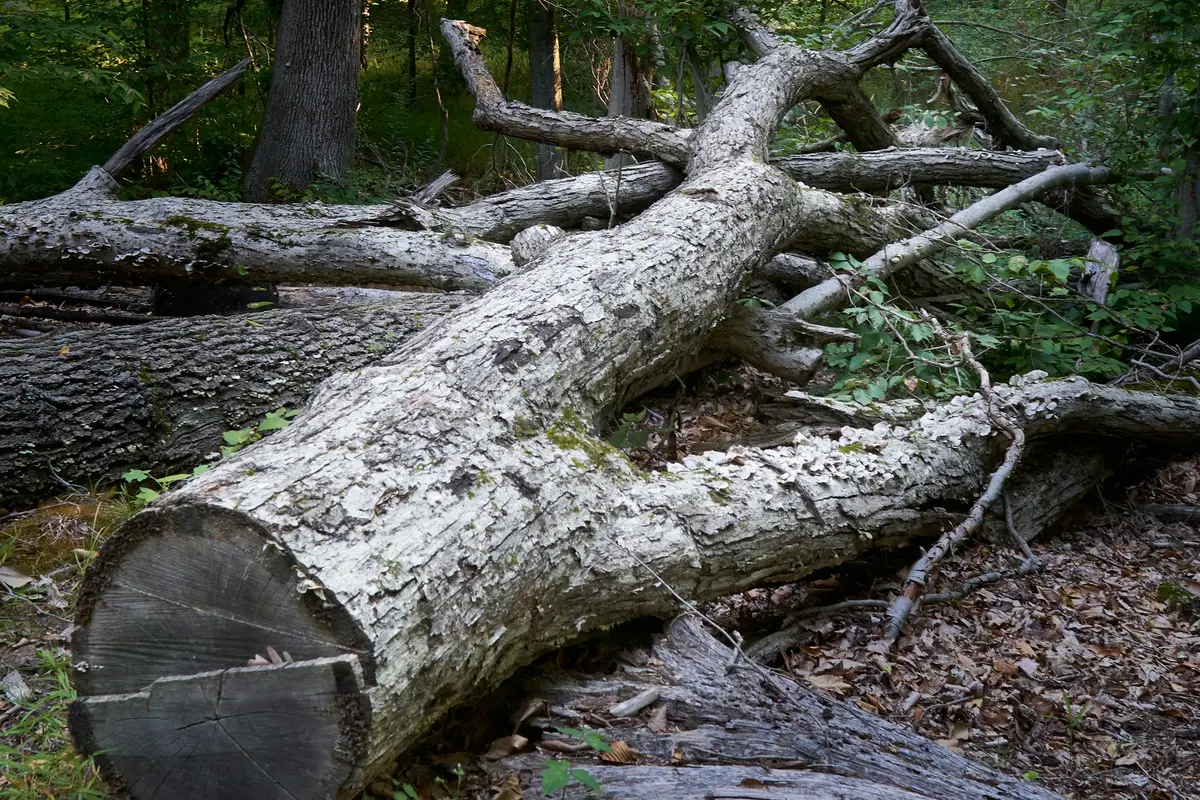
- A tree already fully down in open ground with no tension in it.
Deal with first Still loaded or still overhead
- A split stem or a union that has opened but not failed completely.
- Any tree that is standing at a different angle than it was before the storm.
How post-storm work is usually sequenced
- Triage by risk, not by size
The largest pile of debris is rarely the most dangerous thing on a property. Suspended limbs and destabilised trunks come before ground-level brush.
- Confirm utilities and access
Lines, meters and blocked routes are identified first. Nothing starts around a line that has not been confirmed safe by the utility.
- Remove suspended material
Hangers and partly detached limbs are brought down under control, since these are the pieces most likely to fall on someone during cleanup.
- Reassess what is left standing
Surviving trees are looked at again with the storm's effects in mind, because exposure and load have changed across the whole property.
- Stage and clear debris
Material is cut down to manageable sizes and either hauled or staged where it does not block drainage, driveways or collection access.
Worth doing before the crew arrives
- Photograph the damage from safe positions, including wide shots that show where the tree sat.
- Check current instructions from your city or county about debris placement, which change after major events.
- Note the date and the storm, since that context matters for your own records.
- Where kerbside space is shared or contested, letting immediate neighbours know in advance usually prevents the awkward conversation happening mid-job.
- Note whether anything nearby has been removed or thinned recently — a tree that was sheltered and is now exposed is worth flagging.
- If the tree has not been worked on for some years, say so. The first visit after a long gap is usually a bigger job than the ones that follow, and it is better to know that upfront.
What drives the size of a storm job
- Whether neighbouring properties are involved and who is responsible for what.
- Whether material has to leave the site or can be staged for a later collection.
- Whether the same site has repeat exposure that should shape what is planted or retained.
- Whether the ground around the root plate has been saturated recently, which affects both stability and what can be driven across the site.
- Whether machinery can reach the working position without leaving ruts that outlast the tree work.
- Whether the tree has outgrown the space it was planted in. Landscape trees chosen for a new plot frequently reach the roofline and the fence line decades later, and that is a different problem from a defect.
Debris and cleanup
Where a property is going to need more than one visit, it is usually better to remove the hazardous and structural material first and let lighter brush wait, rather than clearing the easy volume and leaving suspended limbs overhead.
- Where the vehicle has to stand away from the property, everything is carried to it, so the distance between the tree and the kerb is a real part of the cleanup time.
- Trunk wood is cut to a size the access will take rather than to the largest size the machine could handle.
- On ground that holds water, staging is normally kept to firm surfaces such as a drive or path rather than lawn, which sometimes lengthens the carry.
Hauled away, chipped on site, or stacked in an agreed position — all three are normal, and they are different amounts of work. Whichever you want should be stated in the scope before the day rather than settled afterwards.
Storm and Hurricane Damage Tree Removal in St. Petersburg: common questions
Where does storm debris go in St. Petersburg?
The city administers its own collection arrangements, separate from unincorporated Pinellas County, and issues temporary instructions after significant events. Check the current guidance for your address, and keep material clear of drains, hydrants, meters and low lines.
My trees look untouched. Is an inspection worth it?
It can be, particularly if a neighbouring tree came down. Exposure across a block changes when canopy is lost, and the trees that benefit most from a look are often the ones that appear fine.
Can debris just go to the kerb?
Sometimes, and the rules are not the same everywhere. Cities and counties in the Tampa Bay area run different collection programmes, and after a major storm they often publish temporary instructions. Check the current guidance for your address before building a pile.
How much room does a crew actually need?
Less than most people expect for the cutting and more than most people expect for the material. The working area around the tree matters, but so does somewhere to put what comes down and a route to move it. Describing both when you call gets you a more useful answer than describing the tree alone.
There is nowhere obvious to park a truck. Is that a problem?
It is a planning question rather than a blocker. What matters is whether a chipper can be positioned within a workable carry of the tree, and whether that position can be held for the day. Tell us what the street is like when you call and it can be worked out beforehand rather than on arrival.
Related tree services in St. Petersburg
For a tree already on the ground
Load and tension have to be read before anything is cut, particularly where the canopy is resting on a structure.
Read about fallen tree clearingFor trees left standing afterwards
A tree that moved but did not fall is the one most often overlooked in the clean-up.
Read about hazardous tree assessmentFor the material left behind
Post-storm piles are usually two or three loads rather than one once they are pulled apart.
See how debris hauling worksAsk About Storm-Damaged Tree Removal in St. Petersburg
Tell us what came down and what is still standing near it. On the peninsula, the trees worth attention after a storm are frequently the ones that did not visibly move.
- Phone: 877-269-2454
- Serving Tampa Bay, Florida
Information on this page is general guidance for property owners and managers in the Tampa Bay area. It is not an arboricultural assessment, a legal opinion, a permitting determination or an insurance decision. Tree condition and site risk can only be judged in person.