Riverview, Florida
Storm and Hurricane Damage Tree Removal in Riverview, FL
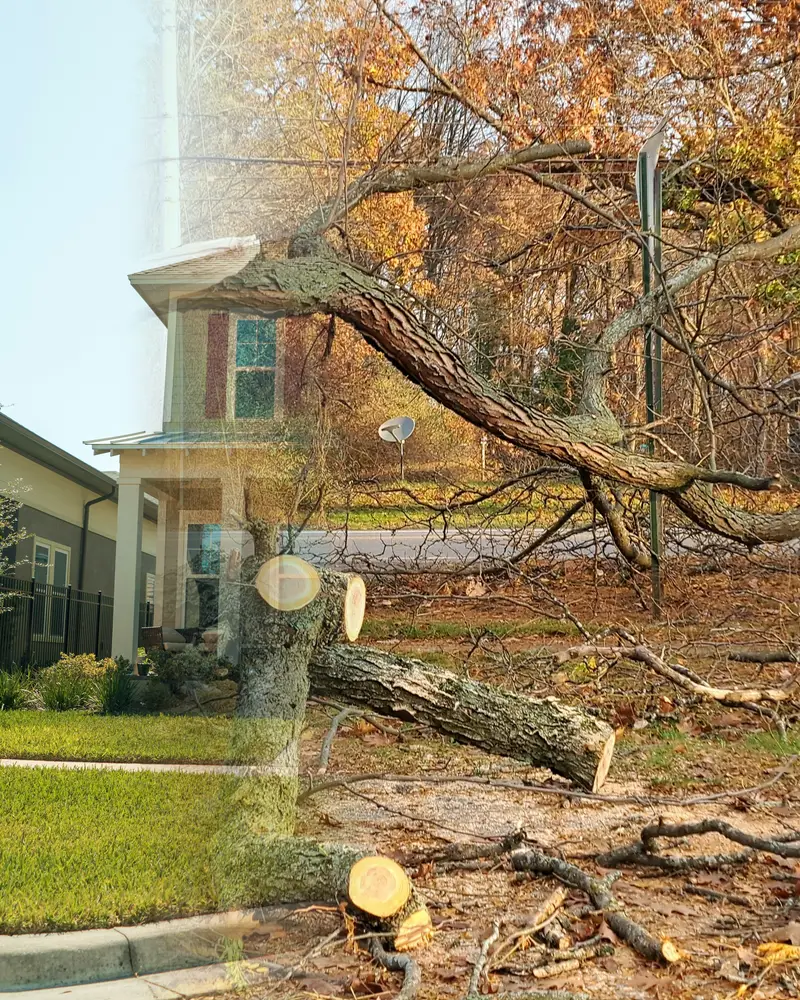
Riverview shows two storm damage patterns side by side. In the newer communities the trees are young and the damage is mostly to planted stock and fencing. On the older parcels between and around them, mature growth that has never been managed produces the genuinely hazardous failures — split unions, hangers and lifted root plates.
- Hillsborough County
- Alafia River corridor
- Rapid growth
If the tree is threatening people, an occupied building or your only access, call straight away rather than waiting.
Before anyone goes near it
Storms bring lines down onto fences, canopies and driveways where they are easy to miss under debris. Do not move branches that might be lying across a conductor, and do not let anyone drag brush from a pile that touches a line. Report it and keep the area clear until the utility has confirmed it is safe.
Never approach, move or work near a downed or sagging power line, and do not assume a line is inactive. Keep people, pets and vehicles well clear, and report the line to your electric utility or emergency services before anyone goes near the area.
What this means on Riverview properties
Water is the common factor. Extended rainfall through a storm event leaves ground here soft for days, which both destabilises root plates and prevents machinery from getting where it needs to be. That combination means post-storm work in Riverview frequently has to be sequenced around ground conditions rather than purely around priority.
The contrast is unusually sharp here: recently built communities with young planting on small lots, next to long-held properties carrying substantial mature trees and, in places, unmanaged understorey along parcel edges.
Riverview is unincorporated, placing it under Hillsborough County provisions. Requirements can vary by property and jurisdiction. Property owners should confirm current requirements with the relevant local authority before work begins.

What to look for after the wind drops
Where a newer home adjoins an older parcel, the more significant risk after a storm is often the large unmanaged tree on the neighbouring land rather than the young planting on your own.
- Whole sections of canopy missing from one side, leaving the tree badly unbalanced.
- Palms with a bent or kinked trunk, or a crown that has lost most of its fronds on one side.
- A fresh lean, or a trunk that no longer lines up with a fence post, wall or path it used to parallel.
- Ground at the base that has been under water, or has stayed saturated after rain.
- Ground at the base that has stayed soft, limiting what can be driven anywhere near the tree.
After a storm: what to deal with now and what can wait
The days after a storm are more dangerous than the storm itself, largely because attention goes to the biggest pile rather than to what is still overhead. Sequencing matters more than speed.
Can wait for a scheduled visit On the ground, going nowhere
- Cosmetic canopy damage on trees whose bases have not moved.
- Fence damage where no tree is still bearing on the panels.
Deal with first Still loaded or still overhead
- A split stem or a union that has opened but not failed completely.
- Material bearing on a roof, cage, carport or vehicle.
How post-storm work is usually sequenced
- Triage by risk, not by size
The largest pile of debris is rarely the most dangerous thing on a property. Suspended limbs and destabilised trunks come before ground-level brush.
- Document visible damage
Photographs taken from safe positions before anything is moved are useful for your own records and for any conversation you have with an insurer.
- Remove suspended material
Hangers and partly detached limbs are brought down under control, since these are the pieces most likely to fall on someone during cleanup.
- Deal with destabilised trunks
Trees with root movement or major splits are taken down or reduced rather than left to a second weather system.
- Stage and clear debris
Material is cut down to manageable sizes and either hauled or staged where it does not block drainage, driveways or collection access.
Worth doing before the crew arrives
- Flag anything buried under debris — irrigation heads, low walls, septic lids, landscape lighting.
- List every affected tree, not only the obvious one, so nothing suspended is missed.
- Identify where a truck and chipper can get in, including any route the storm has blocked.
- Measure the narrowest gate or gap on the route to the tree and have that figure ready. It answers more questions than almost anything else you can tell us.
- Locate anything buried across the approach — septic field, well, irrigation line, soakaway — before machinery crosses it. Undocumented systems are common and expensive to find the hard way.
- Mention any construction, trenching, paving or grade change near the tree in recent years, even if it looked harmless at the time. Root damage shows up slowly.
What drives the size of a storm job
- Whether material has to leave the site or can be staged for a later collection.
- Whether debris is on structures, vehicles, pools or fences rather than open lawn.
- The mix of hardwood trunk sections and light brush, which handle very differently.
- The width of the narrowest point on the route in. A side gate frequently decides which machine can be used, and machine size then decides how long the work takes.
- Whether machinery can reach the working position without leaving ruts that outlast the tree work.
- Whether there is a genuine drop zone. Open ground is the one thing that makes tree work straightforward, and where it exists the method changes completely.
Debris and cleanup
If material is going to the kerb for municipal collection rather than being hauled, placement matters: clear of drains, hydrants, meters and mailboxes, and not under low lines. Collection rules and timelines differ between cities and counties and change after major events, so confirm the current instruction locally before building a pile.
- On ground that holds water, staging is normally kept to firm surfaces such as a drive or path rather than lawn, which sometimes lengthens the carry.
- Where the carry is long or the route is narrow, brush is normally cut into smaller pieces than strictly necessary, because handling size matters more than trips.
- Larger parcels usually allow material to be staged near the working area, so the carry is short and the loading happens in one place.
Hauled away, chipped on site, or stacked in an agreed position — all three are normal, and they are different amounts of work. Whichever you want should be stated in the scope before the day rather than settled afterwards.
Storm and Hurricane Damage Tree Removal in Riverview: common questions
Where does storm debris go in Riverview?
Riverview is unincorporated, so Hillsborough County arrangements apply rather than a city programme, and temporary instructions are commonly published after major events. Confirm the current guidance for your address before building a pile.
The tree is on the older lot next door. What can I do?
You can raise it with the owner, and where there is an immediate hazard that conversation is worth having promptly. What can be done from your side depends on where the trunk stands and on local rules, and it is better resolved before an incident than after.
How soon after a storm should trees be looked at?
As soon as it is safe to walk the property. The urgent items are suspended limbs and any tree whose base has moved. Cosmetic damage can wait; a hanger over a walkway cannot.
There is no vehicle access to the back garden. Does that stop the work?
No, but it changes how it is done and how long it takes. Material comes out along whatever route exists, usually in smaller sections and by hand. Where a fence panel or a gate post can come out temporarily, that is sometimes faster overall — worth raising rather than assuming either way.
The ground is soft where the tree is. Does the work have to wait?
Sometimes, and it is usually better than the alternative. Driving heavy equipment over saturated ground leaves damage that outlasts the tree work. Where waiting is not practical, the method shifts toward smaller equipment and more hand carrying, which takes longer but leaves the ground intact.
Related tree services in Riverview
For a tree already on the ground
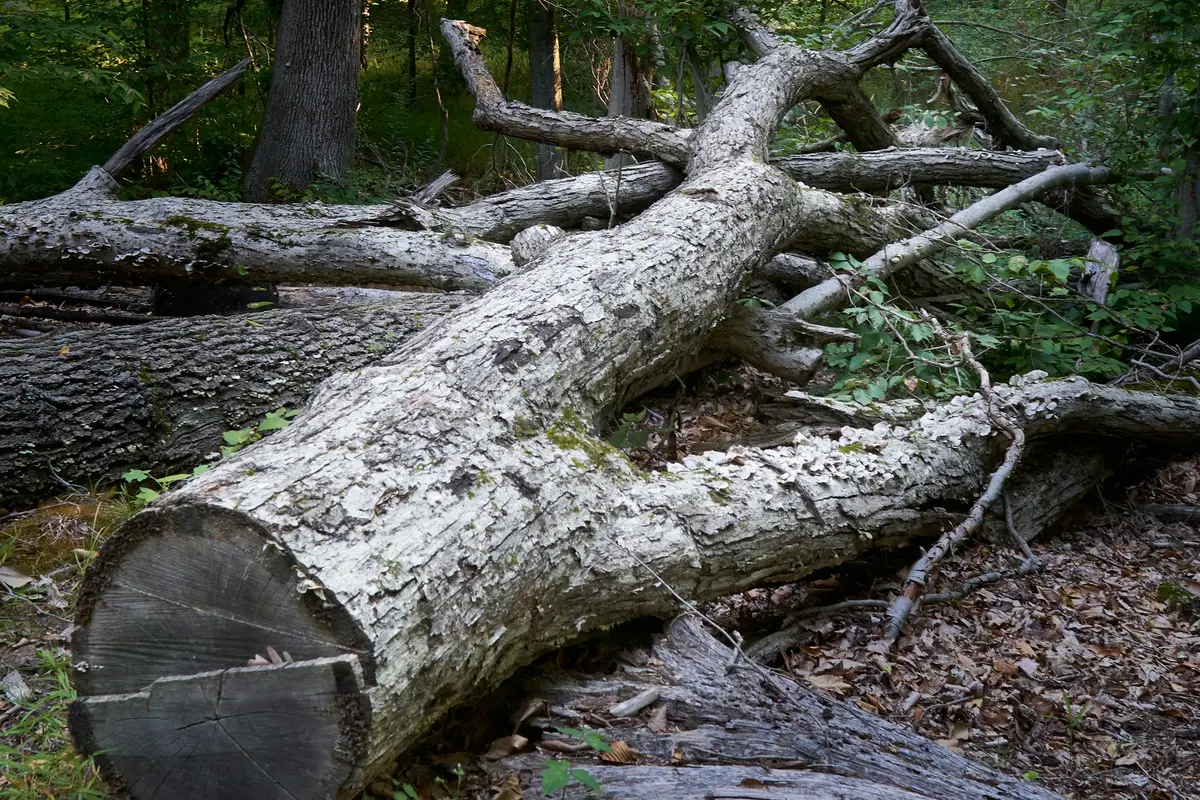
Load and tension have to be read before anything is cut, particularly where the canopy is resting on a structure.
Read about fallen tree clearingFor trees left standing afterwards
A tree that moved but did not fall is the one most often overlooked in the clean-up.
Read about hazardous tree assessmentFor the material left behind
Post-storm piles are usually two or three loads rather than one once they are pulled apart.
See how debris hauling worksAsk About Storm-Damaged Tree Removal in Riverview
Describe what moved, what is suspended and how wet the ground is. In Riverview the ground conditions shape what is possible as much as the damage does.
- Phone: 877-269-2454
- Serving Tampa Bay, Florida
Information on this page is general guidance for property owners and managers in the Tampa Bay area. It is not an arboricultural assessment, a legal opinion, a permitting determination or an insurance decision. Tree condition and site risk can only be judged in person.