New Port Richey, Florida
Storm and Hurricane Damage Tree Removal in New Port Richey, FL
The New Port Richey storm pattern is wind plus water. Coastal wind reaching a short distance inland does the breaking, and low-lying ground that has been saturated for days does the rest — which is why post-storm assessments here find as many trees that have shifted as trees that have snapped.
- Pasco County
- Older coastal-adjacent housing
- Cotee River
If the tree is threatening people, an occupied building or your only access, call straight away rather than waiting.
What this means on New Port Richey properties
That saturation persists longer than people expect. Ground along the river corridor and in the low areas can stay soft for a week or more after sustained rain, and a root plate that lifted during the storm keeps moving through that period. A tree that appeared to have settled on day one may be noticeably worse on day five.
Compact mid-century lots, riverfront properties and long-established plantings are the norm. Trees planted when these neighbourhoods were built are now well beyond the scale the lots were laid out for.
New Port Richey is an incorporated Pasco County city with its own code, distinct from surrounding unincorporated Pasco areas. Requirements can vary by property and jurisdiction. Property owners should confirm current requirements with the relevant local authority before work begins.

Before anyone goes near it
Storms bring lines down onto fences, canopies and driveways where they are easy to miss under debris. Do not move branches that might be lying across a conductor, and do not let anyone drag brush from a pile that touches a line. Report it and keep the area clear until the utility has confirmed it is safe.
Never approach, move or work near a downed or sagging power line, and do not assume a line is inactive. Keep people, pets and vehicles well clear, and report the line to your electric utility or emergency services before anyone goes near the area.
What to look for after the wind drops
After sustained rain, cracked soil at the base of a tree still standing matters more than a tree already down. Ground too soft to carry a machine can mean neither is dealt with immediately, which is a reason to establish priority early.
- Standing water that has not drained around the base days after the rain stopped.
- Trees that were sheltered by a neighbour's tree which has now gone, leaving them newly exposed.
- A split where two codominant stems meet, especially if you can see into the union.
- Growth over a street frontage or footpath where vehicles and pedestrians pass beneath.
- A tree that has reached the roofline or the fence line decades after being planted for a smaller space.
After a storm: what to deal with now and what can wait
The days after a storm are more dangerous than the storm itself, largely because attention goes to the biggest pile rather than to what is still overhead. Sequencing matters more than speed.
Can wait for a scheduled visit On the ground, going nowhere
- Fronds and light material stripped across a yard.
- Cosmetic canopy damage on trees whose bases have not moved.
Deal with first Still loaded or still overhead
- Any tree that is standing at a different angle than it was before the storm.
- Anything at all involving a power line — that is the utility's call before it is ours.
How post-storm work is usually sequenced
- Triage by risk, not by size
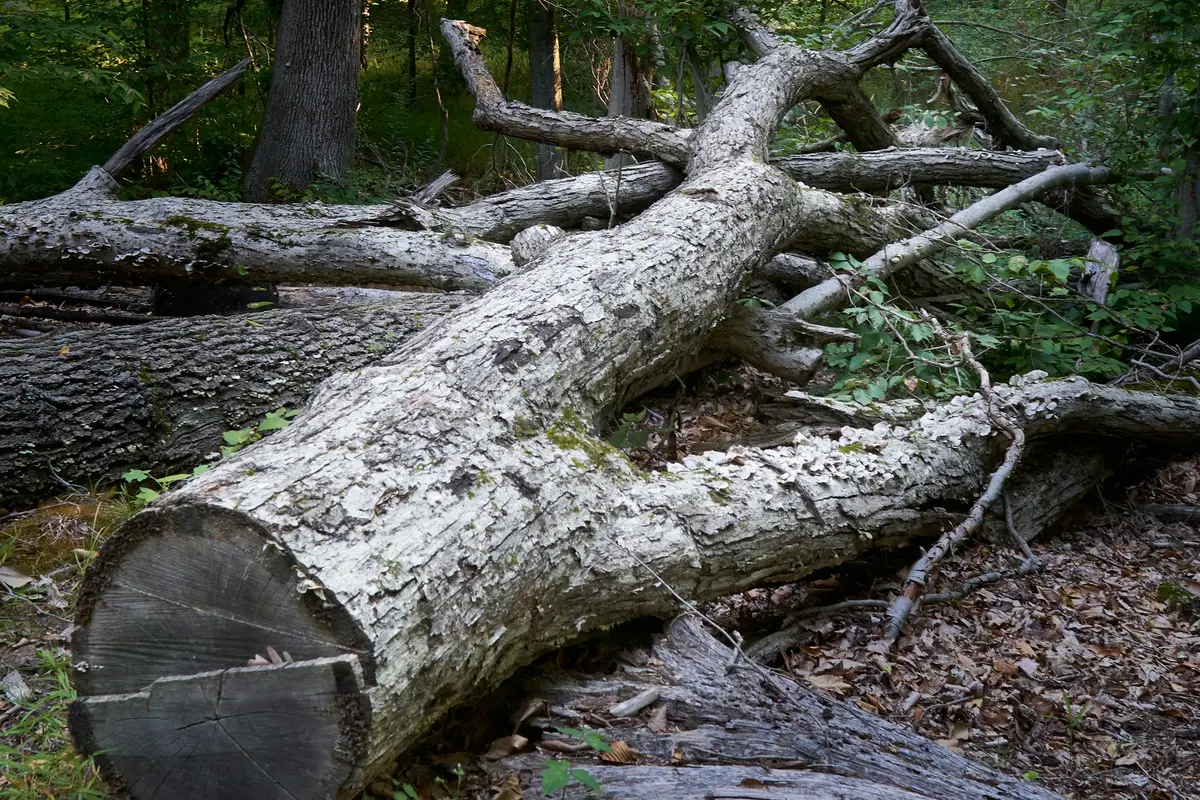
The largest pile of debris is rarely the most dangerous thing on a property. Suspended limbs and destabilised trunks come before ground-level brush.
- Remove suspended material
Hangers and partly detached limbs are brought down under control, since these are the pieces most likely to fall on someone during cleanup.
- Deal with destabilised trunks
Trees with root movement or major splits are taken down or reduced rather than left to a second weather system.
- Reassess what is left standing
Surviving trees are looked at again with the storm's effects in mind, because exposure and load have changed across the whole property.
- Stage and clear debris
Material is cut down to manageable sizes and either hauled or staged where it does not block drainage, driveways or collection access.
Worth doing before the crew arrives
- Check current instructions from your city or county about debris placement, which change after major events.
- Note the date and the storm, since that context matters for your own records.
- List every affected tree, not only the obvious one, so nothing suspended is missed.
- Decide whether vehicles can be moved off the driveway for the day, and whether a gate or side access can be unlocked and left open.
- Have a think about where a truck and chipper could stand near the property, and whether that space can be kept clear on the day.
- Say what sits between the tree and the water — a seawall, dock, lift, bulkhead or open bank — and roughly how much clear ground is left between them.
What drives the size of a storm job
- The mix of hardwood trunk sections and light brush, which handle very differently.
- Access constraints created by the storm itself, including blocked side streets.
- How many trees were affected, and whether they failed into each other.
- Whether material can be dropped at all, or whether every piece has to be rigged and lowered into a small space — the difference between those two is substantial.
- Where the truck and chipper can legally and practically stand. On narrow older streets that position, rather than the tree, often sets the shape of the day.
- Whether the tree stands sheltered or exposed. A tree that grew up inside surrounding canopy carries wind very differently once that shelter is gone.
Debris and cleanup
Where a property is going to need more than one visit, it is usually better to remove the hazardous and structural material first and let lighter brush wait, rather than clearing the easy volume and leaving suspended limbs overhead.
- Staging space on a frontage lot is usually limited, so material tends to be loaded as it comes down rather than piled.
- Where the work is close to water, catching material before it enters is part of the method, and it normally means smaller sections and more rigging than the same tree inland.
- Where the carry is long or the route is narrow, brush is normally cut into smaller pieces than strictly necessary, because handling size matters more than trips.
Hauled away, chipped on site, or stacked in an agreed position — all three are normal, and they are different amounts of work. Whichever you want should be stated in the scope before the day rather than settled afterwards.
Storm and Hurricane Damage Tree Removal in New Port Richey: common questions
Where does storm debris go in New Port Richey?
New Port Richey is an incorporated city administering its own arrangements, separate from surrounding unincorporated Pasco County, and temporary instructions are commonly issued after major events. Confirm the current city guidance for your address before building a pile.
A tree shifted but seems stable now. Is it finished moving?
Not necessarily. On low ground that has been saturated, movement can continue for days as the soil drains. Treating it as unresolved until it has been assessed is the sensible position.
How soon after a storm should trees be looked at?
As soon as it is safe to walk the property. The urgent items are suspended limbs and any tree whose base has moved. Cosmetic damage can wait; a hanger over a walkway cannot.
There is nowhere obvious to park a truck. Is that a problem?
It is a planning question rather than a blocker. What matters is whether a chipper can be positioned within a workable carry of the tree, and whether that position can be held for the day. Tell us what the street is like when you call and it can be worked out beforehand rather than on arrival.
The ground around the tree stays wet. Does that make it less stable?
It can. Saturated soil holds a root plate less firmly, which is why trees with no visible defect sometimes move during sustained wet weather rather than during the strongest wind. Whether it applies to a particular tree needs someone at the base of it — soil movement is one of the few things that genuinely cannot be judged from a photograph.
Related tree services in New Port Richey
For a tree already on the ground
Load and tension have to be read before anything is cut, particularly where the canopy is resting on a structure.
Read about fallen tree clearingFor trees left standing afterwards
A tree that moved but did not fall is the one most often overlooked in the clean-up.
Read about hazardous tree assessmentFor the material left behind
Post-storm piles are usually two or three loads rather than one once they are pulled apart.
See how debris hauling worksAsk About Storm-Damaged Tree Removal in New Port Richey
Tell us what came down, what has shifted and how the ground is behaving. In New Port Richey the drainage picture shapes the response.
- Phone: 877-269-2454
- Serving Tampa Bay, Florida
Information on this page is general guidance for property owners and managers in the Tampa Bay area. It is not an arboricultural assessment, a legal opinion, a permitting determination or an insurance decision. Tree condition and site risk can only be judged in person.