Brandon, Florida
Palm Tree Removal in Brandon, FL
Palms in Brandon are mostly a landscape feature of the back yard — beside a pool, along a patio edge, at a fence corner. They are usually reachable, but the working radius is tight, and the route out for the debris is the same narrow side gate that constrains everything else on these lots.
- Hillsborough County
- Suburban
- 1970s–1990s subdivisions
What this means on Brandon properties
Palm debris is the practical issue in this setting. It is bulky, fibrous and heavy with water rather than chippable, so a single palm can generate a surprising number of trips through a side gate. Where several palms are being done, that carry is a significant part of the job and it is worth planning rather than absorbing.
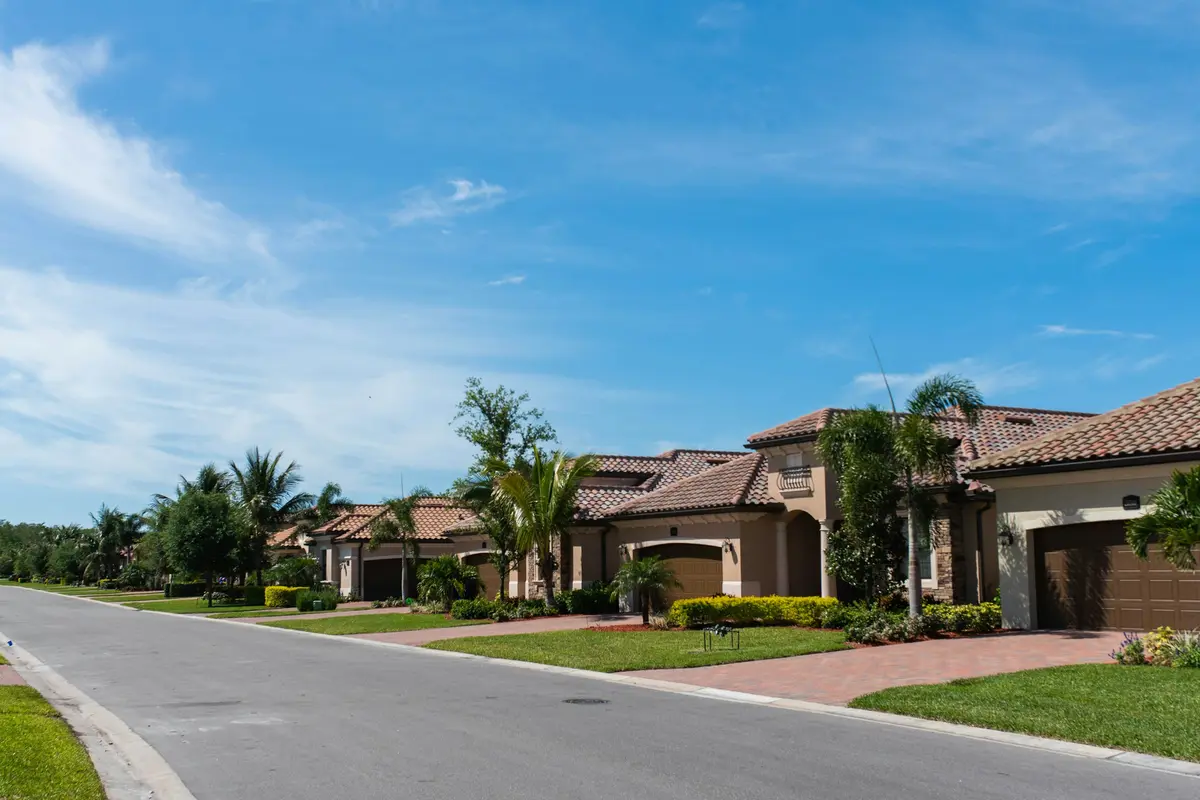
Much of the housing stock dates from the 1970s through the 1990s, which means original landscape plantings have now reached full size — trees chosen for a new yard are frequently pressed against rooflines, driveways and fence lines four decades later.
Brandon is unincorporated, so Hillsborough County provisions apply rather than a city code. Requirements can vary by property and jurisdiction. Property owners should confirm current requirements with the relevant local authority before work begins.
Why palms end up being removed
Where palms stand along a pool deck and are coming out, everything has to be lowered inside the cage line and carried through the side gate. That usually means more sections, and smaller ones, than the size of the palm suggests.
- It has grown well above the roofline and dropping fronds now reach the building.
- The trunk has a narrowed or pinched section, indicating a period of severe stress.
- It is planted directly beneath a service line and cannot be kept clear.
- Dead material held aloft in an interlocking canopy rather than falling clear, above areas that are in daily use.
- Growth closing in over a narrow side route that is the only way in or out.
Remove the palm, or keep maintaining it?
Palms fail differently from broadleaf trees, and they cannot be reduced or reshaped the way an oak can. That narrows the options: maintenance works until it does not, and then removal is the remaining one.
Maintenance still makes sense Crown and trunk sound
- The problem is accumulated dead fronds, seed pods or litter rather than the palm itself.
- The position is inconvenient rather than genuinely wrong for the mature size.
Removal is the sensible call Crown or trunk compromised
- The growing point has died — a palm cannot regrow one.
- The palm has outgrown a position tight against a roofline, cage or seawall.
Why palm work is handled differently
Several palms carry sharp spines on the frond bases, and the sap of some species irritates skin. This is a practical reason not to tackle palm work with garden gloves and a pole saw, quite apart from the height involved.
Never approach, move or work near a downed or sagging power line, and do not assume a line is inactive. Keep people, pets and vehicles well clear, and report the line to your electric utility or emergency services before anyone goes near the area.
How palm removal typically works
- Assess crown and trunk condition
A palm with a compromised crown or a soft upper trunk cannot be climbed, which changes the method before anything else is decided.
- Section the trunk
Palm trunks are dense and heavy for their diameter. They are cut in short sections and lowered rather than dropped where space is tight.
- Manage the fibrous mass
Palm material does not chip like hardwood. It is handled and loaded differently, and that affects both time and truck space.
- Deal with the base
Palm root balls are compact rather than spreading, which makes the base a different proposition to a hardwood stump.
- Clear and finish
The area is cleared of frond litter, fruit and fibre, which spread further than people expect during the work.
What affects a palm removal
- Multiple palms in one visit, which is usually more efficient than separate calls.
- Whether the root ball is removed or ground.
- Whether sections can be dropped or must be lowered.
- Whether material can be dropped at all, or whether every piece has to be rigged and lowered into a small space — the difference between those two is substantial.
- Whether adjacent trees have to be protected while this one is worked, which slows rigging but is usually cheaper than repairing what gets hit.
- The width of the narrowest point on the route in. A side gate frequently decides which machine can be used, and machine size then decides how long the work takes.
Before booking palm work
- Any recent change in the crown, so the condition question can be discussed properly.
- How close the trunk sits to paving, a pool deck, a cage or a wall.
- What will occupy the space afterwards.
- Decide whether you want the work confined to one tree or the overlapping canopies looked at together — treating them separately can mean returning to reach the same area twice.
- Measure the narrowest gate or gap on the route to the tree and have that figure ready. It answers more questions than almost anything else you can tell us.
- Note which limbs actually concern you. Under a dense crown it is easy to point at the wrong tree from the ground.
Debris and cleanup
Frond bases, fruit stalks and loose fibre scatter widely during removal, especially in wind. Pool surfaces, screens and pavers near the work usually need a proper clean-down at the end rather than a quick rake.
- Long-unmanaged canopies carry more accumulated deadwood than expected, so the volume coming down on a first visit is often higher than on subsequent ones.
- Where the carry is long or the route is narrow, brush is normally cut into smaller pieces than strictly necessary, because handling size matters more than trips.
- Trunk wood is cut to a size the access will take rather than to the largest size the machine could handle.
Hauled away, chipped on site, or stacked in an agreed position — all three are normal, and they are different amounts of work. Whichever you want should be stated in the scope before the day rather than settled afterwards.
Palm Tree Removal in Brandon: common questions
Can palms inside a pool cage area be removed?
Usually, though it depends on the clearance between the trunk and the cage frame. Everything has to be lowered rather than dropped in that space, and protecting the frame is part of the method.
Is it cheaper to do several palms at once?
The per-palm effort generally drops because setup and the carry route are shared. If you have more than one, mention them all rather than starting with the worst.
Should the root ball be ground out?
If you plan to plant, pave or build there, yes. Palm root balls are compact, so grinding is usually less involved than for a large hardwood stump, but the spoil still has to go somewhere.
Several trees on the property have grown together. Is that one job or several?
Usually one, and it is generally more efficient that way. Where crowns interlock, working on one tree means moving through or protecting the others anyway, so treating them in a single visit shares the setup and the access. Whether that applies depends on whether they are reachable from the same position.
How much room does a crew actually need?
Less than most people expect for the cutting and more than most people expect for the material. The working area around the tree matters, but so does somewhere to put what comes down and a route to move it. Describing both when you call gets you a more useful answer than describing the tree alone.
Related tree services in Brandon
For broadleaf trees on the same property
Palm work and broadleaf removal differ enough in method that they are worth scoping separately.
Read about tree removalIf it is fronds rather than the whole palm
Frond and seed-pod management is maintenance work rather than removal.
Read about trimming and pruningFor the material it generates
Palm debris is bulky and water-heavy, which matters more for hauling than for cutting.
See how debris hauling worksAsk About Palm Removal in Brandon
Tell us how many palms, how close they are to the cage or patio, and how wide the side gate is. That is most of what shapes a Brandon palm job.
- Phone: 877-269-2454
- Serving Tampa Bay, Florida
Information on this page is general guidance for property owners and managers in the Tampa Bay area. It is not an arboricultural assessment, a legal opinion, a permitting determination or an insurance decision. Tree condition and site risk can only be judged in person.