Valrico, Florida
Land and Lot Clearing in Valrico, FL
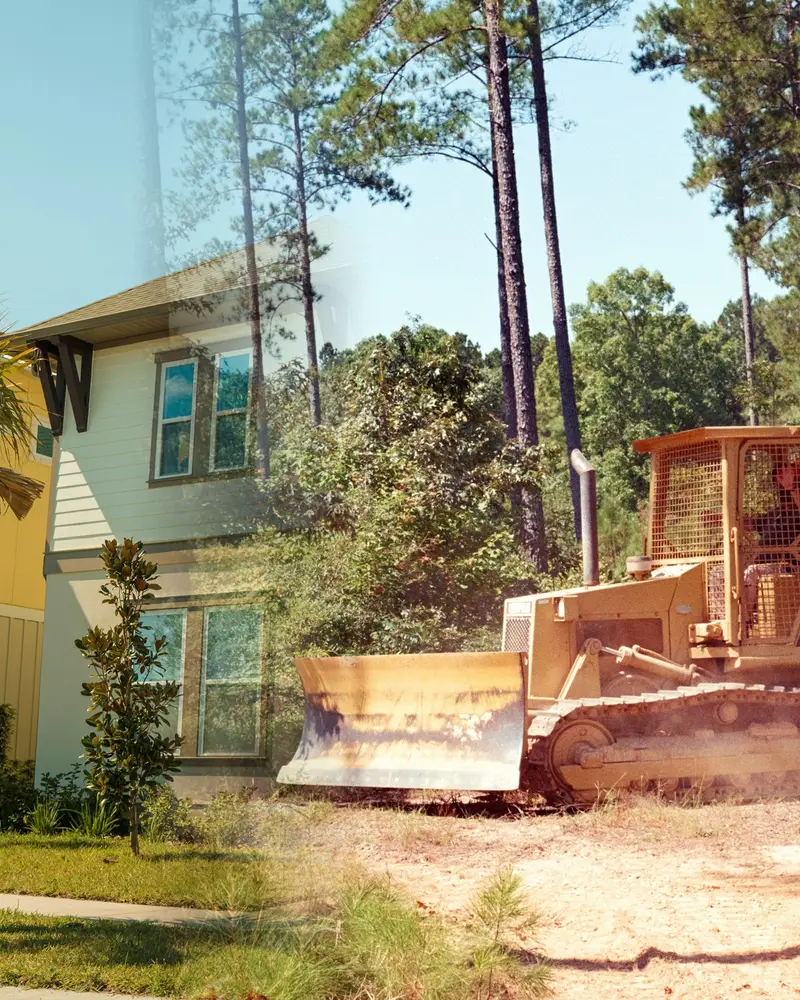
Valrico has genuine acreage clearing work, much of it on land that was farmed and has since grown in. Former groves and pasture that have been left for years develop a dense mix of volunteer trees, understorey and vine growth, and the scope depends heavily on whether old boundary trees are being retained.
- Hillsborough County
- Former agricultural land
- Larger lots
What this means on Valrico properties
Retention decisions need care with these trees. An old field-edge specimen is worth keeping in many landscape plans. It needs two things first, though. Its root zone has to be protected from repeated machine passes during clearing, and the tree itself needs assessing — clearing around it exposes it to wind it has never carried alone.
Properties frequently combine planted landscape trees with remnant growth from earlier land use, including old field-edge trees and boundary lines that were never managed as ornamentals. The two behave quite differently.
Valrico is unincorporated, placing it under Hillsborough County provisions. Requirements can vary by property and jurisdiction. Property owners should confirm current requirements with the relevant local authority before work begins.
Typical reasons a lot gets cleared
Where the objective is clearing volunteer growth and retaining old boundary oaks, those trees have to be marked, protected and assessed before work starts rather than worked around as it proceeds.
- Invasive vegetation spreading across a property.
- A firebreak or defensible margin being established around a building.
- Dense understorey and vines making a property unusable or unsafe to walk.
- Ground at the base that has stayed soft, limiting what can be driven anywhere near the tree.
- Clearance along a long driveway or approach where growth has closed in from both sides.
Site questions that come before any pricing
- Whether neighbouring properties are close enough to constrain how the work runs.
- Whether any watercourse, wetland edge or drainage feature is present.
- Where the boundaries actually run, and whether they are marked on the ground.
- Whether overhead or underground services cross the site.
- Where debris can be processed and staged during the work.
Clear the whole parcel, or clear selectively?
"Cleared" means different things to different people, and the gap between them is most of the price. Deciding what stays is the first job, before anyone quotes an area.
Selective clearing fits Keeping structure and screening
- Retained trees can be protected from repeated machine passes.
- Boundary trees that provide privacy from adjoining property.
Broader clearance makes sense Whole-site change of use
- Access for later work matters more than any individual tree on site.
- Vegetation is dense enough that working around retained trees costs more than it saves.
Site hazards on an uncleared parcel
The most common damage during clearing is not to the trees being removed but to the ones being kept. Repeated machine passes over a root zone compact it, and the effect shows in the canopy a season or two later. Protected areas are marked before clearing begins.
Never approach, move or work near a downed or sagging power line, and do not assume a line is inactive. Keep people, pets and vehicles well clear, and report the line to your electric utility or emergency services before anyone goes near the area.
How a clearing project is normally staged
- Define the area and the outcome
Walk the boundary, agree what stays, and agree what 'clear' means in practice — cleared to grade is very different to cleared of trees.
- Mark retained vegetation
Anything being kept is identified and protected physically before machines start, because retention decisions made on the day get lost.
- Take out the large material first
Trees come down before understorey, so the smaller machines are not working under standing hazards.
- Handle stumps as agreed
Cut low, ground, or removed — the choice depends entirely on what the land is going to be used for.
- Process debris and finish to the agreed standard
Material is chipped, stacked or hauled, and the surface is left in the state that was scoped rather than an assumed one.
What drives a clearing scope
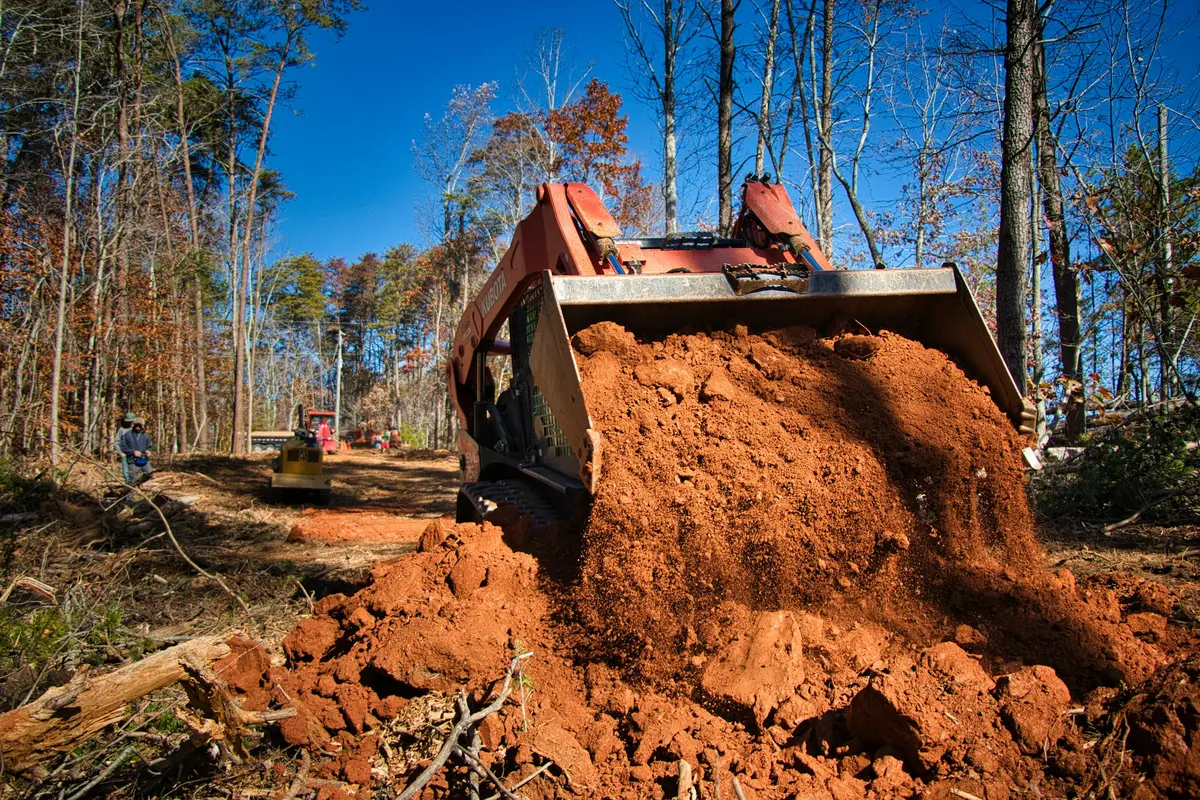
- Total area and how much of it is genuinely dense versus open.
- Ground conditions, slope and any low-lying or seasonally wet ground.
- Whether stumps are ground, removed or left cut low.
- Whether the tree is a planted landscape specimen or remnant growth from earlier land use. Old field-edge trees frequently carry structural defects that never mattered while nothing stood beneath them.
- Whether the ground will carry the equipment. Soft or unmade approaches limit what can be driven in and sometimes rule out machine access entirely.
- The length of the approach from the road to the working area — a long unmade track changes the plant that can realistically be brought in.
Debris and cleanup
Burning is regulated and is not available everywhere or at all times. Rules on open burning, chipping and material disposal vary between jurisdictions and change with conditions, so this has to be confirmed for the specific site rather than assumed.
- Larger parcels usually allow material to be staged near the working area, so the carry is short and the loading happens in one place.
- Where there is room, chip and trunk rounds can often be left in an agreed position rather than hauled, which reduces what has to be carried and loaded.
- Where ground conditions limit vehicle access, material is often staged nearer the road and loaded from there, which needs a position agreeing in advance.
Hauled away, chipped on site, or stacked in an agreed position — all three are normal, and they are different amounts of work. Whichever you want should be stated in the scope before the day rather than settled afterwards.
Have this ready when scoping
- Where equipment can access and whether any of it crosses a neighbour's land.
- Any prior report on the site — environmental, survey, engineering.
- Whether debris can stay on site in any form.
- Decide whether material can stay on the property. On a larger lot that is often a genuinely useful option, and it changes what the work involves.
- Say whether the tree was planted as part of the garden or was already there. It is a genuinely useful distinction — the two tend to have grown very differently.
- Walk the property before you call and count what actually needs attention, rather than describing the single tree that prompted it. Several trees in one visit is normally more efficient than separate calls.
Land and Lot Clearing in Valrico: common questions
Should old boundary trees be retained through clearing?
It depends on their condition and on what they will be exposed to afterwards. Clearing around a tree that grew in shelter changes its wind loading, so retention should follow an assessment rather than a preference.
Do county rules apply to clearing here?
Valrico is unincorporated, so Hillsborough County provisions apply, and clearing may be regulated by area, tree size or proximity to drainage features. Open burning is separately regulated. Requirements can vary by property and jurisdiction, so confirm with the relevant local authority before work begins.
Do I need approval to clear a lot?
Possibly, and it varies. Some Tampa Bay jurisdictions regulate clearing by area, by tree size or species, or by proximity to wetlands and drainage features. Requirements can vary by property and jurisdiction, so confirm with the relevant local authority before work begins.
The ground is soft where the tree is. Does the work have to wait?
Sometimes, and it is usually better than the alternative. Driving heavy equipment over saturated ground leaves damage that outlasts the tree work. Where waiting is not practical, the method shifts toward smaller equipment and more hand carrying, which takes longer but leaves the ground intact.
Can several trees across the property be looked at in one visit?
Usually, and it is generally the more efficient way to do it because the setup, the access and the equipment move are shared. Whether it works in practice depends on whether the trees sit on the same access route or need separate positioning.
Related tree services in Valrico
If what remains is stumps
Cleared of trees and cleared to grade are different scopes with different work in them.
Read about stump grindingFor the volume it produces
Clearing generates material by the load rather than by the tree.
See how debris hauling worksFor a managed or commercial parcel
Phasing, access and who authorises a change on the day shape the plan more than the trees do.
Read about commercial tree workScope a Lot Clearing Project in Valrico
Tell us the acreage, the intended use and which trees you want to keep. In Valrico the retention list is where the scope gets defined.
- Phone: 877-269-2454
- Serving Tampa Bay, Florida
Information on this page is general guidance for property owners and managers in the Tampa Bay area. It is not an arboricultural assessment, a legal opinion, a permitting determination or an insurance decision. Tree condition and site risk can only be judged in person.