Dunedin, Florida
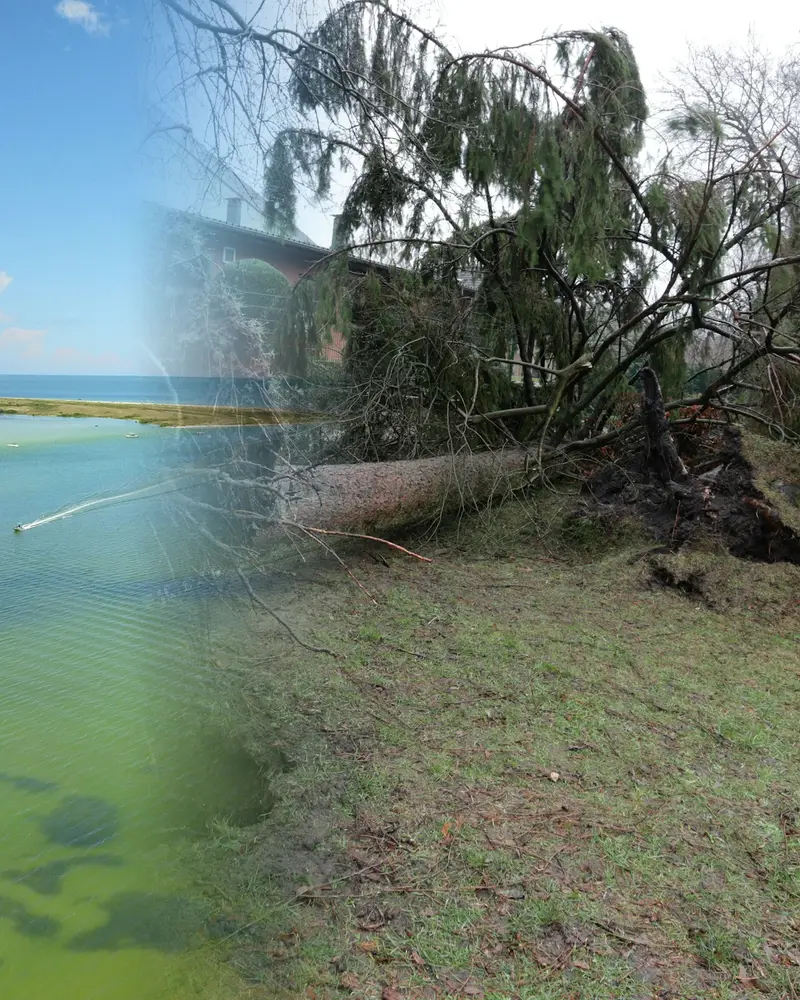
Fallen Tree Removal in Dunedin, FL
Clearing a downed tree in Dunedin is usually a handling problem rather than a rigging one. The tree is on the ground, the load path has to be read properly, and then the material has to travel — often a considerable distance along a narrow route to a truck parked on a narrow street.
- Pinellas County
- Gulf coast city
- Historic residential core
If the tree is threatening people, an occupied building or your only access, call straight away rather than waiting.
What this means on Dunedin properties
Older housing adds a specific care requirement. Porches, wooden steps, decorative railings and original features are common on these properties, and dragging trunk sections past them causes damage that a modern house would shrug off. The route out has to be planned around what it passes rather than by shortest distance.
The older residential core has narrow streets, small lots and a well-established canopy that residents tend to value highly, which makes retention and careful pruning a more common conversation here than outright removal.
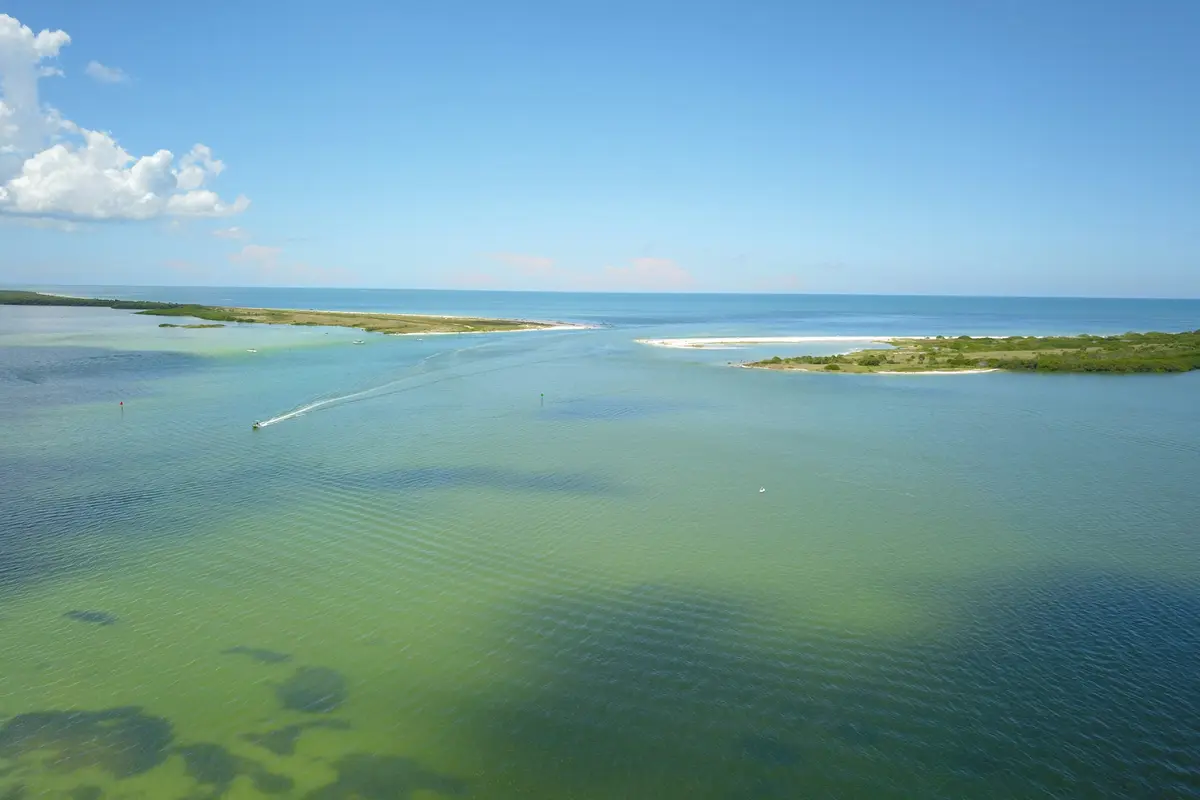
Dunedin is an incorporated Pinellas County city with its own municipal code provisions covering trees. Requirements can vary by property and jurisdiction. Property owners should confirm current requirements with the relevant local authority before work begins.
Before anyone goes near it
A root plate that tipped up is a large mass held in a partly rotated position. When the trunk is cut and the counterweight is removed, the plate can drop back into the hole quickly. Nobody should be standing in that hole, and nothing should be stored in it, while cutting is in progress.
Never approach, move or work near a downed or sagging power line, and do not assume a line is inactive. Keep people, pets and vehicles well clear, and report the line to your electric utility or emergency services before anyone goes near the area.
Things that make a downed tree more complicated than it looks
Where a tree is down across a rear garden and a porch roof, the route out frequently passes original features — steps, low walls, established planting — that need protecting. That usually decides the section size.
- A second tree was struck on the way down and is now leaning against something.
- The trunk is bridging between two points, so the middle is under bending load.
- The ground underneath is saturated, so the tree may settle further as it dries.
- A tree newly exposed because whatever sheltered it has gone.
- Dead material held aloft in an interlocking canopy rather than falling clear, above areas that are in daily use.
A tree is down: what you can clear and what needs equipment
Plenty of a fallen tree is genuinely a homeowner job. The part that is not is the part holding load, and telling the two apart is what keeps this from turning into an injury or a bigger repair bill.
Reasonable to handle yourself Loose and light
- Material well clear of the trunk, fences, vehicles and any line.
- Small brush and leaf litter that lifts freely off the ground.
Leave for equipment and rigging Bearing weight or under tension
- Sections you would need to stand underneath in order to cut.
- A trunk or limb resting on a fence, roof, cage, deck or vehicle.
How a downed tree is normally cleared
- Read the load path
Before any cut, the crew works out what is holding what. Which end is bearing, where the bend is, and what will move when the first section comes off.
- Relieve tension deliberately
Bent and pinned limbs are released in an order that lets stored energy out in a controlled direction rather than toward the crew or the structure.
- Section the main stem
The trunk is cut into lengths that can be moved with the equipment and access available, working from the free end where possible.
- Deal with the root plate
A tipped plate is either cut free and removed or laid back into the hole, depending on what the ground needs to become.
- Clear and finish
Brush chipped, wood removed or staged, and access surfaces cleared so the property works normally again.
What makes one fallen tree a bigger job than another
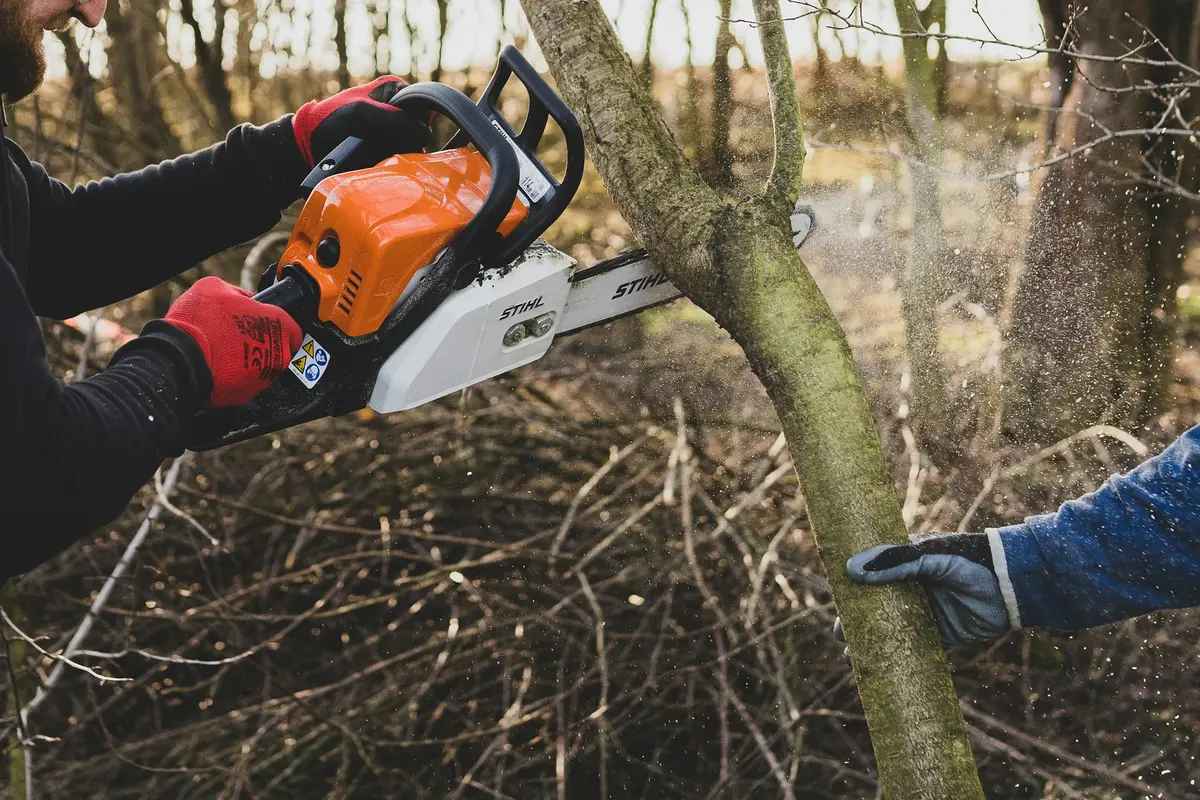
- Trunk diameter, which determines whether sections can be moved by hand or need a machine.
- The amount of stored tension in pinned and bent material.
- Whether it landed on open ground or on something that has to be protected as it comes off.
- How far cut material has to be carried to reach the truck or chipper. Carry distance is often a bigger factor than the size of the tree.
- How much deadwood is held aloft rather than having fallen out. Dense canopy retains dead limbs, so the volume coming down is often larger than it looks from below.
- Whether the tree has outgrown the space it was planted in. Landscape trees chosen for a new plot frequently reach the roofline and the fence line decades later, and that is a different problem from a defect.
Helpful before clearing starts
- Check whether anything valuable is pinned underneath that needs care rather than speed.
- Photograph the tree where it lies before anything is moved.
- Identify what is underneath it that you cannot see — irrigation, cabling, a low wall, a septic lid.
- Decide whether the objective is storm preparation or general maintenance. They lead to different work on the same tree.
- If the tree has not been worked on for some years, say so. The first visit after a long gap is usually a bigger job than the ones that follow, and it is better to know that upfront.
- Note anything fixed on the route — an air-conditioning unit, meter box, irrigation head or low wall — that cannot simply be stepped over.
Debris and cleanup
Where the tree fell on a structure, clearing and repair are two different trades. The clearing work aims to get the load off without adding damage; assessing and fixing what is underneath is for the relevant contractor once the tree is clear.
- Where the carry is long or the route is narrow, brush is normally cut into smaller pieces than strictly necessary, because handling size matters more than trips.
- Where a crown extends over a boundary, agree in advance which side brush will be brought down to — dragging it back under the tree is often the slower option.
- Long-unmanaged canopies carry more accumulated deadwood than expected, so the volume coming down on a first visit is often higher than on subsequent ones.
Hauled away, chipped on site, or stacked in an agreed position — all three are normal, and they are different amounts of work. Whichever you want should be stated in the scope before the day rather than settled afterwards.
Fallen Tree Removal in Dunedin: common questions
Can the route out avoid the porch?
It is planned for. Where the shortest route passes something worth protecting, protection is laid or a longer route used. Pointing out what matters most before work starts is genuinely useful.
Does a long carry add much time?
It is often the main factor. On a Dunedin lot the distance from the tree to the truck can matter more than the size of the tree itself.
Can I cut it up myself and have the pieces taken away?
You can, and people do, but the risk sits in exactly the part that looks simplest: cutting sections that are holding load. If any part of the tree is bridging, pinned or resting on a structure, that is the part to leave alone.
A nearby tree came down and this one is now in the open. Is that a concern?
It is a legitimate reason to have it looked at. Trees that develop within a group share the wind load and grow accordingly; when that shelter is removed the remaining tree carries a load it never grew for. Whether it matters depends on the tree, which is an on-site question rather than a remote one.
There is no vehicle access to the back garden. Does that stop the work?
No, but it changes how it is done and how long it takes. Material comes out along whatever route exists, usually in smaller sections and by hand. Where a fence panel or a gate post can come out temporarily, that is sometimes faster overall — worth raising rather than assuming either way.
Related tree services in Dunedin
If anything is still under load
A trunk resting on a structure, a blocked sole access or material overhead is not a scheduled job.
See what counts as urgentFor what is left once it is cut
Cutting and hauling are different scopes, and the second is easy to underestimate.
See how debris hauling worksFor what remains at ground level
A failed tree usually leaves a stump and a disturbed root plate behind it.
Read about stump grindingGet a Fallen Tree Cleared in Dunedin
Tell us what it landed on, where a truck can stand and what the route out passes. Leave anything under load exactly where it is.
- Phone: 877-269-2454
- Serving Tampa Bay, Florida
Information on this page is general guidance for property owners and managers in the Tampa Bay area. It is not an arboricultural assessment, a legal opinion, a permitting determination or an insurance decision. Tree condition and site risk can only be judged in person.