Palm Harbor, Florida
Emergency Tree Removal in Palm Harbor, FL
The urgent problem on a Palm Harbor wooded lot is frequently the trees that did not fail. Getting a crew and equipment to the tree that has come down means routing through standing canopy, and on a heavily treed property the shortest line is rarely available — which is often what determines how long the first visit takes.
- Pinellas County
- Lake Tarpon area
- Pines and oaks
If the tree is threatening people, an occupied building or your only access, call straight away rather than waiting.
Before anyone goes near it
A chainsaw cut into a trunk or limb that is holding weight changes where that weight goes. Trees resting on roofs, fences and vehicles frequently move in an unexpected direction when the first cut is made. If the tree is bearing load, leave it for equipment and rigging rather than hand tools.
Never approach, move or work near a downed or sagging power line, and do not assume a line is inactive. Keep people, pets and vehicles well clear, and report the line to your electric utility or emergency services before anyone goes near the area.
What this means on Palm Harbor properties
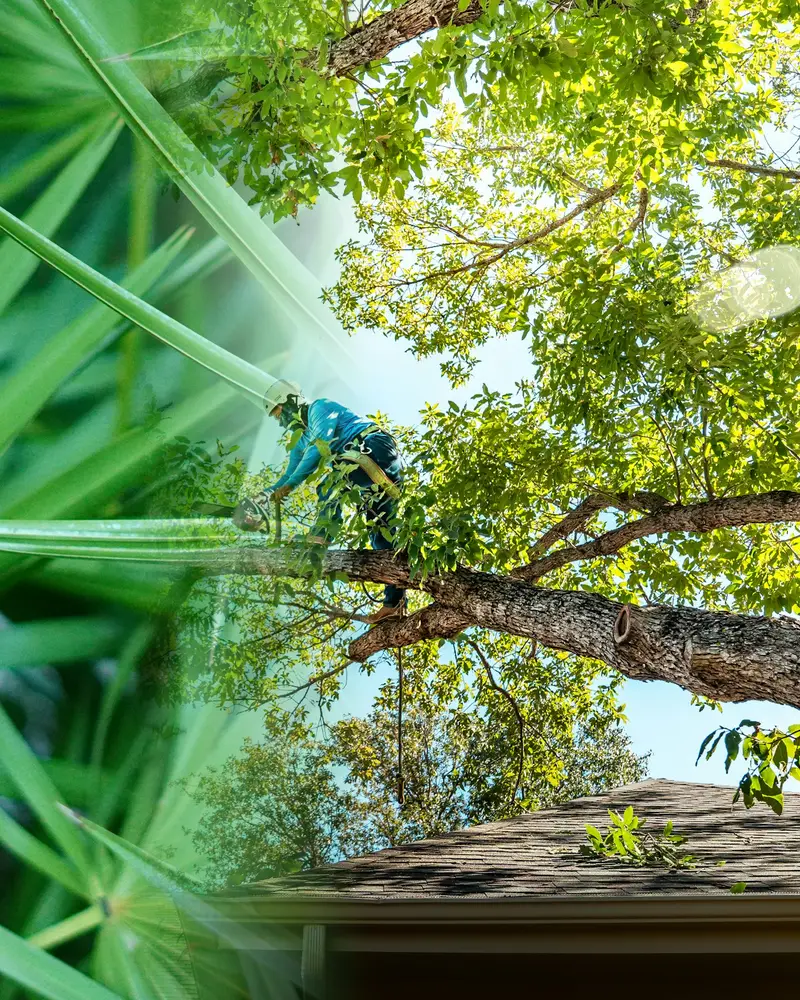
Mixed pine and oak canopy makes this more awkward than an open lot. A pine that fails as a whole stem usually comes to rest against or through neighbouring canopy rather than reaching the ground cleanly. Part of the tree is then left suspended in trees that are staying, and it has to be brought down without damaging them.
Compared with much of Pinellas, a higher proportion of properties retain tall pines alongside oaks, often left in place when neighbourhoods were built. Tall, slender pines over houses are a distinct planning problem from a spreading oak canopy.
Palm Harbor is unincorporated, so Pinellas County provisions apply rather than a city code. Requirements can vary by property and jurisdiction. Property owners should confirm current requirements with the relevant local authority before work begins.
Situations that are usually treated as urgent
A pine that has come down against standing oaks and hung up above a driveway is holding load in a way that cannot be judged from underneath. Nothing about that assembly should be disturbed before someone has looked at it properly.
- Debris is holding a gate, meter, panel or utility connection under pressure.
- A limb failed once already and neighbouring limbs on the same side show similar attachment.
- Roots have lifted on one side, leaving a raised pad of soil or a visible gap at the base.
- Growth closing in over a narrow side route that is the only way in or out.
- Dead material held aloft in an interlocking canopy rather than falling clear, above areas that are in daily use.
Is this actually an emergency, or can it be scheduled?
Calling it an emergency when it is not costs you money; calling it routine when it is not can cost a great deal more. The dividing line is not how alarming the tree looks — it is what sits underneath it and whether anything is still moving.
Can reasonably be scheduled Serious, but stable
- Deadwood high in a canopy that nobody walks or parks under.
- A tree touching a roofline without bearing weight on it.
Should not wait Load, access or occupancy
- A lean pointing at a bedroom or an occupied room rather than at open ground.
- Soil cracked or lifted in an arc at the base — the root plate has already moved once.
How an urgent call usually proceeds
- Describe the hazard by phone
Location, what the tree is touching, whether anyone is inside the affected part of the building, and whether access is blocked. This determines how the visit is prioritised.
- Confirm the utility picture
If any line is involved, sagging or down, that becomes the utility's call first. Work does not begin around an unconfirmed line.
- On-site hazard assessment
The crew reads lean, load, tension in bent limbs, ground condition and what sits underneath before choosing a method.
- Set up the work zone
Exclusion area, drop zone, access route and rigging points are set before cutting starts, and the zone stays closed while work is active.
- Clear access, then finish the site
Blocked routes are usually opened first so the property can function again, followed by the remaining cut-up and cleanup.
Useful to have ready when you call
- Approximate trunk diameter and height, even as a rough comparison to the building.
- Whether there is a gate, code, dog or parking restriction the crew needs to know about.
- Whether the driveway is blocked and whether there is a second way in.
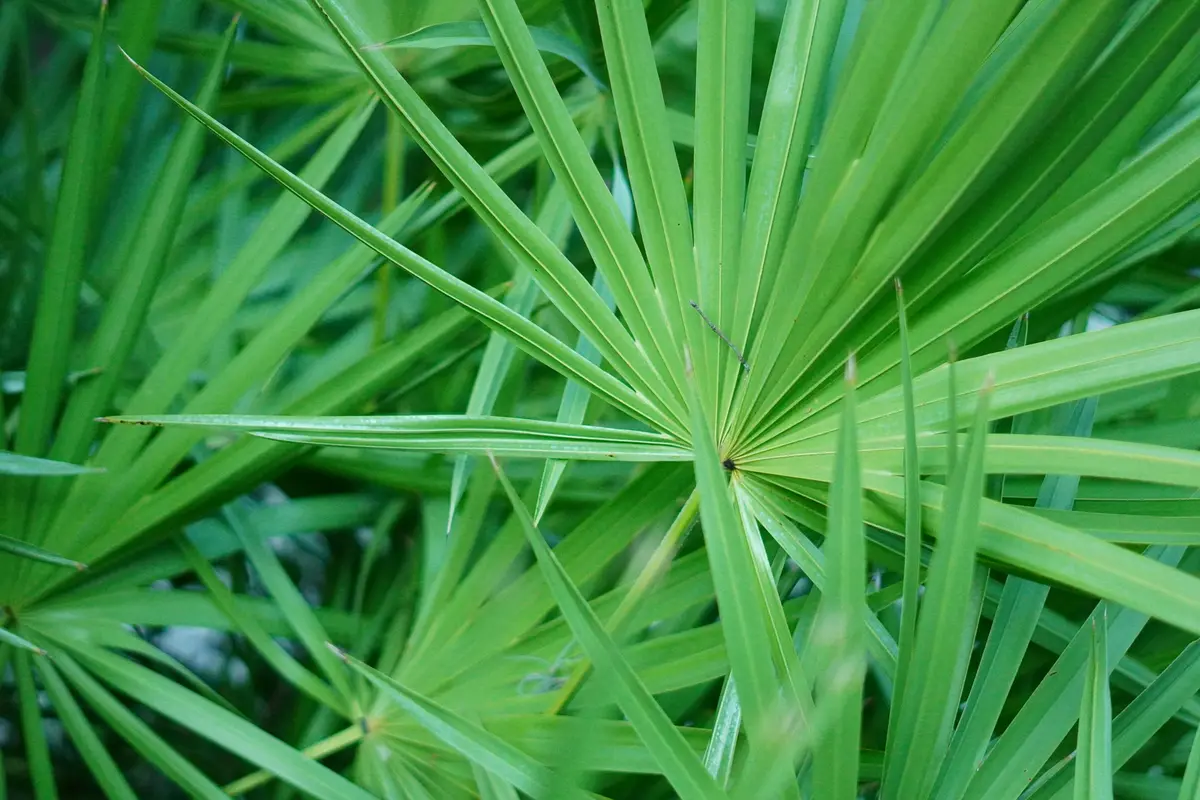
- Identify which plants in the surrounding area you would not want damaged, and which you would accept being crossed. That single answer changes the route and often the method.
- Note anything fixed on the route — an air-conditioning unit, meter box, irrigation head or low wall — that cannot simply be stepped over.
- Measure the narrowest gate or gap on the route to the tree and have that figure ready. It answers more questions than almost anything else you can tell us.
What changes the shape of an emergency job
- Whether the failed section is on the ground or still suspended in the canopy.
- Whether neighbouring trees were loaded or damaged by the same event.
- Time of day and available light, which affect what can be done safely in one visit.
- Whether the tree is a tall single-stem pine or a spreading broadleaf canopy. They are different planning problems — one carries its weight high on a slender stem, the other spreads its load wide.
- Whether adjacent trees have to be protected while this one is worked, which slows rigging but is usually cheaper than repairing what gets hit.
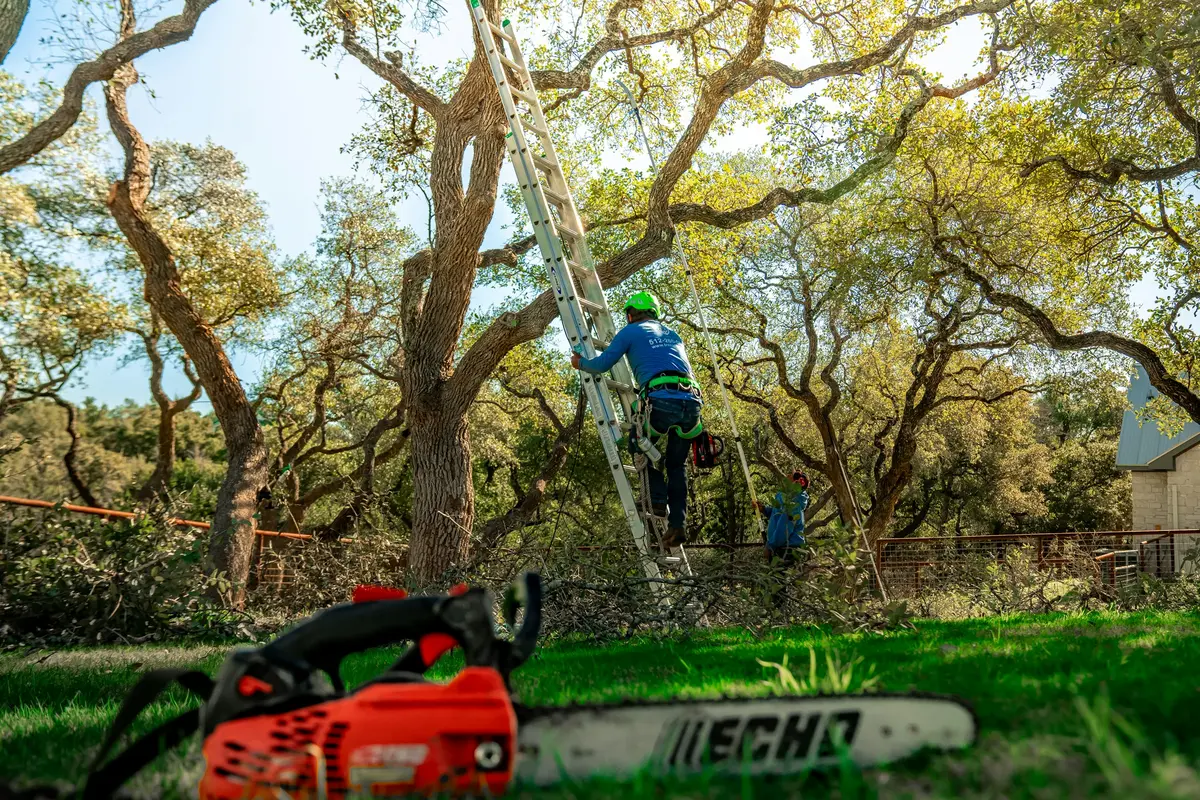
- Whether the canopy can be reached from one setup or needs repositioning. Overlapping crowns frequently mean several climbing or lifting positions for a single tree.
Debris and cleanup
Cleanup after an urgent removal is graded by need. Hard surfaces people walk and drive on get cleared properly; lawn areas are usually raked to a reasonable finish rather than restored, since the priority in the first visit is removing risk.
- Trunk wood is cut to a size the access will take rather than to the largest size the machine could handle.
- Where the route out runs through planted areas, material is usually carried in smaller pieces rather than dragged, which takes longer but avoids scraping through beds.
- Where the carry is long or the route is narrow, brush is normally cut into smaller pieces than strictly necessary, because handling size matters more than trips.
Hauled away, chipped on site, or stacked in an agreed position — all three are normal, and they are different amounts of work. Whichever you want should be stated in the scope before the day rather than settled afterwards.
Emergency Tree Removal in Palm Harbor: common questions
The tree did not reach the ground. Is that worse?
Usually yes. A hung-up stem is holding load through whatever caught it, and it can release when disturbed or when the supporting canopy moves in wind. It should be treated as unresolved rather than as a tree that stopped.
Can equipment get through a wooded lot?
Sometimes, along whatever route exists between the trees that are staying. Where it cannot, the work is done from the ground and by climbing, which takes longer.
What counts as an emergency rather than an urgent job?
Broadly, it is an emergency when the tree is actively threatening people, an occupied structure or the only way in and out. A leaning tree over open lawn is serious but can usually be scheduled. A limb resting on a bedroom roof cannot.
How much room does a crew actually need?
Less than most people expect for the cutting and more than most people expect for the material. The working area around the tree matters, but so does somewhere to put what comes down and a route to move it. Describing both when you call gets you a more useful answer than describing the tree alone.
Will the surrounding planting be damaged?
That is planned for rather than hoped for — sections are lowered into agreed positions and protection goes down where it is needed. In a genuinely tight space some contact is occasionally unavoidable, which is why it helps to say beforehand what matters most to you.
Related tree services in Palm Harbor
If the tree is already down
Material on the ground is still holding load, and the first cut is a reading problem before it is a cutting problem.
Read about fallen tree clearingIf several trees are involved
Damage across a property after a storm is triaged differently from a single failure.
Read about storm damage responseOnce the hazard is cleared
What remains on the ground afterwards is usually a larger volume than it looks.
See how debris hauling worksDiscuss a Dangerous Tree in Palm Harbor
Tell us whether the tree reached the ground, what it is caught in and how a route to it might run. On a Palm Harbor lot access through standing canopy is the first question.
- Phone: 877-269-2454
- Serving Tampa Bay, Florida
Information on this page is general guidance for property owners and managers in the Tampa Bay area. It is not an arboricultural assessment, a legal opinion, a permitting determination or an insurance decision. Tree condition and site risk can only be judged in person.