Palm Harbor, Florida
Storm and Hurricane Damage Tree Removal in Palm Harbor, FL
Storm damage in Palm Harbor typically involves the pines. A pine carries its weight high and generally fails as a complete stem, and on a wooded lot that stem comes down into neighbouring canopy — so the damage is spread across several trees even though only one actually failed.
- Pinellas County
- Lake Tarpon area
- Pines and oaks
If the tree is threatening people, an occupied building or your only access, call straight away rather than waiting.
Before anyone goes near it
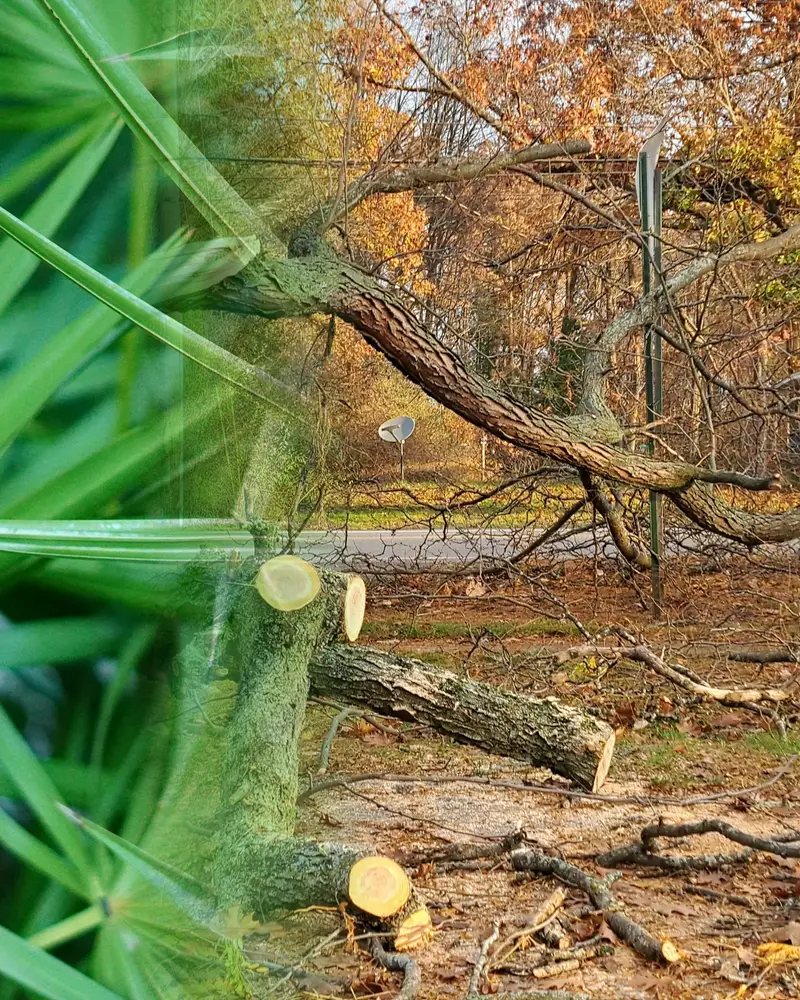
Storms bring lines down onto fences, canopies and driveways where they are easy to miss under debris. Do not move branches that might be lying across a conductor, and do not let anyone drag brush from a pile that touches a line. Report it and keep the area clear until the utility has confirmed it is safe.
Never approach, move or work near a downed or sagging power line, and do not assume a line is inactive. Keep people, pets and vehicles well clear, and report the line to your electric utility or emergency services before anyone goes near the area.
What this means on Palm Harbor properties
Assessing what remains matters particularly here. When a pine goes through an oak canopy on the way down it tears limbs from trees that are otherwise sound, and that torn material stays suspended. On a lot with a dozen mature trees, working out what is still overhead is a genuinely useful exercise after any significant event.
Palm Harbor is an unincorporated community in northern Pinellas County, running from near the Gulf across to the Lake Tarpon side, with a mix of established subdivisions and wooded residential areas.
Palm Harbor is unincorporated, so Pinellas County provisions apply rather than a city code. Requirements can vary by property and jurisdiction. Property owners should confirm current requirements with the relevant local authority before work begins.
What to look for after the wind drops
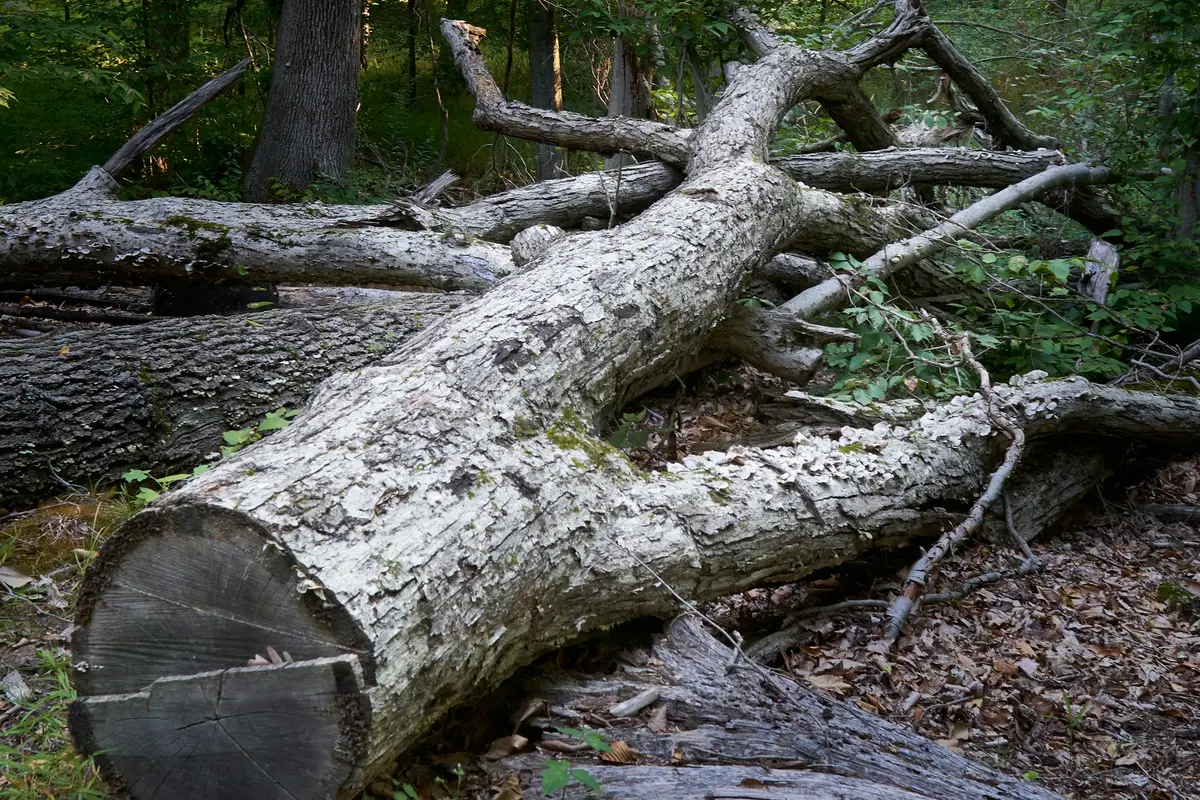
Where pines and oaks grow together, one pine down usually means torn limbs suspended in the oaks around it. Under a wooded canopy none of that is clearly visible from the ground.
- A fresh lean, or a trunk that no longer lines up with a fence post, wall or path it used to parallel.
- Whole sections of canopy missing from one side, leaving the tree badly unbalanced.
- Standing water that has not drained around the base days after the rain stopped.
- Growth closing in over a narrow side route that is the only way in or out.
- Dead lower limbs on a tall stem, which shed as the tree grows.
After a storm: what to deal with now and what can wait
The days after a storm are more dangerous than the storm itself, largely because attention goes to the biggest pile rather than to what is still overhead. Sequencing matters more than speed.
Can wait for a scheduled visit On the ground, going nowhere
- Brush and limb debris lying on lawn, away from paths and drives.
- Cosmetic canopy damage on trees whose bases have not moved.
Deal with first Still loaded or still overhead
- A split stem or a union that has opened but not failed completely.
- Any tree that is standing at a different angle than it was before the storm.
How post-storm work is usually sequenced
- Triage by risk, not by size
The largest pile of debris is rarely the most dangerous thing on a property. Suspended limbs and destabilised trunks come before ground-level brush.
- Confirm utilities and access
Lines, meters and blocked routes are identified first. Nothing starts around a line that has not been confirmed safe by the utility.
- Document visible damage
Photographs taken from safe positions before anything is moved are useful for your own records and for any conversation you have with an insurer.
- Reassess what is left standing
Surviving trees are looked at again with the storm's effects in mind, because exposure and load have changed across the whole property.
- Stage and clear debris
Material is cut down to manageable sizes and either hauled or staged where it does not block drainage, driveways or collection access.
Worth doing before the crew arrives
- Decide whether debris should be hauled away or staged, and where staging would be acceptable.
- Identify where a truck and chipper can get in, including any route the storm has blocked.
- Photograph the damage from safe positions, including wide shots that show where the tree sat.
- Decide whether vehicles can be moved off the driveway for the day, and whether a gate or side access can be unlocked and left open.
- Say roughly how tall the tree is against the house — two storeys, three, or well above the roofline. On a tall stem that estimate matters more than the trunk diameter.
- Decide whether a section of hedge, fence or bed could be temporarily opened. It is sometimes the faster overall option, but it is your call rather than ours.
What drives the size of a storm job
- Whether debris is on structures, vehicles, pools or fences rather than open lawn.
- Whether the damage is suspended in canopies or already down on the ground.
- Whether neighbouring properties are involved and who is responsible for what.
- The width of the narrowest point on the route in. A side gate frequently decides which machine can be used, and machine size then decides how long the work takes.
- Whether the canopy can be reached from one setup or needs repositioning. Overlapping crowns frequently mean several climbing or lifting positions for a single tree.
- Whether ground protection needs putting down before machinery or heavy sections cross planted areas or lawn.
Debris and cleanup
Where a property is going to need more than one visit, it is usually better to remove the hazardous and structural material first and let lighter brush wait, rather than clearing the easy volume and leaving suspended limbs overhead.
- Where the route out runs through planted areas, material is usually carried in smaller pieces rather than dragged, which takes longer but avoids scraping through beds.
- Overlapping canopies tend to produce more brush than expected, because material caught in a neighbouring crown comes down as well as the material that was cut.
- Where a crown extends over a boundary, agree in advance which side brush will be brought down to — dragging it back under the tree is often the slower option.
Hauled away, chipped on site, or stacked in an agreed position — all three are normal, and they are different amounts of work. Whichever you want should be stated in the scope before the day rather than settled afterwards.
Storm and Hurricane Damage Tree Removal in Palm Harbor: common questions
Where does storm debris go in Palm Harbor?
Palm Harbor is unincorporated, so Pinellas County arrangements apply rather than a city programme, and temporary instructions are commonly issued after major events. Confirm the current guidance for your address before building a pile.
Only one tree fell. Why look at the others?
Because a falling pine tears material out of what it passes through, and that material stays up there. On a wooded lot the suspended debris is usually spread across several trees that look undamaged from below.
Should trees be pre-emptively cut back before hurricane season?
Sensible structural pruning to remove dead and poorly attached limbs is reasonable maintenance. Severe topping is not — it produces weak regrowth and typically leaves a tree less able to handle wind, not more.
Is a tall pine handled differently from an oak?
Yes, in a way that matters. A pine carries most of its weight high on a comparatively slender stem and tends to fail as a whole stem rather than by shedding limbs, so the target assessment and the takedown sequence are both different. It is worth saying which you have when you call.
Will the surrounding planting be damaged?
That is planned for rather than hoped for — sections are lowered into agreed positions and protection goes down where it is needed. In a genuinely tight space some contact is occasionally unavoidable, which is why it helps to say beforehand what matters most to you.
Related tree services in Palm Harbor
For a tree already on the ground
Load and tension have to be read before anything is cut, particularly where the canopy is resting on a structure.
Read about fallen tree clearingFor trees left standing afterwards
A tree that moved but did not fall is the one most often overlooked in the clean-up.
Read about hazardous tree assessmentFor the material left behind
Post-storm piles are usually two or three loads rather than one once they are pulled apart.
See how debris hauling worksAsk About Storm-Damaged Tree Removal in Palm Harbor
Tell us what came down and what it went through. In Palm Harbor the material left in the surrounding canopy is usually the priority.
- Phone: 877-269-2454
- Serving Tampa Bay, Florida
Information on this page is general guidance for property owners and managers in the Tampa Bay area. It is not an arboricultural assessment, a legal opinion, a permitting determination or an insurance decision. Tree condition and site risk can only be judged in person.