Clearwater, Florida
Emergency Tree Removal in Clearwater, FL
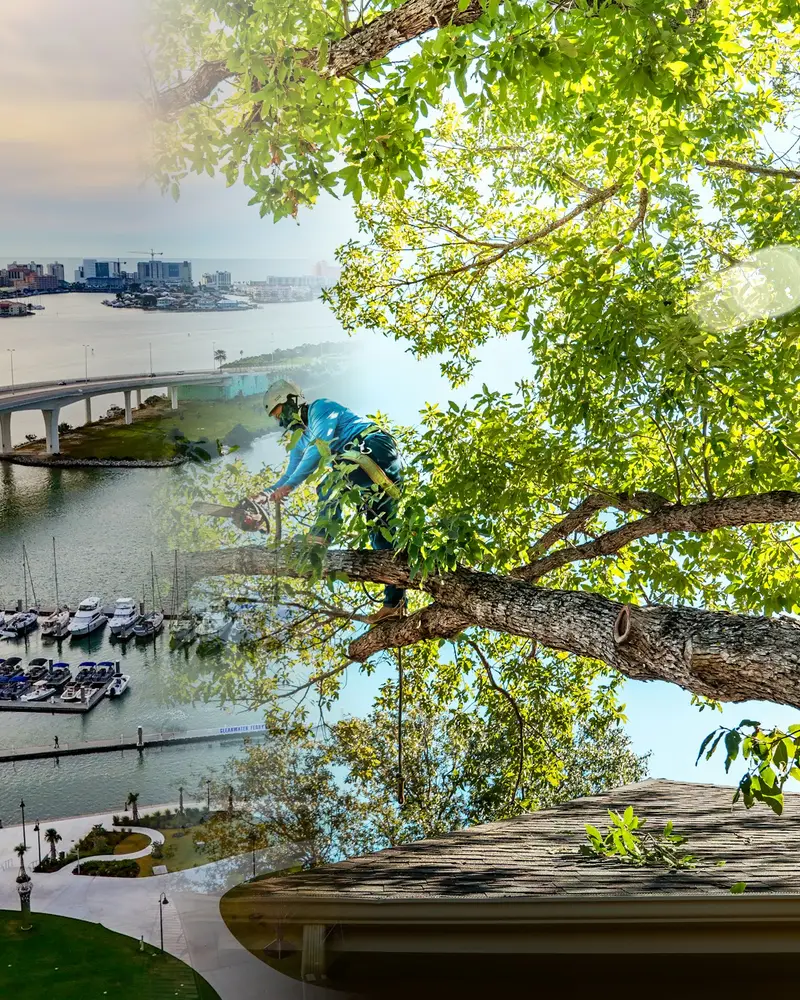
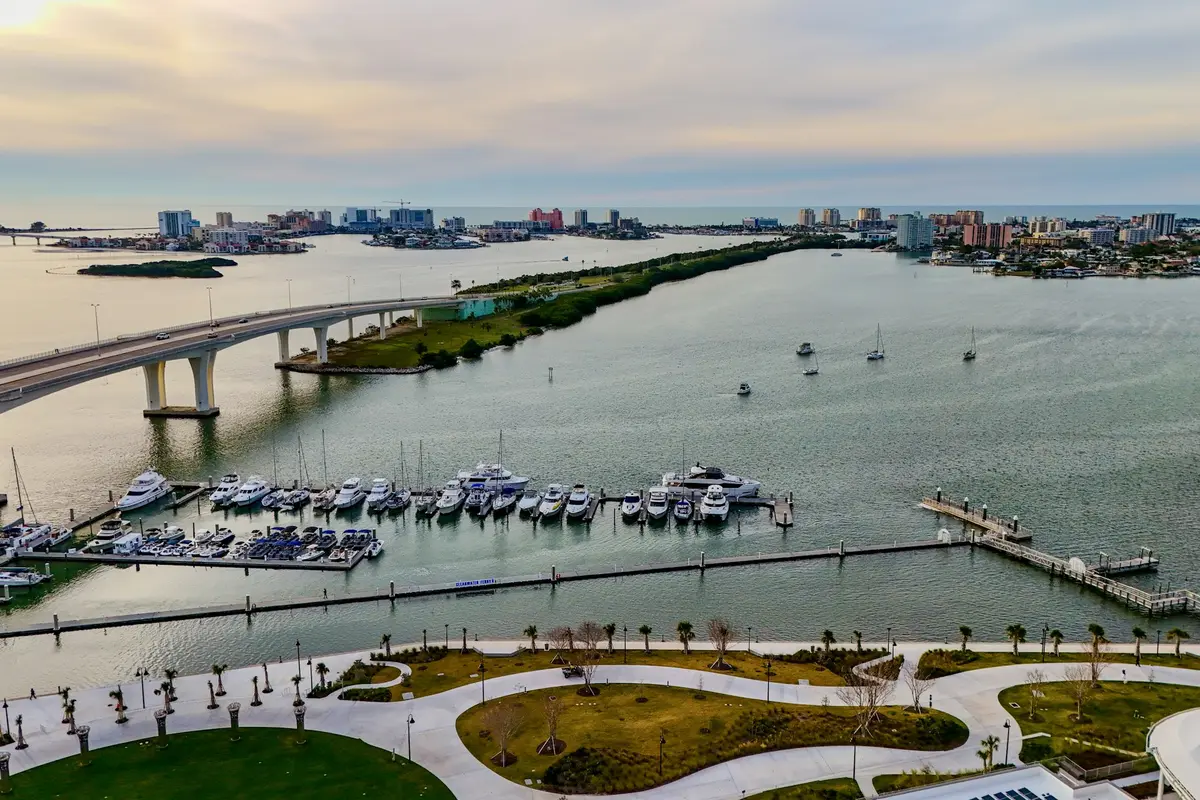
Clearwater splits into two urgent-response problems. On the mainland it is the usual picture — a tree onto a roof or across a drive, reachable directly. On the island and waterfront side, the constraint is often getting there at all, because causeway access and traffic conditions can add time that has nothing to do with the tree.
- Pinellas County
- Gulf-facing
- Barrier island and mainland
If the tree is threatening people, an occupied building or your only access, call straight away rather than waiting.
Before anyone goes near it
A chainsaw cut into a trunk or limb that is holding weight changes where that weight goes. Trees resting on roofs, fences and vehicles frequently move in an unexpected direction when the first cut is made. If the tree is bearing load, leave it for equipment and rigging rather than hand tools.
Never approach, move or work near a downed or sagging power line, and do not assume a line is inactive. Keep people, pets and vehicles well clear, and report the line to your electric utility or emergency services before anyone goes near the area.
What this means on Clearwater properties
That difference is worth stating on the call. On a barrier island property the working footprint can be a strip between a house and a seawall. That needs a different plan and different equipment from the same tree on a mainland bluff lot with a driveway and a back yard. Telling us which side of the city you are on changes what we send.
Gulf-facing property takes direct wind and salt exposure, and access across bridges and causeways can be constrained during and after weather events, which affects when work on the islands can realistically happen.
Clearwater is an incorporated Pinellas County city with its own municipal provisions, distinct from unincorporated county areas nearby. Requirements can vary by property and jurisdiction. Property owners should confirm current requirements with the relevant local authority before work begins.
Situations that are usually treated as urgent
Where a tree comes down across the only vehicle access on a narrow island lot, with a seawall on one side and a neighbouring wall on the other, there is often nowhere to put material while the route is being opened. Clearing then happens in loads rather than in one pass.
- Branches are hanging above a driveway, walkway, doorway or parking area where people pass underneath.
- Roots have lifted on one side, leaving a raised pad of soil or a visible gap at the base.
- A split has opened where two stems join, and the two halves are moving independently in the wind.
- Growth overhanging a dock, deck or seawall, where anything dropped would go into the water rather than onto ground.
- A tree newly exposed because whatever sheltered it has gone.
Is this actually an emergency, or can it be scheduled?
Calling it an emergency when it is not costs you money; calling it routine when it is not can cost a great deal more. The dividing line is not how alarming the tree looks — it is what sits underneath it and whether anything is still moving.
Can reasonably be scheduled Serious, but stable
- A dead or declining tree over open lawn, with nothing beneath it that people use.
- A lean the owner has known about for years, with no fresh soil movement at the base.
Should not wait Load, access or occupancy
- A lean pointing at a bedroom or an occupied room rather than at open ground.
- The only vehicle access to the property is blocked.
How an urgent call usually proceeds
- Describe the hazard by phone
Location, what the tree is touching, whether anyone is inside the affected part of the building, and whether access is blocked. This determines how the visit is prioritised.
- Establish a safe distance
Move people, pets and vehicles out from under the affected canopy and away from the fall path before anyone inspects further.
- Confirm the utility picture
If any line is involved, sagging or down, that becomes the utility's call first. Work does not begin around an unconfirmed line.
- Release load in a controlled sequence
Weight is taken off in stages so the remaining structure does not shift unpredictably onto what it is resting against.
- Clear access, then finish the site
Blocked routes are usually opened first so the property can function again, followed by the remaining cut-up and cleanup.
Useful to have ready when you call
- Photographs taken from a safe distance, if you can capture them without walking under the canopy.
- Whether any power, phone or cable line is involved, sagging or on the ground.
- Approximate trunk diameter and height, even as a rough comparison to the building.
- Measure the narrowest gate or gap on the route to the tree and have that figure ready. It answers more questions than almost anything else you can tell us.
- Move loose furniture, covers and anything on the deck out of the working area, or agree in advance who is moving it.
- Note anything fixed on the route — an air-conditioning unit, meter box, irrigation head or low wall — that cannot simply be stepped over.
What changes the shape of an emergency job
- How much material has to leave the property versus what can be staged temporarily.
- Ground conditions after rain, which affect what equipment can be brought in.
- Whether the failed section is on the ground or still suspended in the canopy.
- Whether a seawall, dock, bulkhead or shoreline edge sits inside the working radius. Those are load-bearing structures that cannot be used as a landing area.
- How much of the working footprint is left once the house, the deck and the water's edge are accounted for — on a frontage lot the answer is often very little.
- Whether material can be dropped at all, or whether every piece has to be rigged and lowered into a small space — the difference between those two is substantial.
Debris and cleanup
Urgent visits usually separate two things: opening what has to be usable again, and clearing everything else. Access routes, doorways and driveways are typically cleared first, with the remaining trunk sections and brush handled once the immediate hazard is down.
- Where a pool or enclosure sits beneath the work, keeping debris out of the water is part of the plan rather than an afterthought, and it usually means smaller cuts and more of them.
- Where the work is close to water, catching material before it enters is part of the method, and it normally means smaller sections and more rigging than the same tree inland.
- Trunk wood is cut to a size the access will take rather than to the largest size the machine could handle.
Hauled away, chipped on site, or stacked in an agreed position — all three are normal, and they are different amounts of work. Whichever you want should be stated in the scope before the day rather than settled afterwards.
Emergency Tree Removal in Clearwater: common questions
Does island access affect response?
It can. Bridge and causeway conditions are outside anyone's control, and after weather events they are sometimes restricted. It does not change the priority we assign, but it is realistic to factor it into expectations.
There is nowhere to put the material. What happens?
On a tight waterfront lot, material usually has to be loaded as it comes down rather than staged. That makes the job slower but it avoids blocking the very access we are trying to clear.
What counts as an emergency rather than an urgent job?
Broadly, it is an emergency when the tree is actively threatening people, an occupied structure or the only way in and out. A leaning tree over open lawn is serious but can usually be scheduled. A limb resting on a bedroom roof cannot.
Does coastal exposure change what a tree needs?
It can, though it is judged at the tree rather than assumed from the location. Salt-laden wind and direct exposure affect species differently, and a tree that has grown up with that exposure behaves differently from one recently made exposed. What we will not do is give a verdict on a specific tree's condition from a description.
The tree is right at the water's edge. Does that change the approach?
Considerably. A seawall or dock cannot take dropped material, there is rarely a free drop zone on a frontage lot, and anything that goes into the water is far harder to recover than it is to prevent. Work in that position is normally rigged and lowered in small sections, which takes longer than the same tree would inland.
Related tree services in Clearwater
If the tree is already down
Material on the ground is still holding load, and the first cut is a reading problem before it is a cutting problem.
Read about fallen tree clearingIf several trees are involved
Damage across a property after a storm is triaged differently from a single failure.
Read about storm damage responseOnce the hazard is cleared
What remains on the ground afterwards is usually a larger volume than it looks.
See how debris hauling worksDiscuss a Dangerous Tree in Clearwater
Tell us whether you are mainland or island, what the tree is resting on and whether access is blocked. On Clearwater properties, where you are changes the plan.
- Phone: 877-269-2454
- Serving Tampa Bay, Florida
Information on this page is general guidance for property owners and managers in the Tampa Bay area. It is not an arboricultural assessment, a legal opinion, a permitting determination or an insurance decision. Tree condition and site risk can only be judged in person.