Clearwater, Florida
Storm and Hurricane Damage Tree Removal in Clearwater, FL
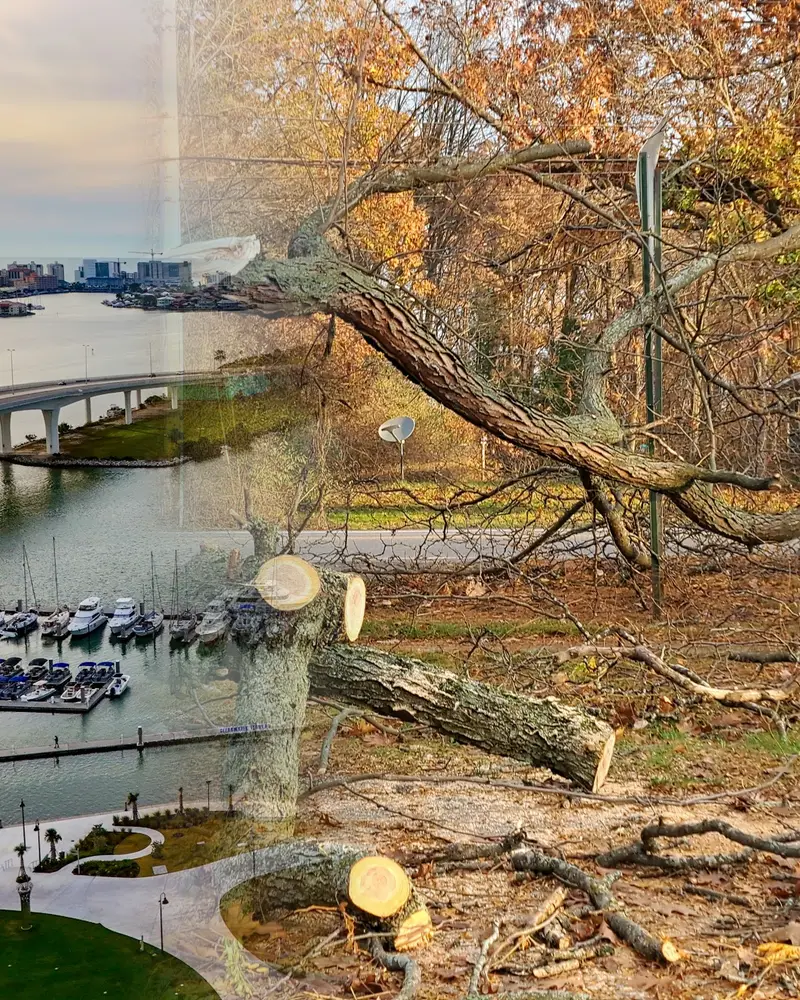
Gulf-facing property takes weather directly, and the damage pattern reflects it: canopies stripped on the windward side, palms with fronds torn away, and trees on exposed frontages that have shifted rather than fallen. On the mainland, damage tends to be more localised and more structural.
- Pinellas County
- Barrier island and mainland
- Gulf-facing
If the tree is threatening people, an occupied building or your only access, call straight away rather than waiting.
What this means on Clearwater properties
One Clearwater complication is sequencing. Island and waterfront properties may not be accessible immediately after a significant event, and by the time they are, suspended material has often been sitting in canopies for days. That material has not become safer — it has simply had longer to work loose.
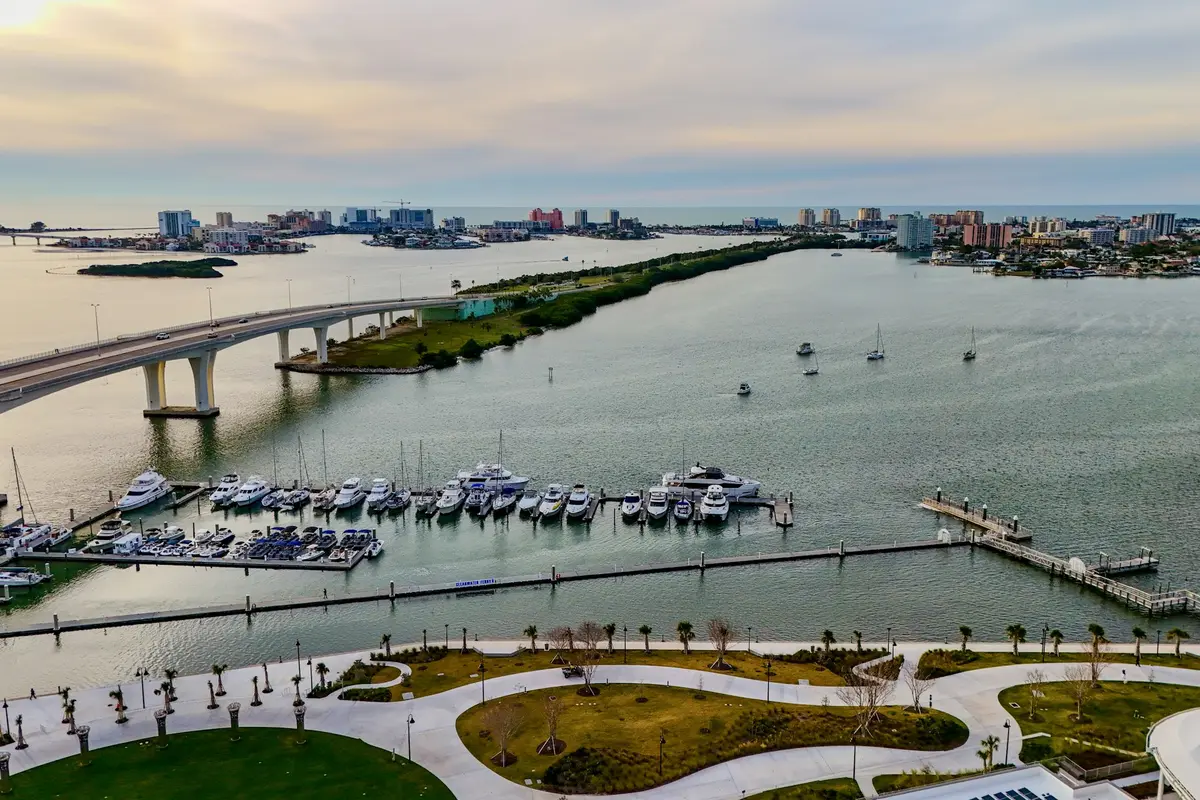
Mainland neighbourhoods include long-established residential streets with substantial canopy, while island and waterfront properties tend toward tighter lots, salt exposure and a heavy proportion of palms and coastal-tolerant planting.
Clearwater is an incorporated Pinellas County city with its own municipal provisions, distinct from unincorporated county areas nearby. Requirements can vary by property and jurisdiction. Property owners should confirm current requirements with the relevant local authority before work begins.
Before anyone goes near it
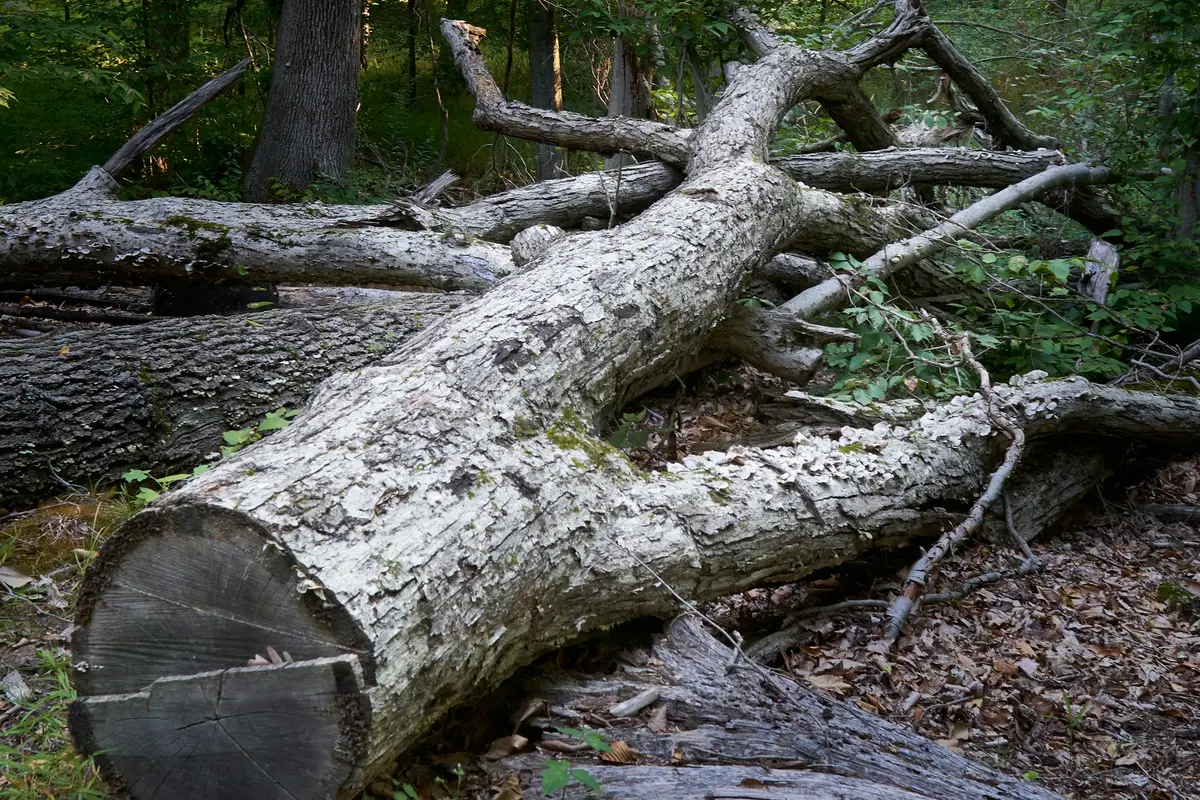
A tree that shifted and stopped has not necessarily finished moving. Saturated soil takes days to drain, and a root plate that lifted once will often lift further under the next gust or when weight is removed from the canopy. Keep people out of the lean direction and treat the tree as unresolved until it is assessed.
Never approach, move or work near a downed or sagging power line, and do not assume a line is inactive. Keep people, pets and vehicles well clear, and report the line to your electric utility or emergency services before anyone goes near the area.
What to look for after the wind drops
On a waterfront lot expect two kinds of damage at once: frond debris across a pool cage from palms, and any broadleaf tree at the seawall edge now leaning. They are different jobs and the second is the more urgent.
- A split where two codominant stems meet, especially if you can see into the union.
- A fresh lean, or a trunk that no longer lines up with a fence post, wall or path it used to parallel.
- Palms with a bent or kinked trunk, or a crown that has lost most of its fronds on one side.
- Growth closing in over a narrow side route that is the only way in or out.
- Growth over a street frontage or footpath where vehicles and pedestrians pass beneath.
After a storm: what to deal with now and what can wait
The days after a storm are more dangerous than the storm itself, largely because attention goes to the biggest pile rather than to what is still overhead. Sequencing matters more than speed.
Can wait for a scheduled visit On the ground, going nowhere
- Brush and limb debris lying on lawn, away from paths and drives.
- Cosmetic canopy damage on trees whose bases have not moved.
Deal with first Still loaded or still overhead
- Any tree that is standing at a different angle than it was before the storm.
- Torn limbs lodged in a canopy — they come down on their own schedule, not yours.
How post-storm work is usually sequenced
- Triage by risk, not by size
The largest pile of debris is rarely the most dangerous thing on a property. Suspended limbs and destabilised trunks come before ground-level brush.
- Document visible damage
Photographs taken from safe positions before anything is moved are useful for your own records and for any conversation you have with an insurer.
- Remove suspended material
Hangers and partly detached limbs are brought down under control, since these are the pieces most likely to fall on someone during cleanup.
- Deal with destabilised trunks
Trees with root movement or major splits are taken down or reduced rather than left to a second weather system.
- Stage and clear debris
Material is cut down to manageable sizes and either hauled or staged where it does not block drainage, driveways or collection access.
Worth doing before the crew arrives
- Check current instructions from your city or county about debris placement, which change after major events.
- List every affected tree, not only the obvious one, so nothing suspended is missed.
- Note the date and the storm, since that context matters for your own records.
- Have a think about where a truck and chipper could stand near the property, and whether that space can be kept clear on the day.
- Measure the narrowest gate or gap on the route to the tree and have that figure ready. It answers more questions than almost anything else you can tell us.
- Note anything fixed on the route — an air-conditioning unit, meter box, irrigation head or low wall — that cannot simply be stepped over.
What drives the size of a storm job
- Whether the damage is suspended in canopies or already down on the ground.
- How many trees were affected, and whether they failed into each other.
- The mix of hardwood trunk sections and light brush, which handle very differently.
- How far cut material has to be carried to reach the truck or chipper. Carry distance is often a bigger factor than the size of the tree.
- How much of the working footprint is left once the house, the deck and the water's edge are accounted for — on a frontage lot the answer is often very little.
- Whether material can be lowered clear of the enclosure or has to be taken out in pieces small enough to be handled over it.
Debris and cleanup
Where a property is going to need more than one visit, it is usually better to remove the hazardous and structural material first and let lighter brush wait, rather than clearing the easy volume and leaving suspended limbs overhead.
- Trunk wood is cut to a size the access will take rather than to the largest size the machine could handle.
- Where a pool or enclosure sits beneath the work, keeping debris out of the water is part of the plan rather than an afterthought, and it usually means smaller cuts and more of them.
- Staging space on a frontage lot is usually limited, so material tends to be loaded as it comes down rather than piled.
Hauled away, chipped on site, or stacked in an agreed position — all three are normal, and they are different amounts of work. Whichever you want should be stated in the scope before the day rather than settled afterwards.
Storm and Hurricane Damage Tree Removal in Clearwater: common questions
Where does storm debris go in Clearwater?
The city administers its own arrangements, separate from unincorporated Pinellas County, and issues temporary instructions after major events. Confirm the current guidance for your address and keep material clear of drains, hydrants, meters and low lines.
Is salt spray damage the same as storm damage?
They often arrive together but they are different things. Wind causes the breakage; salt-laden spray can cause foliage burn and dieback that shows up over following weeks. A tree that looks scorched rather than broken may be showing the second.
How soon after a storm should trees be looked at?
As soon as it is safe to walk the property. The urgent items are suspended limbs and any tree whose base has moved. Cosmetic damage can wait; a hanger over a walkway cannot.
Can a tree be pruned to make it safer in a storm?
Selective work can reduce specific risks — removing deadwood, addressing a poorly attached limb, clearing material from directly above something that matters. What it cannot do is make a tree storm-proof, and heavy topping generally makes a tree less stable rather than more. Anyone promising a storm-proof tree is overstating what pruning does.
How much room does a crew actually need?
Less than most people expect for the cutting and more than most people expect for the material. The working area around the tree matters, but so does somewhere to put what comes down and a route to move it. Describing both when you call gets you a more useful answer than describing the tree alone.
Related tree services in Clearwater
For a tree already on the ground
Load and tension have to be read before anything is cut, particularly where the canopy is resting on a structure.
Read about fallen tree clearingFor trees left standing afterwards
A tree that moved but did not fall is the one most often overlooked in the clean-up.
Read about hazardous tree assessmentFor the material left behind
Post-storm piles are usually two or three loads rather than one once they are pulled apart.
See how debris hauling worksAsk About Storm-Damaged Tree Removal in Clearwater
Describe what came down, what is still suspended and whether the property is water-facing. On the Gulf side of Clearwater the exposure picture matters as much as the damage.
- Phone: 877-269-2454
- Serving Tampa Bay, Florida
Information on this page is general guidance for property owners and managers in the Tampa Bay area. It is not an arboricultural assessment, a legal opinion, a permitting determination or an insurance decision. Tree condition and site risk can only be judged in person.