Land O’ Lakes, Florida
Tree Trimming and Pruning in Land O’ Lakes, FL
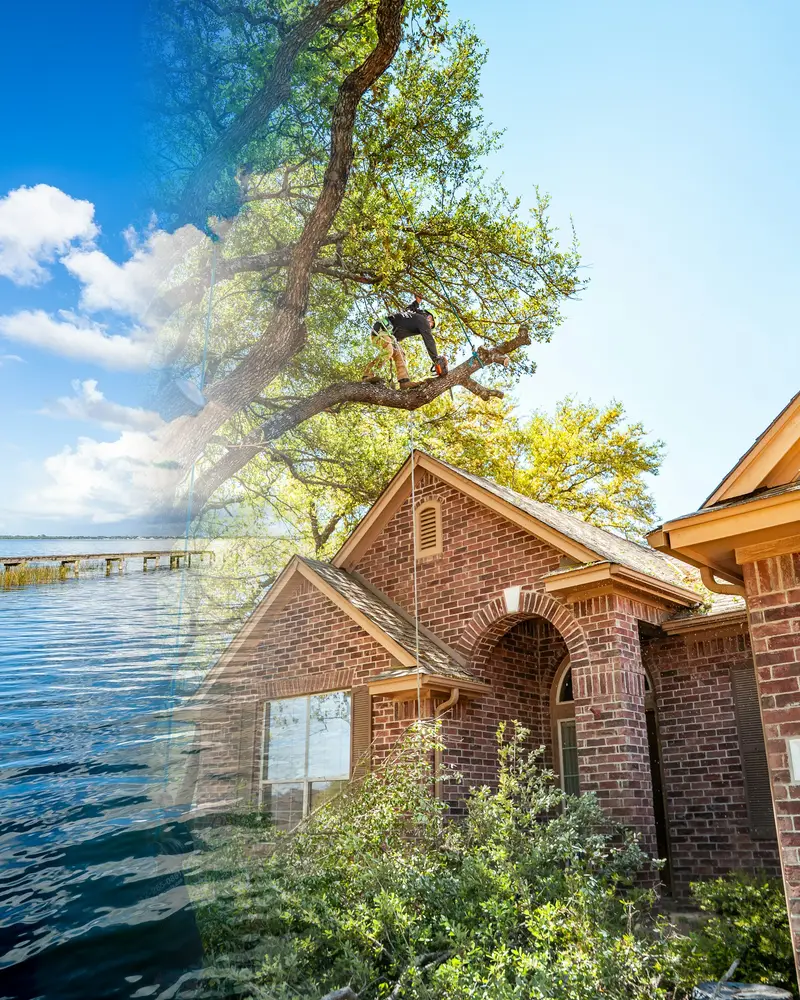
Pruning here is usually a property-wide job rather than a single-tree one. With a dozen or more mature trees on an acre, the useful approach is a walk through the whole site identifying what genuinely needs work — deadwood over used areas, clearance along the drive, damaged limbs — rather than pricing trees individually.
- Pasco County
- Mixed acreage
- Lakes and larger lots
What this means on Land O’ Lakes properties
Driveway clearance is the recurring specific requirement. Long private drives lined with mature trees need vertical clearance for delivery vehicles and service trucks, and that clearance closes up steadily in a long growing season. It is one of the few pruning objectives here that genuinely repeats on a cycle.
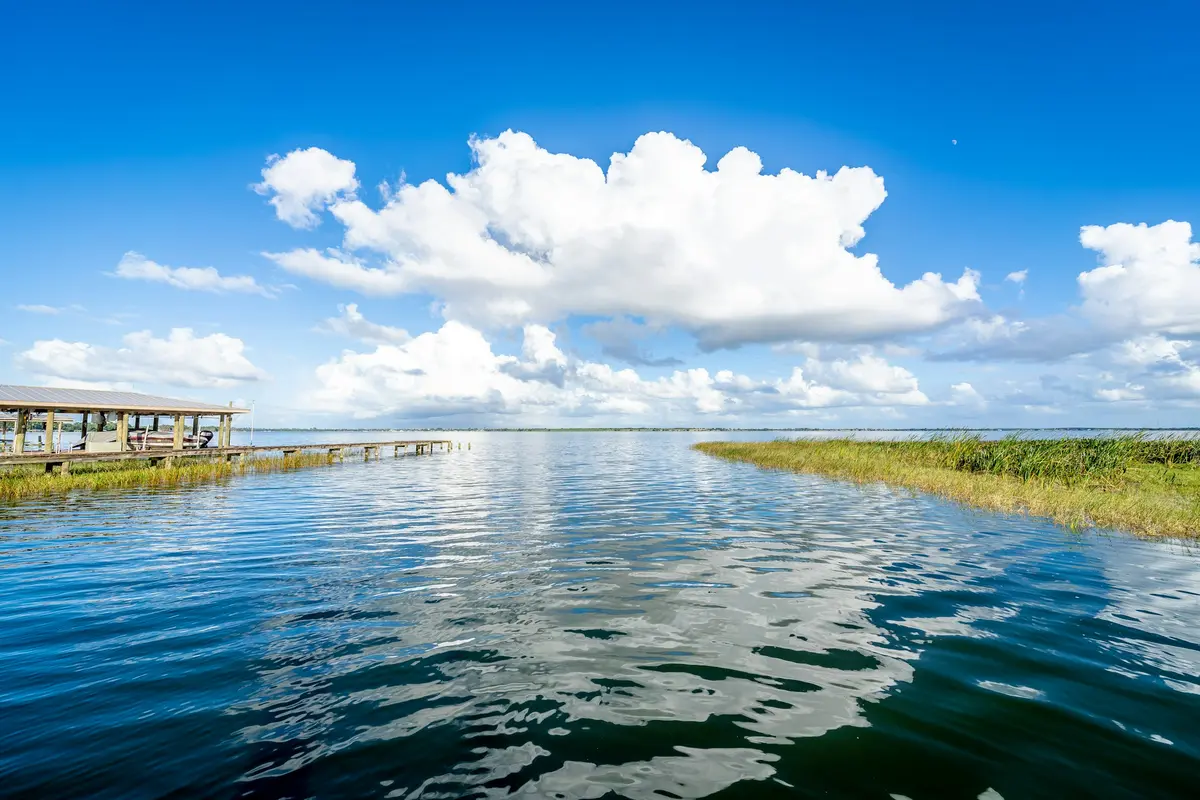
Land O’ Lakes is an unincorporated Pasco County area characterised by numerous lakes and a mix of suburban subdivisions, semi-rural roads and properties running to an acre or more.
Land O’ Lakes is unincorporated and therefore falls under Pasco County provisions. Requirements can vary by property and jurisdiction. Property owners should confirm current requirements with the relevant local authority before work begins.
Common reasons to prune
Driveway clearance along a long approach, plus deadwood removal from the trees nearest the house, is normally done as one visit. The mobilisation is shared and the access is the same.
- Sprouts and suckers from the base or along the main stem taking energy from the canopy.
- Vines climbing into the canopy and adding weight and wind load.
- Branches touching or rubbing a roof, gutter, wall or window.
- Growth overhanging a dock, deck or seawall, where anything dropped would go into the water rather than onto ground.
- Clearance along a long driveway or approach where growth has closed in from both sides.
Pruning versus removal
Pruning solves branch problems. It does not solve trunk problems, and it cannot make a tree fit a space that is fundamentally too small for it.
Pruning is the right tool Branch-level issues
- The problems are dead, broken, crossing or poorly placed branches.
- Clearance can be achieved by removing a limited share of the canopy.
Pruning will not fix it Whole-tree issues
- The tree's mature size is simply wrong for the position.
- Repeated heavy cutting has already left a canopy of weakly attached regrowth.
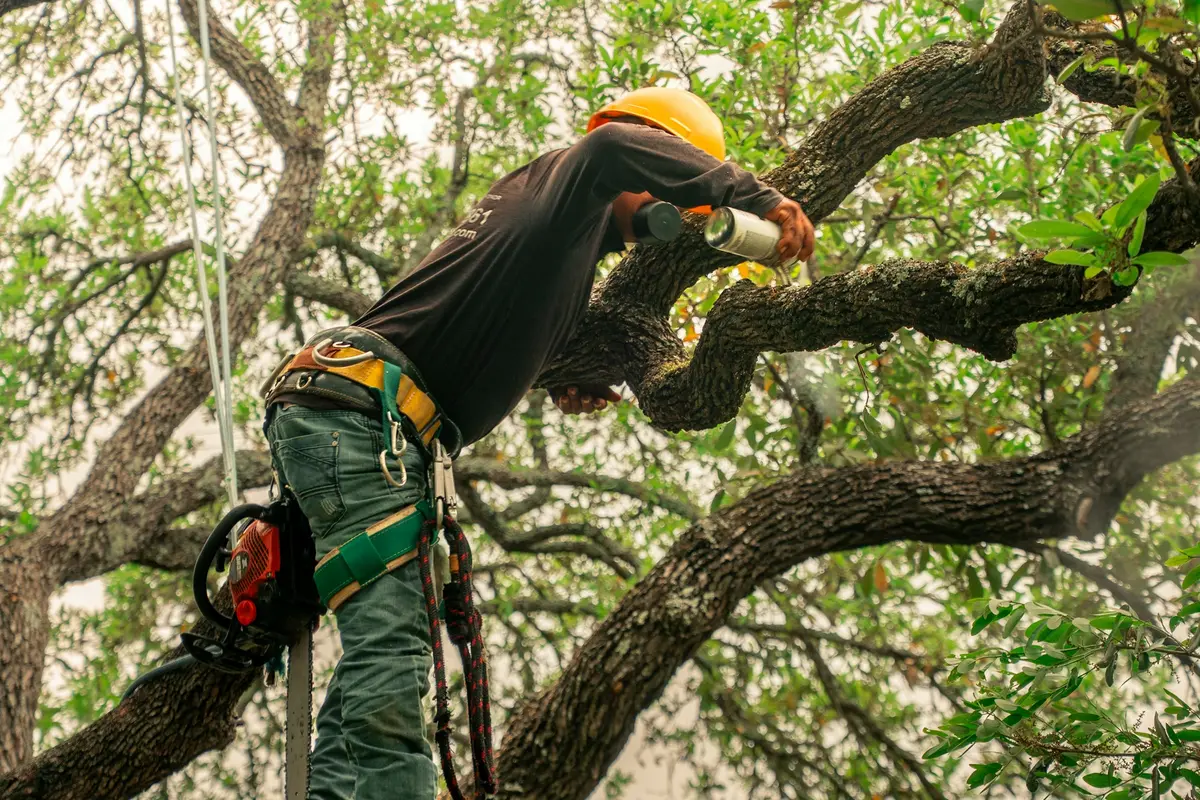
Working aloft, and why it is the risk
Stripping a canopy back hard produces a flush of weakly attached regrowth, which is exactly what fails in the next strong wind. It also removes the leaf area the tree needs. Restraint here is a safety decision as much as an arboricultural one.
Never approach, move or work near a downed or sagging power line, and do not assume a line is inactive. Keep people, pets and vehicles well clear, and report the line to your electric utility or emergency services before anyone goes near the area.
How pruning work is normally approached
- Agree the objective
Clearance, deadwood, structure or sightlines. Pruning without a stated objective is how trees end up over-cut.
- Assess from the ground and in the canopy
Attachment points, decay, previous cuts and the tree's response to earlier work all change what is sensible now.
- Work to the branch collar
Cuts are made at the right point so the wound can close properly, rather than leaving stubs or cutting flush into the stem.
- Balance the canopy
Where weight is one-sided, reduction is spread rather than concentrated, so the tree is not left with a new imbalance.
- Clear and check
Debris removed, cuts reviewed from the ground, and any follow-up interval discussed if the work is staged.
What sets the size of a pruning job
- What is underneath — an open lawn allows dropping, a courtyard needs everything lowered.
- Multiple trees in one visit, which usually works out more efficiently than single calls.
- Canopy size and the number of cuts needed to meet the objective.
- The length of the approach from the road to the working area — a long unmade track changes the plant that can realistically be brought in.
- Whether there is a genuine drop zone. Open ground is the one thing that makes tree work straightforward, and where it exists the method changes completely.
- Whether the ground around the root plate has been saturated recently, which affects both stability and what can be driven across the site.
Decide these before the visit
- Where brush can be staged while the chipper works.
- What outcome you actually want — more light, roof clearance, less deadwood, a tidier shape.
- Whether there are cables, lights or fixtures within the canopy.
- Decide whether material can stay on the property. On a larger lot that is often a genuinely useful option, and it changes what the work involves.
- Say whether the approach is made-up surface or open ground, and whether it has stayed wet recently. It is the difference between driving to the tree and working off it.
- Look at the ground at the base of the tree and mention anything unusual — cracking, lifting, or soil that has moved in an arc on one side.
Debris and cleanup
Pruning produces mostly light brush, which chips efficiently. The practical consideration is usually where the chipper can stand and how far material has to be dragged to reach it.
- Where the work is close to water, catching material before it enters is part of the method, and it normally means smaller sections and more rigging than the same tree inland.
- Where ground conditions limit vehicle access, material is often staged nearer the road and loaded from there, which needs a position agreeing in advance.
- On ground that holds water, staging is normally kept to firm surfaces such as a drive or path rather than lawn, which sometimes lengthens the carry.
Hauled away, chipped on site, or stacked in an agreed position — all three are normal, and they are different amounts of work. Whichever you want should be stated in the scope before the day rather than settled afterwards.
Tree Trimming and Pruning in Land O’ Lakes: common questions
Is it more efficient to do several trees at once?
Considerably, on a property this size. Setup, access and the chipper position are shared, and the crew is not remobilising for each tree. A property walk is usually the sensible starting point.
How often will driveway clearance need redoing?
It depends on the species and the height you clear to, but in a long growing season it is a recurring job rather than a one-off. Clearing to a generous height rather than the minimum extends the interval considerably.
How much can be taken off at once?
Less than most people expect. Removing a large share of living canopy in one visit stresses a tree and often triggers weak, fast regrowth. Where a big change is wanted, staging it across more than one visit is usually the better route.
The ground is soft where the tree is. Does the work have to wait?
Sometimes, and it is usually better than the alternative. Driving heavy equipment over saturated ground leaves damage that outlasts the tree work. Where waiting is not practical, the method shifts toward smaller equipment and more hand carrying, which takes longer but leaves the ground intact.
The tree is right at the water's edge. Does that change the approach?
Considerably. A seawall or dock cannot take dropped material, there is rarely a free drop zone on a frontage lot, and anything that goes into the water is far harder to recover than it is to prevent. Work in that position is normally rigged and lowered in small sections, which takes longer than the same tree would inland.
Related tree services in Land O’ Lakes
When pruning will not be enough
Where the concern is in the trunk or the root flare rather than the branches, pruning cannot resolve it. This is the comparison worth making before booking either.
Compare pruning with tree removalIf the tree looks unwell rather than overgrown
Fungal growth at the base, a cavity, dieback at the top of the canopy or a lean that has changed are condition questions, not clearance questions.
Read about hazardous tree assessmentIf it is mostly the brush you want gone
Where material is already on the ground from earlier work or a storm, hauling is a separate job from cutting.
See how debris removal is handledDiscuss Trimming Your Trees in Land O’ Lakes
Tell us how many trees are involved and what the objectives are — drive clearance, deadwood, specific limbs. On a Land O’ Lakes property a whole-site walk usually works best.
- Phone: 877-269-2454
- Serving Tampa Bay, Florida
Information on this page is general guidance for property owners and managers in the Tampa Bay area. It is not an arboricultural assessment, a legal opinion, a permitting determination or an insurance decision. Tree condition and site risk can only be judged in person.