Clearwater, Florida
Tree Trimming and Pruning in Clearwater, FL
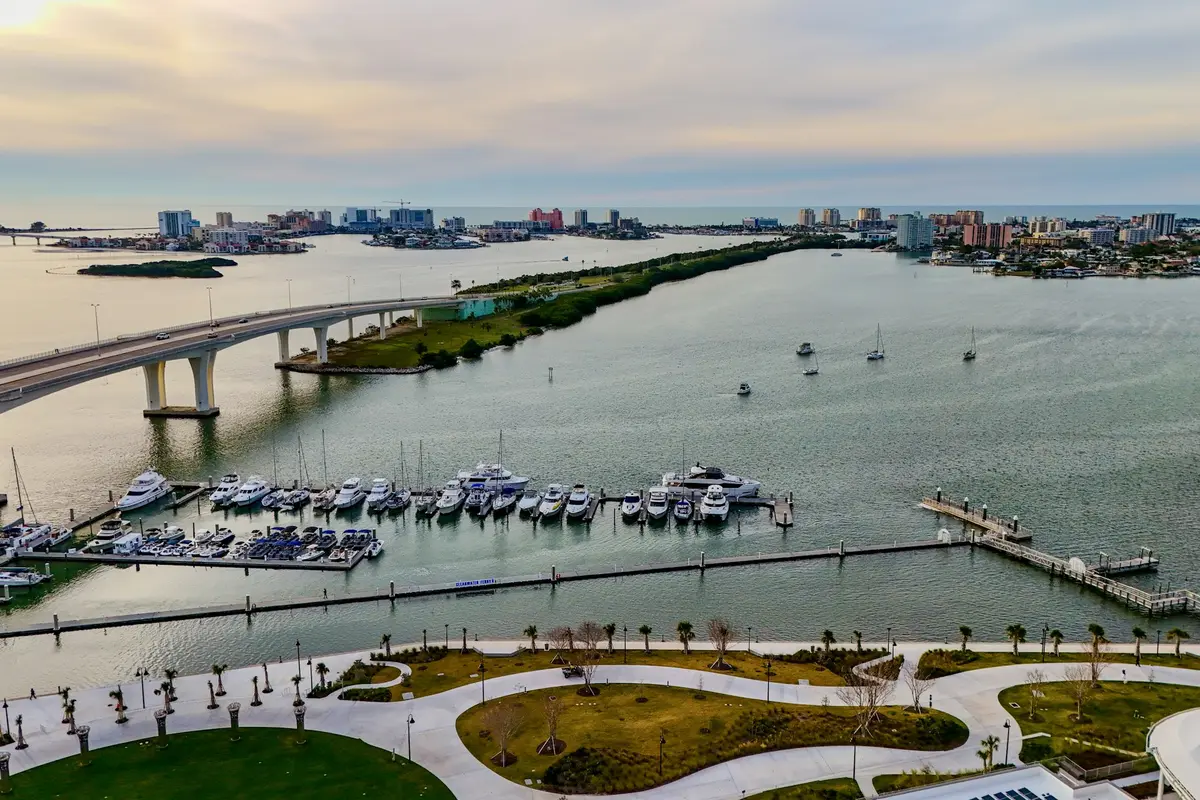
Pruning on the Gulf side is a narrower target than inland. Trees here are already working against salt-laden wind, and removing large amounts of live canopy on top of that stress is a poor trade. Deadwood, broken material and genuine structural defects are the useful work; general thinning is usually not.
- Pinellas County
- Barrier island and mainland
- Gulf-facing
What this means on Clearwater properties
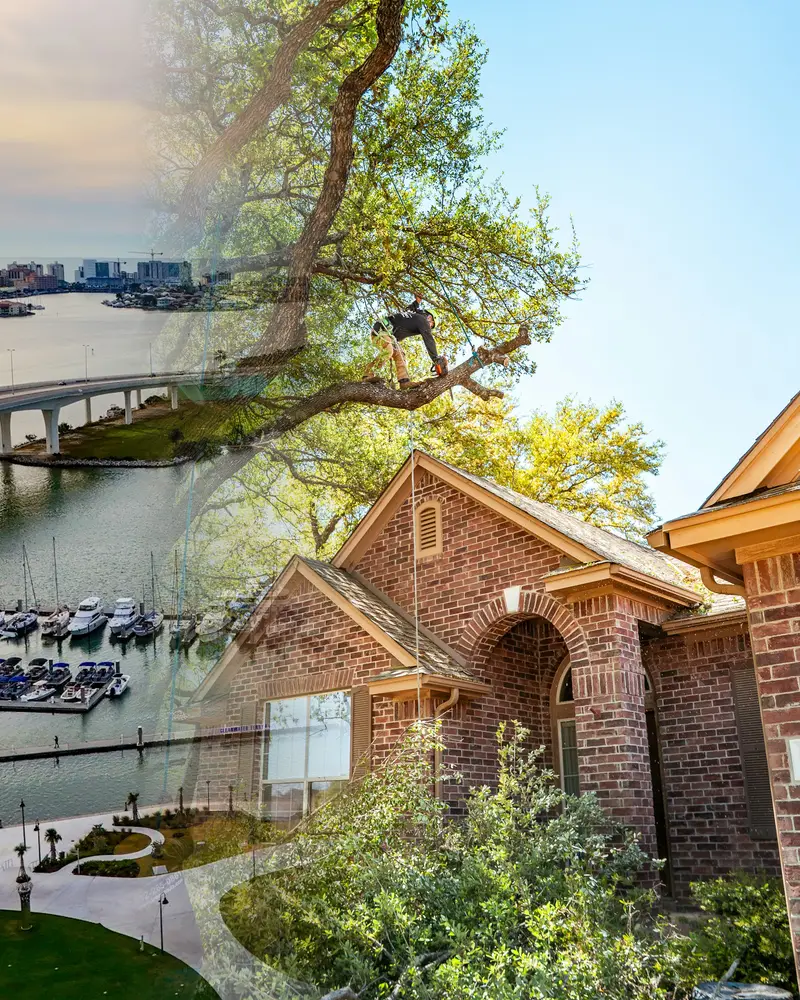
Mainland Clearwater canopy and island planting need different handling. Inland, pruning is mostly about clearance from rooflines, drives and sightlines. On the water side it is more often about managing palms and coastal-tolerant species that are shedding material onto decks, cages and walkways, where litter is a continual maintenance issue rather than a safety one.
Island and waterfront work is frequently limited by narrow frontages, seawalls, pool cages and shared driveways, with very little room to set down material near the tree.
Clearwater is an incorporated Pinellas County city with its own municipal provisions, distinct from unincorporated county areas nearby. Requirements can vary by property and jurisdiction. Property owners should confirm current requirements with the relevant local authority before work begins.
Common reasons to prune
Clearance over a pool deck means getting overhanging material back far enough that the deck stays usable, without cutting so hard that the tree answers with a flush of weak regrowth. Those two objectives pull against each other, and the balance is worth agreeing beforehand.
- A canopy grown lopsided toward light, putting most of its weight on one side.
- Dead limbs held in the canopy above a walkway, drive or seating area.
- Sprouts and suckers from the base or along the main stem taking energy from the canopy.
- Growth overhanging a dock, deck or seawall, where anything dropped would go into the water rather than onto ground.
- A tree newly exposed because whatever sheltered it has gone.
Pruning versus removal
Pruning solves branch problems. It does not solve trunk problems, and it cannot make a tree fit a space that is fundamentally too small for it.
Pruning is the right tool Branch-level issues
- The objective is sightlines, light or keeping growth off a building.
- The tree is young enough that structure can still be guided.
Pruning will not fix it Whole-tree issues
- The tree's mature size is simply wrong for the position.
- Roots are in direct conflict with a slab, wall or drain.
Working aloft, and why it is the risk
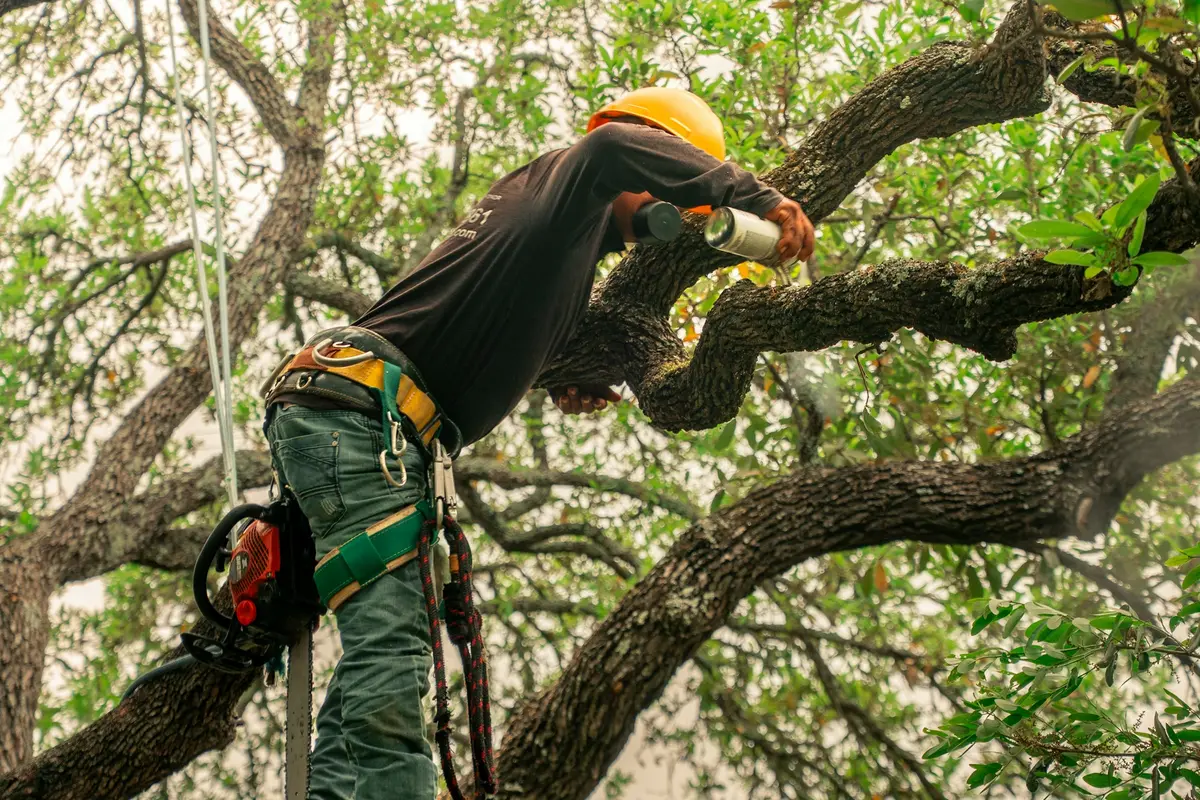
Deadwood is lighter than live wood but far more brittle, and it breaks rather than bends. A dead limb being removed can shed pieces sideways instead of dropping where you expect, so the area below stays clear for the whole operation rather than just for the final cut.
Never approach, move or work near a downed or sagging power line, and do not assume a line is inactive. Keep people, pets and vehicles well clear, and report the line to your electric utility or emergency services before anyone goes near the area.
How pruning work is normally approached
- Agree the objective
Clearance, deadwood, structure or sightlines. Pruning without a stated objective is how trees end up over-cut.
- Assess from the ground and in the canopy
Attachment points, decay, previous cuts and the tree's response to earlier work all change what is sensible now.
- Set the limit
How much live canopy comes off is decided before cutting starts, and kept modest. Removing too much at once weakens the tree and triggers stress regrowth.
- Balance the canopy
Where weight is one-sided, reduction is spread rather than concentrated, so the tree is not left with a new imbalance.
- Clear and check
Debris removed, cuts reviewed from the ground, and any follow-up interval discussed if the work is staged.
What sets the size of a pruning job
- Whether the work is clearance over a structure or general canopy management.
- Canopy size and the number of cuts needed to meet the objective.
- Whether nearby beds and plantings need protection during the drop.
- How far cut material has to be carried to reach the truck or chipper. Carry distance is often a bigger factor than the size of the tree.
- How much of the working footprint is left once the house, the deck and the water's edge are accounted for — on a frontage lot the answer is often very little.
- Whether the work needs any pedestrian or vehicle management on the street side, which has to be planned rather than improvised.
Decide these before the visit
- Which specific branches concern you, so nothing gets missed and nothing extra gets cut.
- Whether there are cables, lights or fixtures within the canopy.
- Where brush can be staged while the chipper works.
- Decide whether vehicles can be moved off the driveway for the day, and whether a gate or side access can be unlocked and left open.
- Measure the narrowest gate or gap on the route to the tree and have that figure ready. It answers more questions than almost anything else you can tell us.
- Where kerbside space is shared or contested, letting immediate neighbours know in advance usually prevents the awkward conversation happening mid-job.
Debris and cleanup
Pruning produces mostly light brush, which chips efficiently. The practical consideration is usually where the chipper can stand and how far material has to be dragged to reach it.
- Staging space on a frontage lot is usually limited, so material tends to be loaded as it comes down rather than piled.
- Where a pool or enclosure sits beneath the work, keeping debris out of the water is part of the plan rather than an afterthought, and it usually means smaller cuts and more of them.
- Trunk wood is cut to a size the access will take rather than to the largest size the machine could handle.
Hauled away, chipped on site, or stacked in an agreed position — all three are normal, and they are different amounts of work. Whichever you want should be stated in the scope before the day rather than settled afterwards.
Tree Trimming and Pruning in Clearwater: common questions
Should coastal trees be pruned harder to resist wind?
No. Heavy thinning removes structure the tree has developed in response to its own exposure and produces weakly attached regrowth. The useful work is removing dead and defective material, not reducing the canopy generally.
Can pruning stop debris falling into the pool?
It can reduce it substantially by removing overhang and deadwood, but it will not eliminate it. Any canopy near a pool sheds something, and expecting a permanent fix usually leads to over-cutting.
Is topping ever appropriate?
Cutting a canopy back to stubs is widely regarded as poor practice. It creates large wounds, produces weakly attached regrowth and generally leaves a tree less able to handle wind, not more. Reduction to appropriate lateral branches is the alternative.
How much room does a crew actually need?
Less than most people expect for the cutting and more than most people expect for the material. The working area around the tree matters, but so does somewhere to put what comes down and a route to move it. Describing both when you call gets you a more useful answer than describing the tree alone.
How is pruning planned around a screened pool enclosure?
By treating the cage as something that cannot take any load at all. Limbs above it are normally rigged and lowered rather than dropped, cut sizes are kept small enough to control, and the sequence works outward so nothing swings back over the screen. It is slower than open-ground work, and that is the point of it.
Related tree services in Clearwater
When pruning will not be enough
Where the concern is in the trunk or the root flare rather than the branches, pruning cannot resolve it. This is the comparison worth making before booking either.
Compare pruning with tree removalIf the tree looks unwell rather than overgrown
Fungal growth at the base, a cavity, dieback at the top of the canopy or a lean that has changed are condition questions, not clearance questions.
Read about hazardous tree assessmentIf it is mostly the brush you want gone
Where material is already on the ground from earlier work or a storm, hauling is a separate job from cutting.
See how debris removal is handledDiscuss Trimming Your Trees in Clearwater
Tell us the objective — deck clearance, roof clearance, deadwood — and which branches concern you. On exposed Clearwater property, precise beats extensive.
- Phone: 877-269-2454
- Serving Tampa Bay, Florida
Information on this page is general guidance for property owners and managers in the Tampa Bay area. It is not an arboricultural assessment, a legal opinion, a permitting determination or an insurance decision. Tree condition and site risk can only be judged in person.