Largo, Florida
Storm and Hurricane Damage Tree Removal in Largo, FL
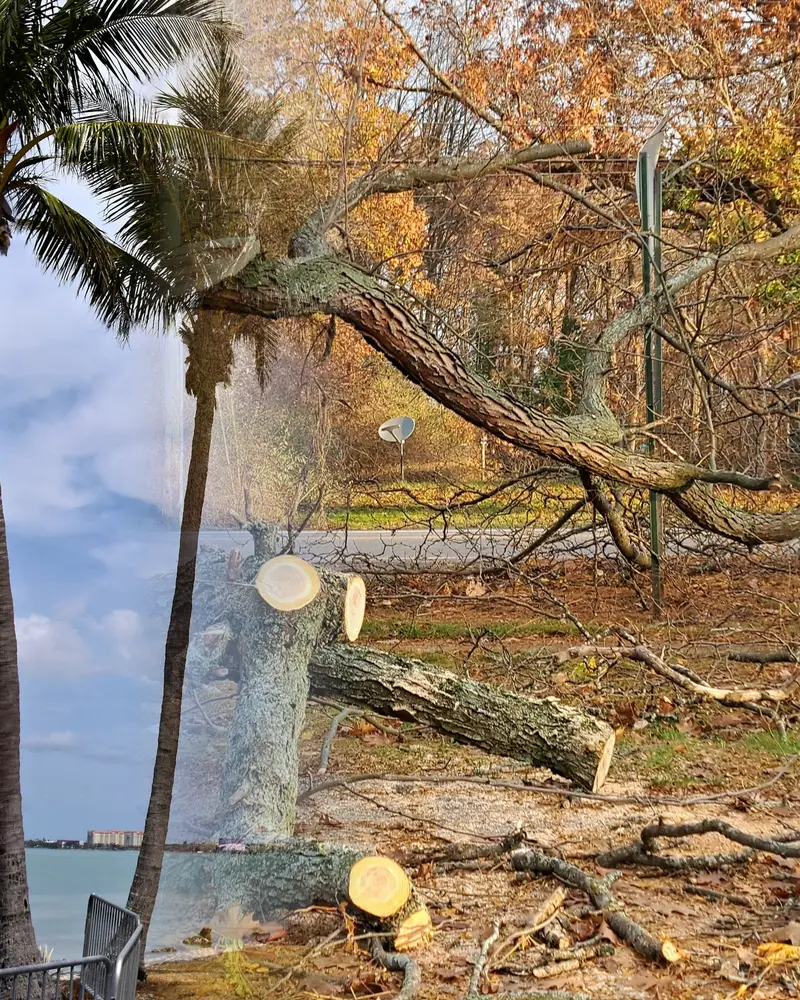
Largo's position in the middle of the Pinellas peninsula means exposure from either direction depending on a storm's track, with little sheltering distance from open water on either side. Combined with dense development, that produces damage that lands on structures rather than on open ground almost every time.
- Pinellas County
- Densely built
- Mid-peninsula city
If the tree is threatening people, an occupied building or your only access, call straight away rather than waiting.
What this means on Largo properties
In the manufactured and mobile home communities the post-storm picture is distinctive: damage spread across many closely spaced units, with debris blocking narrow internal lanes that emergency and service vehicles need. Clearing access within those communities is frequently more urgent than clearing any individual tree.
Working room is the defining constraint. Narrow side yards, carports, screen rooms and closely parked vehicles frequently mean material has to be lowered in small sections rather than dropped.
Largo is an incorporated Pinellas County city administering its own code, and adjacent unincorporated areas are governed differently. Requirements can vary by property and jurisdiction. Property owners should confirm current requirements with the relevant local authority before work begins.
Before anyone goes near it
Most storm-related tree injuries happen during cleanup rather than during the storm. Partly detached limbs settle, saturated root plates keep moving, and cut material under tension springs. Treat the property as an active hazard zone until damaged trees have been dealt with, not just until the rain stops.
Never approach, move or work near a downed or sagging power line, and do not assume a line is inactive. Keep people, pets and vehicles well clear, and report the line to your electric utility or emergency services before anyone goes near the area.
What to look for after the wind drops
Where an internal lane is blocked, residents cannot move vehicles until it is cleared. That normally moves the lane to the front of the queue ahead of larger but less obstructive damage.
- Torn limbs still caught in the canopy, sometimes called hangers, which can drop long after the storm passes.
- A split where two codominant stems meet, especially if you can see into the union.
- Whole sections of canopy missing from one side, leaving the tree badly unbalanced.
- Material overhanging a screened enclosure or pool deck, which cannot take anything that lands on it.
- Growth closing in over a narrow side route that is the only way in or out.
After a storm: what to deal with now and what can wait
The days after a storm are more dangerous than the storm itself, largely because attention goes to the biggest pile rather than to what is still overhead. Sequencing matters more than speed.
Can wait for a scheduled visit On the ground, going nowhere
- Brush and limb debris lying on lawn, away from paths and drives.
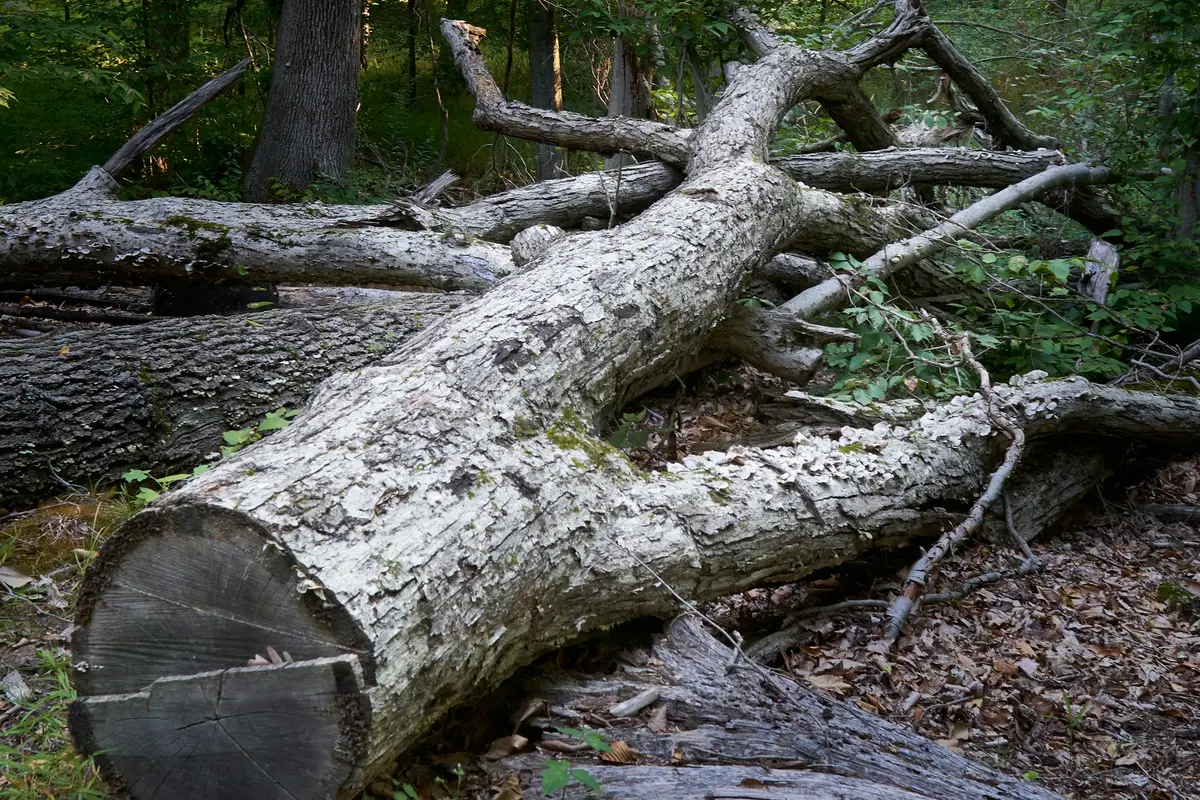
- A tree already fully down in open ground with no tension in it.
Deal with first Still loaded or still overhead
- A split stem or a union that has opened but not failed completely.
- Any tree that is standing at a different angle than it was before the storm.
How post-storm work is usually sequenced
- Triage by risk, not by size
The largest pile of debris is rarely the most dangerous thing on a property. Suspended limbs and destabilised trunks come before ground-level brush.
- Document visible damage
Photographs taken from safe positions before anything is moved are useful for your own records and for any conversation you have with an insurer.
- Remove suspended material
Hangers and partly detached limbs are brought down under control, since these are the pieces most likely to fall on someone during cleanup.
- Reassess what is left standing
Surviving trees are looked at again with the storm's effects in mind, because exposure and load have changed across the whole property.
- Stage and clear debris
Material is cut down to manageable sizes and either hauled or staged where it does not block drainage, driveways or collection access.
Worth doing before the crew arrives
- Note the date and the storm, since that context matters for your own records.
- Identify where a truck and chipper can get in, including any route the storm has blocked.
- List every affected tree, not only the obvious one, so nothing suspended is missed.
- Note whether anything nearby has been removed or thinned recently — a tree that was sheltered and is now exposed is worth flagging.
- Note anything mounted on the roof or wall within the working area: solar panels, satellite dishes, lighting, gutter guards or a carport roof.
- Note anything fixed on the route — an air-conditioning unit, meter box, irrigation head or low wall — that cannot simply be stepped over.
What drives the size of a storm job
- Whether debris is on structures, vehicles, pools or fences rather than open lawn.
- The mix of hardwood trunk sections and light brush, which handle very differently.
- How much of the work is removal versus making a damaged tree safe to keep.
- Whether material can be lowered clear of the enclosure or has to be taken out in pieces small enough to be handled over it.
- How close the canopy sits to the roofline, gutters and any carport. Low single-storey roofs sit well inside the fall radius of limbs that look comfortably clear from the ground.
- Whether the tree stands sheltered or exposed. A tree that grew up inside surrounding canopy carries wind very differently once that shelter is gone.
Debris and cleanup
If material is going to the kerb for municipal collection rather than being hauled, placement matters: clear of drains, hydrants, meters and mailboxes, and not under low lines. Collection rules and timelines differ between cities and counties and change after major events, so confirm the current instruction locally before building a pile.
- Where a pool or enclosure sits beneath the work, keeping debris out of the water is part of the plan rather than an afterthought, and it usually means smaller cuts and more of them.
- Trunk wood is cut to a size the access will take rather than to the largest size the machine could handle.
- In closely spaced communities the staging position often has to be agreed with the site as well as with you, so it is worth checking who authorises it.
Hauled away, chipped on site, or stacked in an agreed position — all three are normal, and they are different amounts of work. Whichever you want should be stated in the scope before the day rather than settled afterwards.
Storm and Hurricane Damage Tree Removal in Largo: common questions
Where does storm debris go in Largo?
Largo is an incorporated city administering its own arrangements, separate from unincorporated Pinellas County, and temporary instructions are commonly issued after major events. Confirm the current city guidance for your address before building a pile.
Can a whole community be handled together?
Usually that is the sensible approach. Where damage is spread across many units on shared lanes, coordinating one visit through the community management is far more effective than unit-by-unit calls.
My tree looks fine but lost half its canopy. Is it a problem?
It may be. A tree that has lost one side is unbalanced and newly exposed to wind it was previously sheltered from. That does not automatically mean removal, but it does mean it should be looked at rather than assumed to be fine.
A nearby tree came down and this one is now in the open. Is that a concern?
It is a legitimate reason to have it looked at. Trees that develop within a group share the wind load and grow accordingly; when that shelter is removed the remaining tree carries a load it never grew for. Whether it matters depends on the tree, which is an on-site question rather than a remote one.
Can branches over the roof be removed without cutting the whole tree back?
Usually, yes. Clearance work targets the specific limbs creating the problem and leaves the rest of the canopy intact, which is both better for the tree and less work than a general reduction. What it cannot do is create clearance that the tree will not simply regrow into, so it is worth agreeing how much you want and how often you would accept revisiting it.
Related tree services in Largo
For a tree already on the ground
Load and tension have to be read before anything is cut, particularly where the canopy is resting on a structure.
Read about fallen tree clearingFor trees left standing afterwards
A tree that moved but did not fall is the one most often overlooked in the clean-up.
Read about hazardous tree assessmentFor the material left behind
Post-storm piles are usually two or three loads rather than one once they are pulled apart.
See how debris hauling worksAsk About Storm-Damaged Tree Removal in Largo
Tell us whether internal access is blocked and how many properties are affected. In Largo the shared lanes often need clearing before anything else.
- Phone: 877-269-2454
- Serving Tampa Bay, Florida
Information on this page is general guidance for property owners and managers in the Tampa Bay area. It is not an arboricultural assessment, a legal opinion, a permitting determination or an insurance decision. Tree condition and site risk can only be judged in person.