Apollo Beach, Florida
Palm Tree Removal in Apollo Beach, FL
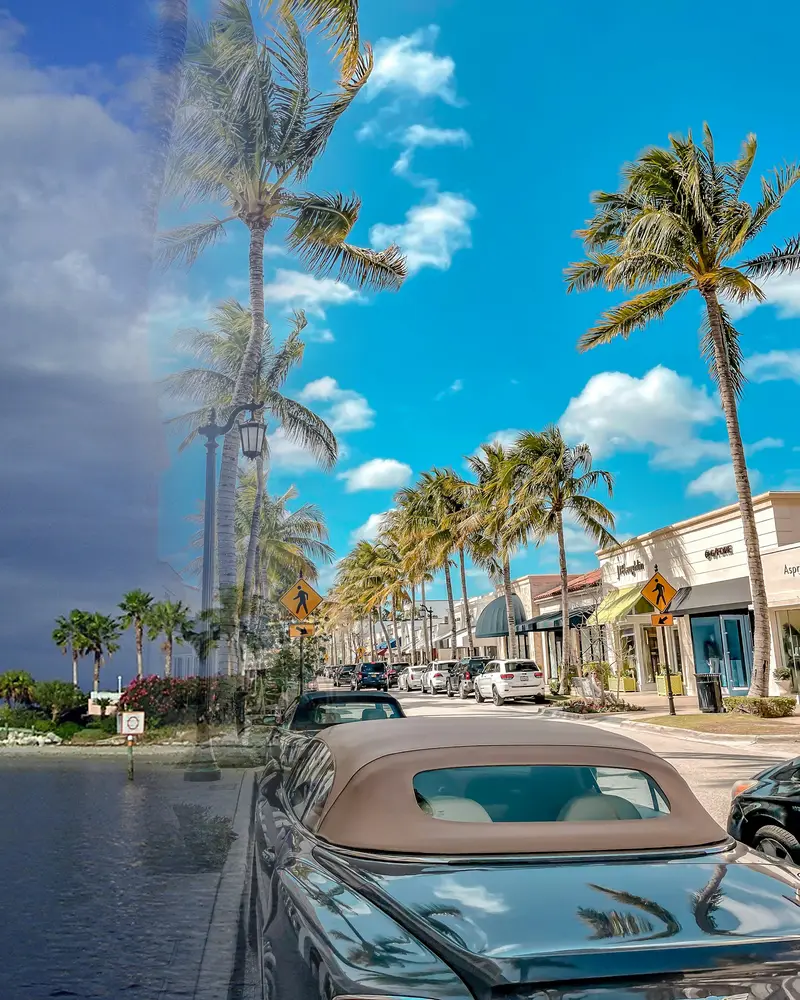
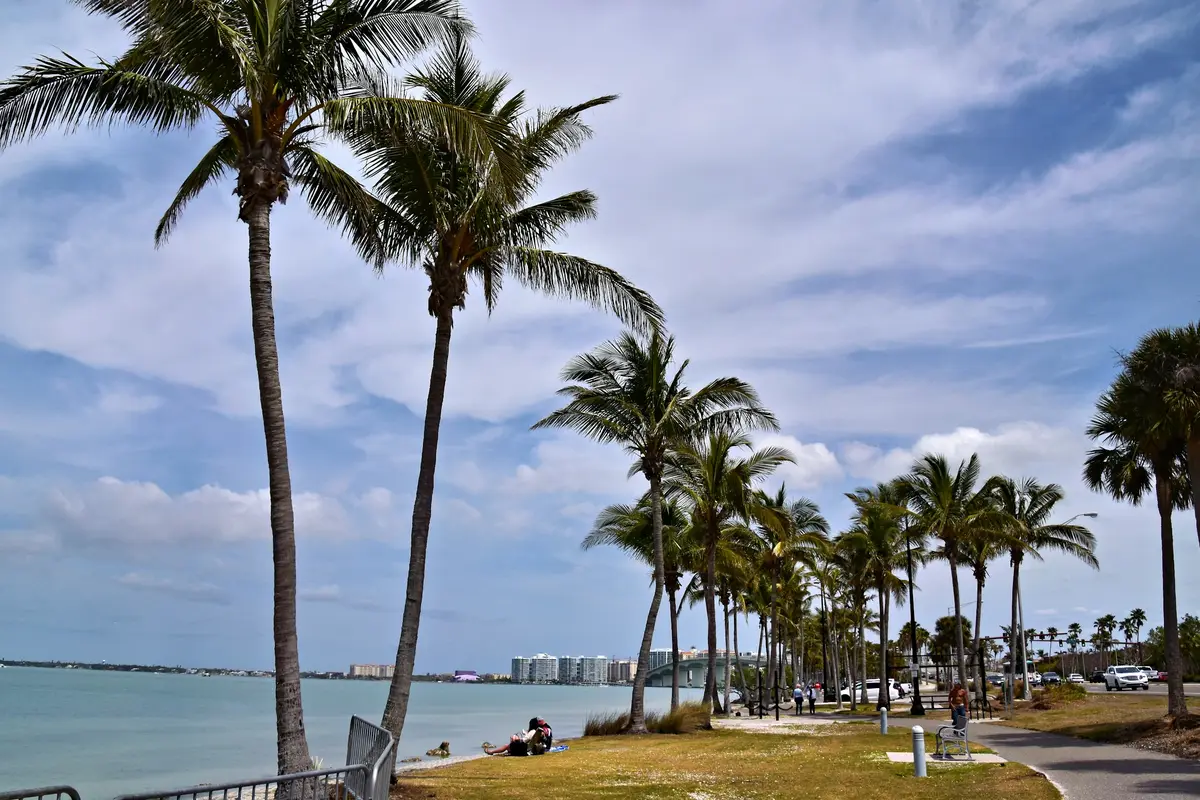
Palms are a defining part of the Apollo Beach landscape and they are almost always in the tightest available position — along a seawall, beside a pool deck, at a dock edge. The working radius at the base, typically a few feet, determines the entire method regardless of how tall the palm is.
- Hillsborough County
- Canal-front community
- Direct bay exposure
What this means on Apollo Beach properties
Water is the added complication. Where a palm overhangs a canal or a dock, fronds and trunk sections have to be controlled rather than dropped, because anything that goes in has to come back out. Palm debris is also bulky and heavy with water, and on a canal lot it has to be carried the long way round to reach a truck.
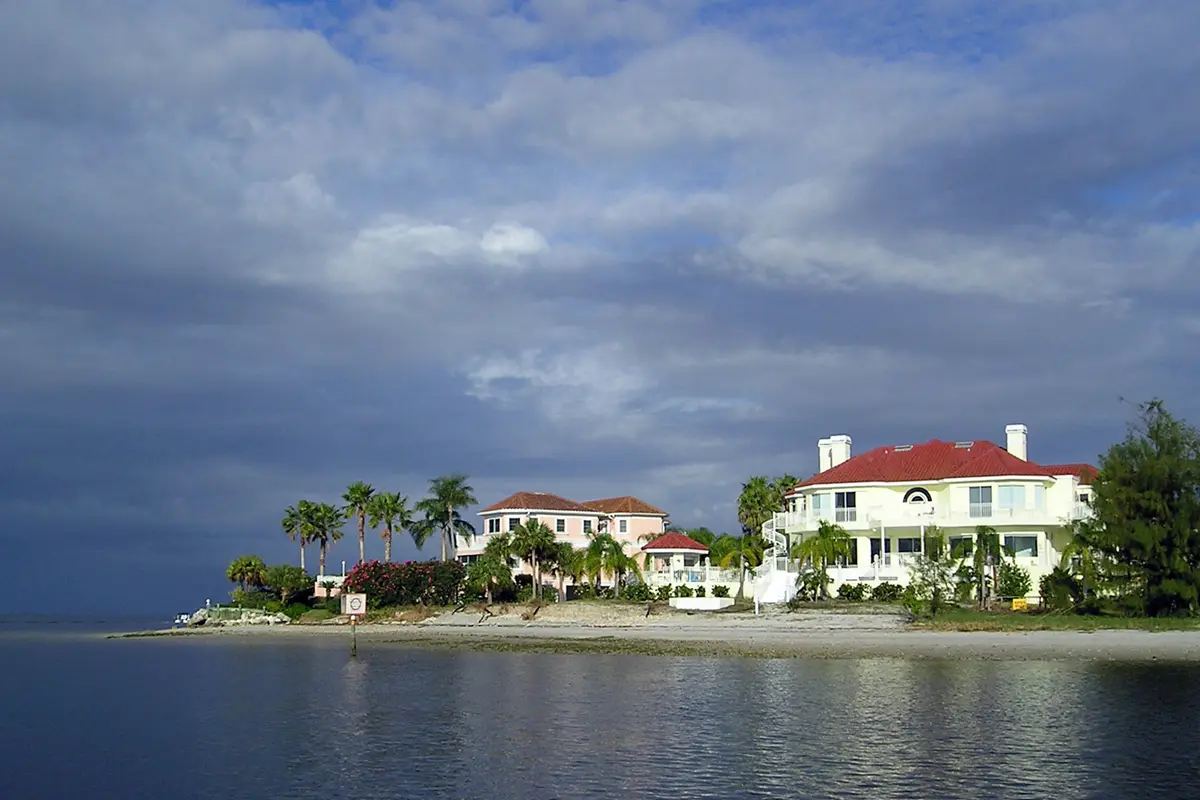
Direct bay frontage means sustained onshore wind and salt exposure, and low elevation across much of the community means storm-driven water and saturated ground are recurring considerations rather than rare ones.
Apollo Beach is unincorporated, so Hillsborough County provisions apply. Requirements can vary by property and jurisdiction. Property owners should confirm current requirements with the relevant local authority before work begins.
Why palms end up being removed
Where palms stand in a row along a seawall and only some are coming out, there is normally no position from which anything can be dropped freely. A dock below and a pool cage behind account for most of the working radius between them.
- The crown has thinned to a few fronds, or new growth has stopped emerging.
- It has grown well above the roofline and dropping fronds now reach the building.
- Fruit, seed and frond litter is a continual maintenance burden over a pool or path.
- Growth closing in over a narrow side route that is the only way in or out.
- Growth overhanging a dock, deck or seawall, where anything dropped would go into the water rather than onto ground.
Remove the palm, or keep maintaining it?
Palms fail differently from broadleaf trees, and they cannot be reduced or reshaped the way an oak can. That narrows the options: maintenance works until it does not, and then removal is the remaining one.
Maintenance still makes sense Crown and trunk sound
- Height is still workable from the ground or a modest platform.
- The problem is accumulated dead fronds, seed pods or litter rather than the palm itself.
Removal is the sensible call Crown or trunk compromised
- It is leaning from root-plate movement rather than from natural curvature.
- The growing point has died — a palm cannot regrow one.
Why palm work is handled differently
A water-laden frond or a mature seed pod dropping from height carries real energy, and palm debris tends to fall in an unpredictable spread rather than straight down. The area below needs to be clear well beyond the apparent footprint of the crown.
Never approach, move or work near a downed or sagging power line, and do not assume a line is inactive. Keep people, pets and vehicles well clear, and report the line to your electric utility or emergency services before anyone goes near the area.
How palm removal typically works
- Assess crown and trunk condition
A palm with a compromised crown or a soft upper trunk cannot be climbed, which changes the method before anything else is decided.
- Check overhead and underfoot
Palms are frequently planted close to lines, walls, pool cages and paving, so the clear space around the trunk is often the binding constraint.
- Manage the fibrous mass
Palm material does not chip like hardwood. It is handled and loaded differently, and that affects both time and truck space.
- Deal with the base
Palm root balls are compact rather than spreading, which makes the base a different proposition to a hardwood stump.
- Clear and finish
The area is cleared of frond litter, fruit and fibre, which spread further than people expect during the work.
What affects a palm removal
- Access for a lift, if climbing is not appropriate.
- Multiple palms in one visit, which is usually more efficient than separate calls.
- Trunk diameter and density, which determine section weight.
- Whether coastal exposure has affected the tree's condition, which is assessed at the tree rather than assumed from the address.
- How far cut material has to be carried to reach the truck or chipper. Carry distance is often a bigger factor than the size of the tree.
- Whether the ground around the root plate has been saturated recently, which affects both stability and what can be driven across the site.
Before booking palm work
- Whether anything overhead crosses the working radius.
- Whether the base is being ground out or left.
- Any recent change in the crown, so the condition question can be discussed properly.
- Where a screened enclosure, pool deck or spa sits under the canopy, say so when you call — it changes the rigging plan more than the size of the tree does.
- Note anything fixed on the route — an air-conditioning unit, meter box, irrigation head or low wall — that cannot simply be stepped over.
- Look at the ground at the base of the tree and mention anything unusual — cracking, lifting, or soil that has moved in an arc on one side.
Debris and cleanup
Frond bases, fruit stalks and loose fibre scatter widely during removal, especially in wind. Pool surfaces, screens and pavers near the work usually need a proper clean-down at the end rather than a quick rake.
- On ground that holds water, staging is normally kept to firm surfaces such as a drive or path rather than lawn, which sometimes lengthens the carry.
- Trunk wood is cut to a size the access will take rather than to the largest size the machine could handle.
- Where a pool or enclosure sits beneath the work, keeping debris out of the water is part of the plan rather than an afterthought, and it usually means smaller cuts and more of them.
Hauled away, chipped on site, or stacked in an agreed position — all three are normal, and they are different amounts of work. Whichever you want should be stated in the scope before the day rather than settled afterwards.
Palm Tree Removal in Apollo Beach: common questions
Can palms over the water be removed without material going in?
That is the objective and it is achievable with controlled lowering, though it is slower than dropping sections. Recovering material from a canal afterwards is considerably more work than avoiding it.
Should the whole row be done at once?
Often it is more efficient, since setup and the carry route are shared. Whether to remove healthy palms from a matched row is a landscape decision worth making before the work rather than during it.
Can a declining palm be saved?
Sometimes, depending on the cause, and sometimes not — several palm disorders are not treatable once symptoms are obvious. A collapsed spear leaf or soft tissue in the crown is a serious sign. Diagnosis needs someone looking at the palm, not a description over the phone.
The tree is right at the water's edge. Does that change the approach?
Considerably. A seawall or dock cannot take dropped material, there is rarely a free drop zone on a frontage lot, and anything that goes into the water is far harder to recover than it is to prevent. Work in that position is normally rigged and lowered in small sections, which takes longer than the same tree would inland.
Does coastal exposure change what a tree needs?
It can, though it is judged at the tree rather than assumed from the location. Salt-laden wind and direct exposure affect species differently, and a tree that has grown up with that exposure behaves differently from one recently made exposed. What we will not do is give a verdict on a specific tree's condition from a description.
Related tree services in Apollo Beach
For broadleaf trees on the same property
Palm work and broadleaf removal differ enough in method that they are worth scoping separately.
Read about tree removalIf it is fronds rather than the whole palm
Frond and seed-pod management is maintenance work rather than removal.
Read about trimming and pruningFor the material it generates
Palm debris is bulky and water-heavy, which matters more for hauling than for cutting.
See how debris hauling worksAsk About Palm Removal in Apollo Beach
Tell us how many palms, how close they are to the seawall and dock, and what the route out is. That shapes an Apollo Beach palm job.
- Phone: 877-269-2454
- Serving Tampa Bay, Florida
Information on this page is general guidance for property owners and managers in the Tampa Bay area. It is not an arboricultural assessment, a legal opinion, a permitting determination or an insurance decision. Tree condition and site risk can only be judged in person.