New Port Richey, Florida
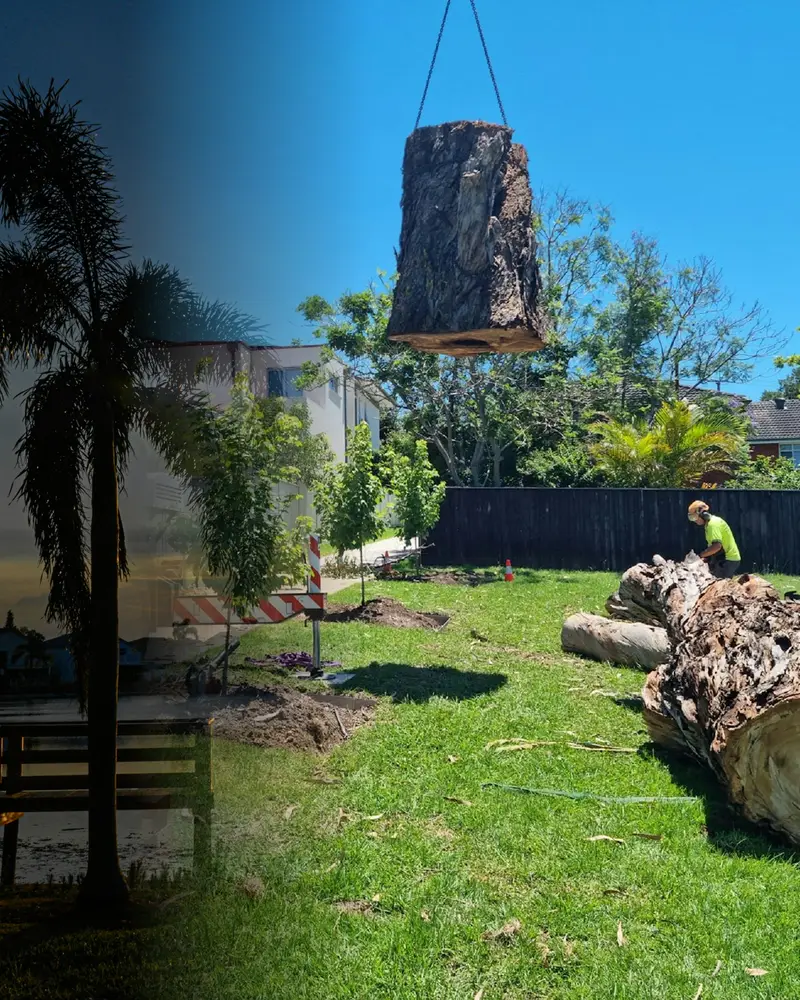
Large and Crane-Assisted Tree Removal in New Port Richey, FL
Lift-assisted work in New Port Richey runs into two obstacles at once. Narrow older streets and small frontages limit where a machine can stand, and the ground that is available — low-lying, sometimes sloping toward the river — may not carry concentrated outrigger loads.
- Pasco County
- Older coastal-adjacent housing
- Cotee River
What this means on New Port Richey properties
Ground bearing deserves specific attention on riverside lots. Fill, slope and saturation are all common, and outrigger loads are highly concentrated. Where a surface or a position is questionable it has to be assessed properly rather than tested on the day, and sometimes the honest answer is that no viable position exists.
River corridor and low ground near the Gulf hold water, and the combination of saturated soil and coastal wind is the pattern most often behind trees moving at the root plate here.
New Port Richey is an incorporated Pasco County city with its own code, distinct from surrounding unincorporated Pasco areas. Requirements can vary by property and jurisdiction. Property owners should confirm current requirements with the relevant local authority before work begins.

Constraints that point toward a lift-assisted approach
Where a lift is the sensible method on a riverfront lot, the only candidate position may be an older driveway on low ground near the bank. Whether that ground will carry the machine is worth establishing well before the day.
- No usable drop zone — the tree stands in a courtyard, between buildings or over a pool.
- Neighbouring structures close enough that a swinging section is unacceptable.
- A very long carry from the tree to where a truck can stand.
- Decay or storm damage that makes the stem unsafe to climb or to rig against.
- A canopy spread over a roof, pool cage or conservatory where nothing can be dropped free.
What has to be established before a lift is planned
- Whether the street or drive can be partly closed and who authorises that.
- Section weights, and whether they fall within capacity at the required radius.
- Whether the machine's reach covers the tree from the only available position.
- Whether the same job could be completed conventionally with more time and less equipment.
- Where lifted sections will be set down and processed.
A lift, or climb and rig?
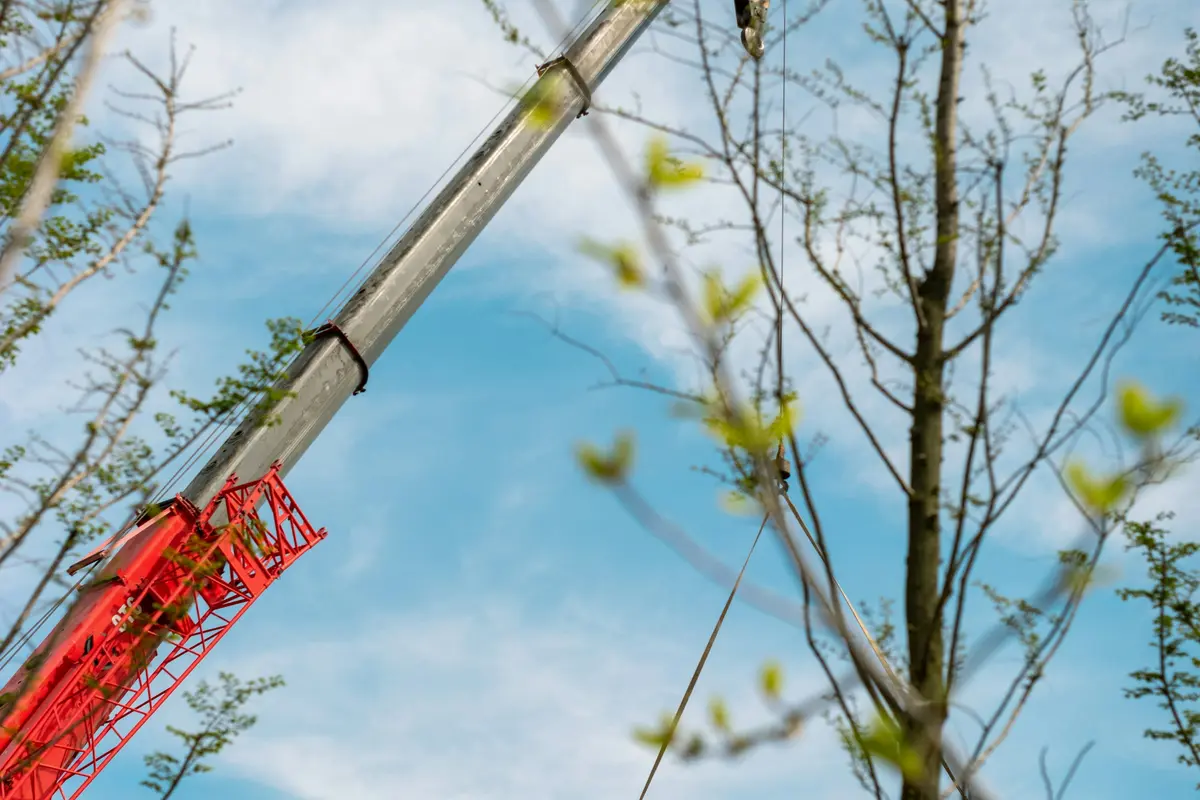
A crane is a tool, never a default. It buys you reach and controlled set-down, and it costs setup space, a load-bearing position and money — so the question is whether the site actually needs what it buys.
Climbing and rigging is the right method Reachable and sound
- The stem is sound enough to rig against with confidence.
- The canopy can be taken down in pieces light enough to handle by rope.
A lift earns its place No drop zone or no trustworthy stem
- The stem's condition makes climbing it the wrong risk to take.
- Lifting out shortens the time the site is disrupted enough to justify the cost.
What has to be true before anything is lifted
The exclusion zone for lifting work is larger than for a conventional dismantle and it includes the whole travel path, not just the tree and the set-down area. It stays clear while a section is in the air, without exception.
Never approach, move or work near a downed or sagging power line, and do not assume a line is inactive. Keep people, pets and vehicles well clear, and report the line to your electric utility or emergency services before anyone goes near the area.
How a lift-assisted removal is planned and run
- Site assessment
The tree, the setup area, the travel path and the landing zone are looked at as one system. Any of them can rule the approach out.
- Confirm the method is warranted
A crane is a tool, not a default. If the tree can be dismantled conventionally without unacceptable risk, that is usually the better answer.
- Establish the exclusion zone
The zone covers the swing path, not just the tree. It is closed for the duration and nobody works or stands beneath a suspended load.
- Process at the landing zone
Sections are set down away from the structure and cut up there, which is faster and safer than processing in a confined space.
- Demobilise and finish
Ground protection lifted, surfaces inspected and cleared, and the stump handled as agreed.
What determines whether this approach is practical
- Overhead clearance along the whole lift path, not just above the tree.
- The size and accessibility of the landing zone.
- Available setup space and how far the machine has to reach.
- Whether machinery can reach the working position without leaving ruts that outlast the tree work.
- Whether the ground around the root plate has been saturated recently, which affects both stability and what can be driven across the site.
- Whether the tree stands sheltered or exposed. A tree that grew up inside surrounding canopy carries wind very differently once that shelter is gone.
Information that makes planning realistic
- Whether a shared drive, verge or neighbouring property would be involved.
- Any known soft ground, septic field or drainage feature near a possible setup point.
- Photographs showing the tree, everything around its base and the route in from the street.
- Say whether the area around the tree holds water after heavy rain. It affects the timing, the equipment and occasionally the assessment itself.
- Have a think about where a truck and chipper could stand near the property, and whether that space can be kept clear on the day.
- Decide whether the objective is storm preparation or general maintenance. They lead to different work on the same tree.
Debris and cleanup
The landing zone does take a beating, so where it sits matters. A driveway with protection down, or a verge, is often preferable to a lawn — and it is worth agreeing before the machine arrives.
- On ground that holds water, staging is normally kept to firm surfaces such as a drive or path rather than lawn, which sometimes lengthens the carry.
- Staging space on a frontage lot is usually limited, so material tends to be loaded as it comes down rather than piled.
- Trunk wood is cut to a size the access will take rather than to the largest size the machine could handle.
Hauled away, chipped on site, or stacked in an agreed position — all three are normal, and they are different amounts of work. Whichever you want should be stated in the scope before the day rather than settled afterwards.
Large and Crane-Assisted Tree Removal in New Port Richey: common questions
Will an older driveway on low ground carry the machine?
It has to be assessed. Low-lying ground and older construction both introduce uncertainty, and load spreading has limits. It is checked rather than assumed either way.
What if there is no viable position?
Conventional dismantling in small sections with material carried uphill to the street. On riverfront lots here that is frequently the only realistic method.
Will my driveway be damaged?
That is a real consideration. Outrigger loads are concentrated, and driveways vary enormously in what they will take. Load spreading and ground protection are standard, and where a surface is questionable it should be discussed in the assessment.
The tree has not been touched in years. Where should it start?
Normally with deadwood and anything making direct contact with a structure, because those are the parts creating actual risk or damage. Shaping and reduction can follow once the tree's condition is clear. Trying to correct decades of growth in one visit tends to take more off the tree than is good for it.
The tree is right at the water's edge. Does that change the approach?
Considerably. A seawall or dock cannot take dropped material, there is rarely a free drop zone on a frontage lot, and anything that goes into the water is far harder to recover than it is to prevent. Work in that position is normally rigged and lowered in small sections, which takes longer than the same tree would inland.
Related tree services in New Port Richey
If a lift is not actually needed
A crane is a tool for trees with no usable drop zone or a stem that cannot be climbed — not a default.
Compare with conventional removalIf the stem cannot be trusted
Where decay or storm damage rules out climbing, the assessment drives the method.
Read about hazardous tree assessmentOn an operating site
Street or car park positioning, exclusion zones and permitted hours usually decide the day.
Read about commercial tree workDiscuss a Large Tree Removal in New Port Richey
Send photographs of the tree, the driveway and the ground around it. In New Port Richey the bearing question usually decides it.
- Phone: 877-269-2454
- Serving Tampa Bay, Florida
Information on this page is general guidance for property owners and managers in the Tampa Bay area. It is not an arboricultural assessment, a legal opinion, a permitting determination or an insurance decision. Tree condition and site risk can only be judged in person.