Apollo Beach, Florida
Land and Lot Clearing in Apollo Beach, FL
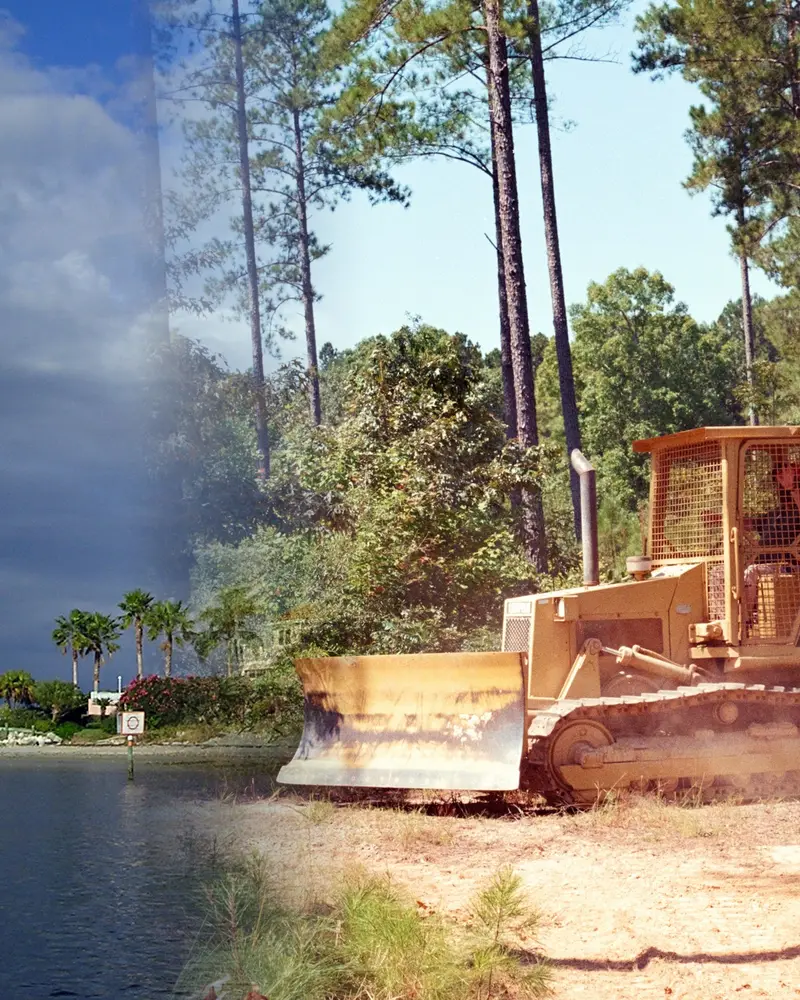
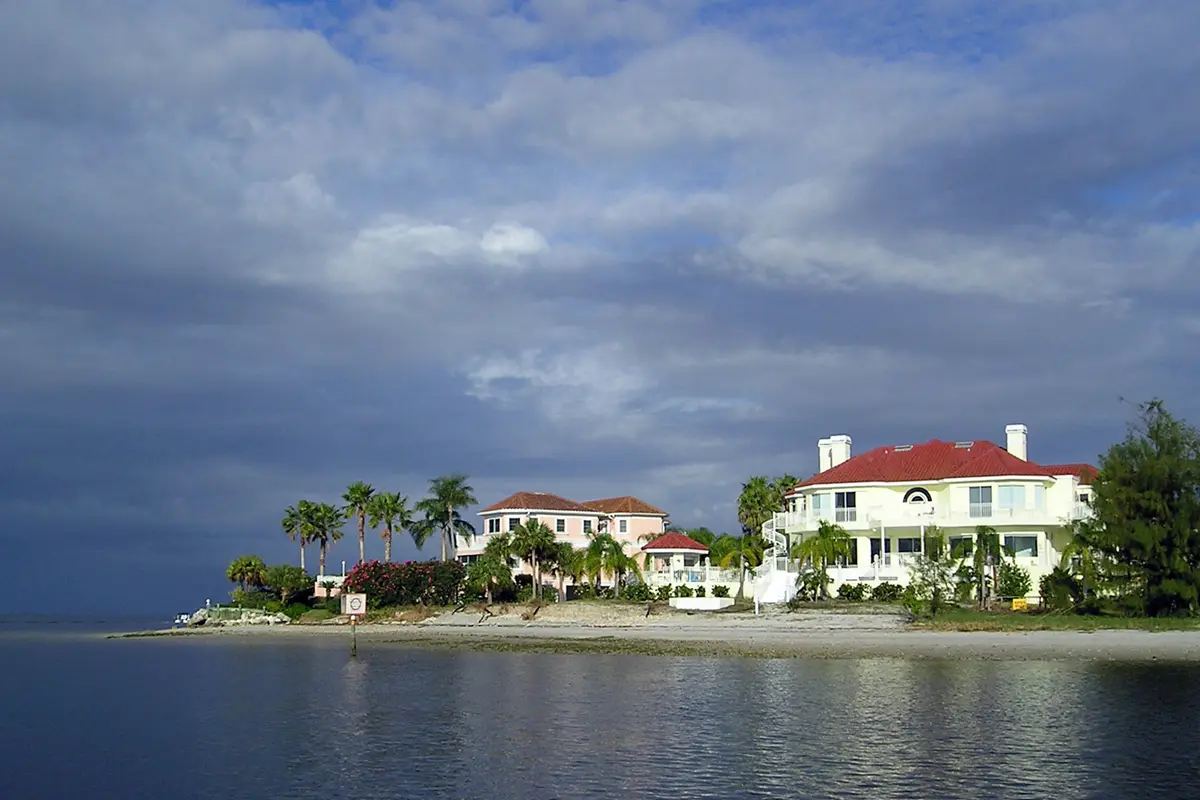
Clearing work here is mostly vacant canal lots being prepared for a build, and the defining feature is proximity to water on at least one boundary. That changes the question from how to clear the vegetation to what may be cleared and how close to the water's edge work can go.
- Hillsborough County
- Canal-front community
- Direct bay exposure
What this means on Apollo Beach properties
Areas near water, shoreline vegetation and drainage features can be subject to specific protections that differ from ordinary lot clearing, and getting that wrong on a waterfront parcel is a serious matter. Apollo Beach is unincorporated so Hillsborough County provisions apply, and open burning is separately regulated. Requirements can vary by property and jurisdiction, so confirm with the relevant local authority before work begins.
Direct bay frontage means sustained onshore wind and salt exposure, and low elevation across much of the community means storm-driven water and saturated ground are recurring considerations rather than rare ones.
Apollo Beach is unincorporated, so Hillsborough County provisions apply. Requirements can vary by property and jurisdiction. Property owners should confirm current requirements with the relevant local authority before work begins.
Typical reasons a lot gets cleared
On a vacant canal lot with overgrowth across the whole parcel, what may be cleared along the shoreline edge needs establishing before any equipment arrives rather than after.
- A vacant parcel being prepared for a build.
- Dense understorey and vines making a property unusable or unsafe to walk.
- Selective thinning to keep specimen trees and remove the rest.
- Growth closing in over a narrow side route that is the only way in or out.
- Growth overhanging a dock, deck or seawall, where anything dropped would go into the water rather than onto ground.
Site questions that come before any pricing
- How equipment gets on and off the site, including any soft or low-lying stretch.
- Whether neighbouring properties are close enough to constrain how the work runs.
- Whether the whole area is being cleared or specific trees are being retained.
- Where debris can be processed and staged during the work.
- Whether any watercourse, wetland edge or drainage feature is present.
Clear the whole parcel, or clear selectively?
"Cleared" means different things to different people, and the gap between them is most of the price. Deciding what stays is the first job, before anyone quotes an area.
Selective clearing fits Keeping structure and screening
- A defined building footprint or access route rather than the whole parcel.
- Understory and brush are the actual problem, not the canopy.
Broader clearance makes sense Whole-site change of use
- The intended use needs the full area open, not a partly wooded lot.
- Access for later work matters more than any individual tree on site.
Site hazards on an uncleared parcel
A tree that grew inside a stand has never carried full wind load on its own. Clearing around it exposes it to conditions it has not experienced, which is why retention decisions are made on structure rather than only on appearance.
Never approach, move or work near a downed or sagging power line, and do not assume a line is inactive. Keep people, pets and vehicles well clear, and report the line to your electric utility or emergency services before anyone goes near the area.
How a clearing project is normally staged
- Define the area and the outcome
Walk the boundary, agree what stays, and agree what 'clear' means in practice — cleared to grade is very different to cleared of trees.
- Identify services and constraints
Overhead lines, buried services, wells, septic components and drainage features are located before clearing begins.
- Clear understorey and vines
The dense lower layer is usually the slowest part of a clearing job, and it is where hidden obstacles turn up.
- Handle stumps as agreed
Cut low, ground, or removed — the choice depends entirely on what the land is going to be used for.
- Process debris and finish to the agreed standard
Material is chipped, stacked or hauled, and the surface is left in the state that was scoped rather than an assumed one.
What drives a clearing scope
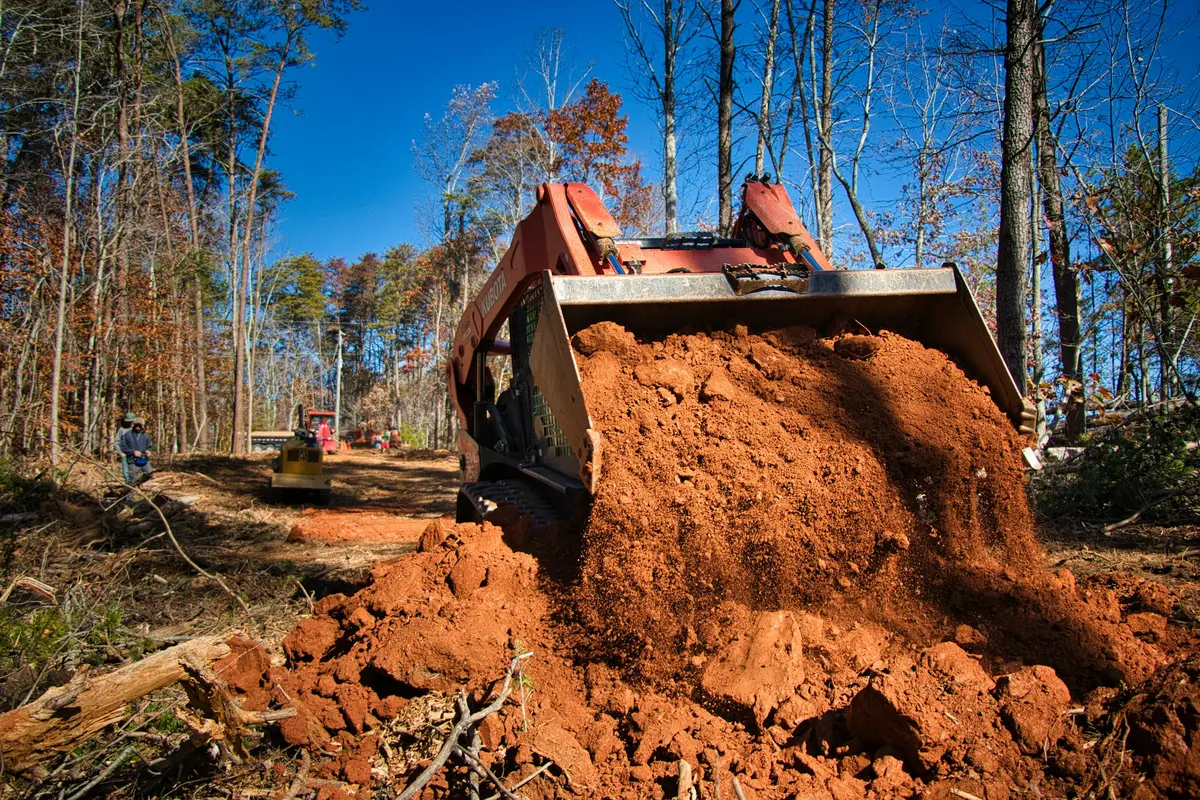
- Whether stumps are ground, removed or left cut low.
- Boundary accuracy and the risk of clearing beyond the line.
- Ground conditions, slope and any low-lying or seasonally wet ground.
- Whether material can be dropped at all, or whether every piece has to be rigged and lowered into a small space — the difference between those two is substantial.
- How much of the working footprint is left once the house, the deck and the water's edge are accounted for — on a frontage lot the answer is often very little.
- Whether the ground around the root plate has been saturated recently, which affects both stability and what can be driven across the site.
Debris and cleanup
Burning is regulated and is not available everywhere or at all times. Rules on open burning, chipping and material disposal vary between jurisdictions and change with conditions, so this has to be confirmed for the specific site rather than assumed.
- On ground that holds water, staging is normally kept to firm surfaces such as a drive or path rather than lawn, which sometimes lengthens the carry.
- Staging space on a frontage lot is usually limited, so material tends to be loaded as it comes down rather than piled.
- Where the carry is long or the route is narrow, brush is normally cut into smaller pieces than strictly necessary, because handling size matters more than trips.
Hauled away, chipped on site, or stacked in an agreed position — all three are normal, and they are different amounts of work. Whichever you want should be stated in the scope before the day rather than settled afterwards.
Have this ready when scoping
- Whether debris can stay on site in any form.
- Known locations of wells, septic systems, easements and buried services.
- Any prior report on the site — environmental, survey, engineering.
- Decide whether vehicles can be moved off the driveway for the day, and whether a gate or side access can be unlocked and left open.
- Decide whether the objective is storm preparation or general maintenance. They lead to different work on the same tree.
- Look at the ground at the base of the tree and mention anything unusual — cracking, lifting, or soil that has moved in an arc on one side.
Land and Lot Clearing in Apollo Beach: common questions
How close to the water can clearing go?
That has to be confirmed for the specific parcel rather than assumed. Shoreline and near-water vegetation can carry protections distinct from ordinary clearing, and this is exactly the situation where checking first matters.
Can equipment work on a canal lot?
Usually, though it has to stay back from the seawall and off the fill behind it. On a narrow lot that can leave surprisingly little room to manoeuvre.
Does clearing include grading or excavation?
Not by default. Vegetation clearing and earthworks are separate scopes, and assuming they are bundled is a common source of misunderstanding. If the land needs to be levelled or prepared to a grade, that should be scoped explicitly.
Can a tree be pruned to make it safer in a storm?
Selective work can reduce specific risks — removing deadwood, addressing a poorly attached limb, clearing material from directly above something that matters. What it cannot do is make a tree storm-proof, and heavy topping generally makes a tree less stable rather than more. Anyone promising a storm-proof tree is overstating what pruning does.
A nearby tree came down and this one is now in the open. Is that a concern?
It is a legitimate reason to have it looked at. Trees that develop within a group share the wind load and grow accordingly; when that shelter is removed the remaining tree carries a load it never grew for. Whether it matters depends on the tree, which is an on-site question rather than a remote one.
Related tree services in Apollo Beach
If what remains is stumps
Cleared of trees and cleared to grade are different scopes with different work in them.
Read about stump grindingFor the volume it produces
Clearing generates material by the load rather than by the tree.
See how debris hauling worksFor a managed or commercial parcel
Phasing, access and who authorises a change on the day shape the plan more than the trees do.
Read about commercial tree workScope a Lot Clearing Project in Apollo Beach
Tell us the parcel size, the intended use and how close the work needs to go to the water. That scopes Apollo Beach clearing.
- Phone: 877-269-2454
- Serving Tampa Bay, Florida
Information on this page is general guidance for property owners and managers in the Tampa Bay area. It is not an arboricultural assessment, a legal opinion, a permitting determination or an insurance decision. Tree condition and site risk can only be judged in person.