Land O’ Lakes, Florida
Fallen Tree Removal in Land O’ Lakes, FL
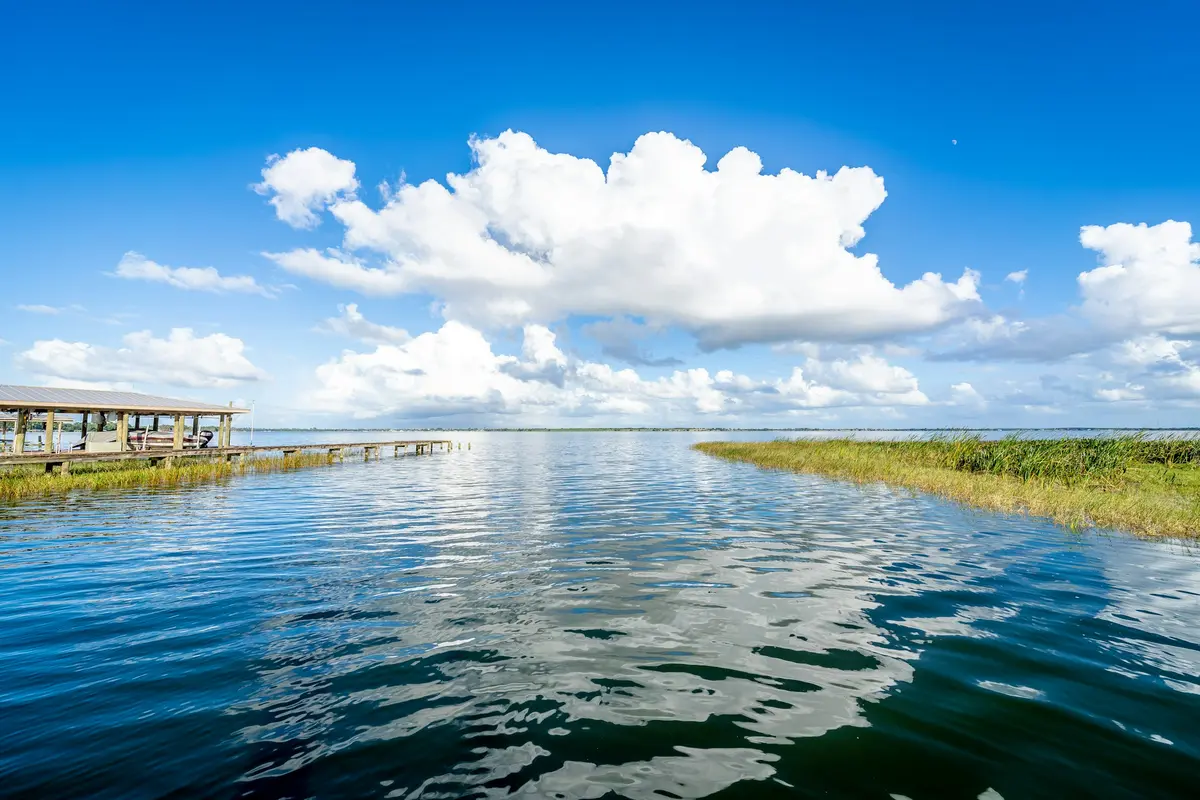
Downed trees on larger properties here are usually a materials-handling job rather than a rigging problem. There is room to work, the tree is often clear of structures, and the constraint becomes how far the material has to travel and whether the ground will carry a machine to reach it.
- Pasco County
- Lakes and larger lots
- Mixed acreage
If the tree is threatening people, an occupied building or your only access, call straight away rather than waiting.
Before anyone goes near it
The dangerous part of a downed tree is not its weight, it is where that weight is held. Trunks bridging between two supports snap upward or downward when cut in the wrong place, and limbs pinned beneath a stem can whip sideways with real force when released. This is the situation that injures the most well-intentioned property owners.
Never approach, move or work near a downed or sagging power line, and do not assume a line is inactive. Keep people, pets and vehicles well clear, and report the line to your electric utility or emergency services before anyone goes near the area.
What this means on Land O’ Lakes properties
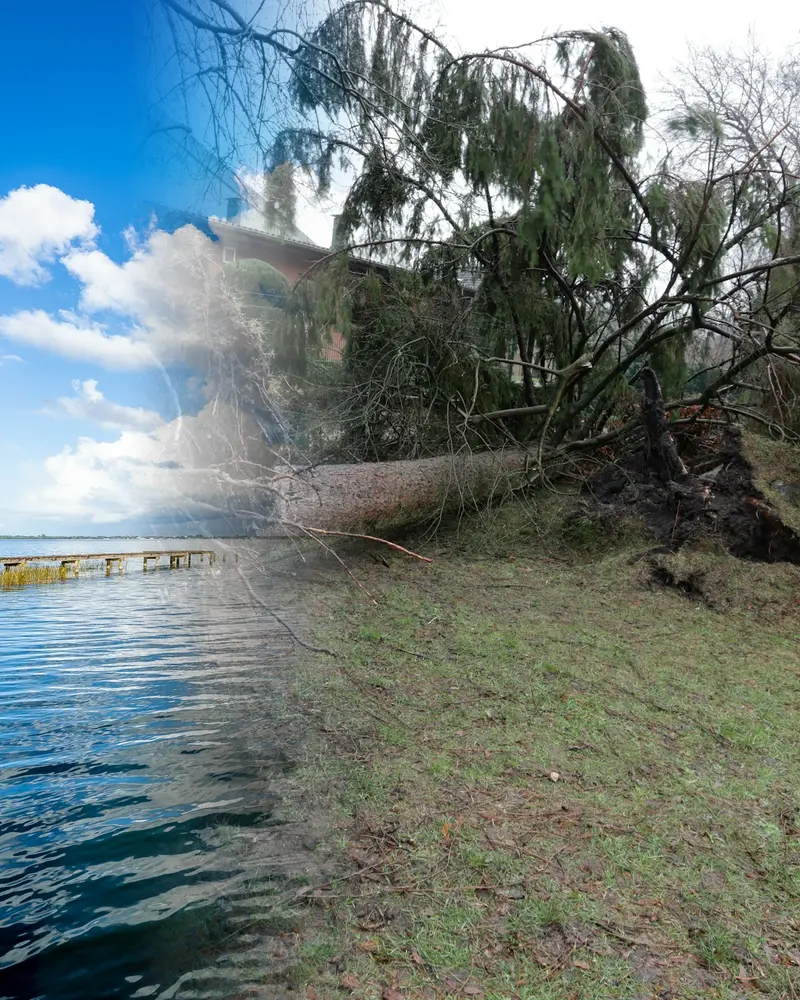
Shoreline failures are a specific case. A tree that has come down at a lake edge, partly into the water, has to be recovered rather than simply cut, and anything that goes into the water has to come back out. Ground at a shoreline is also the least likely on the property to carry equipment.
Access is usually better than in tight subdivisions, but long driveways, unmade tracks, soft ground and gated frontages are common and matter for heavier equipment.
Land O’ Lakes is unincorporated and therefore falls under Pasco County provisions. Requirements can vary by property and jurisdiction. Property owners should confirm current requirements with the relevant local authority before work begins.
Things that make a downed tree more complicated than it looks
Where a large tree is down along a fence line at the far end of a property, the carry to the nearest point a truck can reach can run to hundreds of feet, and soft ground in between changes what can be driven at all.
- The root plate has tipped up but is still attached, and can rotate back when weight shifts.
- The tree is resting on a fence, wall or vehicle that is now part of what holds it up.
- The ground underneath is saturated, so the tree may settle further as it dries.
- Ground at the base that has stayed soft, limiting what can be driven anywhere near the tree.
- Ground at the base that has been under water, or has stayed saturated after rain.
A tree is down: what you can clear and what needs equipment
Plenty of a fallen tree is genuinely a homeowner job. The part that is not is the part holding load, and telling the two apart is what keeps this from turning into an injury or a bigger repair bill.
Reasonable to handle yourself Loose and light
- Limbs already detached and lying flat with nothing on top of them.
- Material well clear of the trunk, fences, vehicles and any line.
Leave for equipment and rigging Bearing weight or under tension
- Sections you would need to stand underneath in order to cut.
- Limbs pinned or bent under the weight of the tree above them.
How a downed tree is normally cleared
- Read the load path
Before any cut, the crew works out what is holding what. Which end is bearing, where the bend is, and what will move when the first section comes off.
- Secure the surroundings
The area is closed, vehicles moved, and anyone likely to walk through is redirected. Cutting a loaded trunk is not a spectator activity.
- Relieve tension deliberately
Bent and pinned limbs are released in an order that lets stored energy out in a controlled direction rather than toward the crew or the structure.
- Take weight off structures first
Where the tree lies on a building, fence or vehicle, sections are lifted or lowered away rather than dragged, so the object is not damaged further on the way out.
- Clear and finish
Brush chipped, wood removed or staged, and access surfaces cleared so the property works normally again.
What makes one fallen tree a bigger job than another
- How far material has to be carried to reach the truck.
- Whether the fall damaged irrigation, lighting, fencing or paving that needs care during clearing.
- Trunk diameter, which determines whether sections can be moved by hand or need a machine.
- Whether there is a genuine drop zone. Open ground is the one thing that makes tree work straightforward, and where it exists the method changes completely.
- Whether the ground around the root plate has been saturated recently, which affects both stability and what can be driven across the site.
- How many trees are actually involved. On a larger parcel the answer is frequently more than the one that prompted the call, and doing them together shares the mobilisation.
Helpful before clearing starts
- Have someone available who can authorise decisions about the stump and the root plate.
- Identify what is underneath it that you cannot see — irrigation, cabling, a low wall, a septic lid.
- Check whether anything valuable is pinned underneath that needs care rather than speed.
- Decide whether material can stay on the property. On a larger lot that is often a genuinely useful option, and it changes what the work involves.
- Locate anything buried across the approach — septic field, well, irrigation line, soakaway — before machinery crosses it. Undocumented systems are common and expensive to find the hard way.
- Move boats, lifts and anything on the dock clear of the working area if that is possible, or say what cannot be moved.
Debris and cleanup
Where the tree fell on a structure, clearing and repair are two different trades. The clearing work aims to get the load off without adding damage; assessing and fixing what is underneath is for the relevant contractor once the tree is clear.
- Where there is room, chip and trunk rounds can often be left in an agreed position rather than hauled, which reduces what has to be carried and loaded.
- Where ground conditions limit vehicle access, material is often staged nearer the road and loaded from there, which needs a position agreeing in advance.
- On ground that holds water, staging is normally kept to firm surfaces such as a drive or path rather than lawn, which sometimes lengthens the carry.
Hauled away, chipped on site, or stacked in an agreed position — all three are normal, and they are different amounts of work. Whichever you want should be stated in the scope before the day rather than settled afterwards.
Fallen Tree Removal in Land O’ Lakes: common questions
Does distance across the property affect the cost?
Yes, substantially. Carry distance is often the single biggest factor on a large lot — a tree three hundred feet from a hard surface is a very different job from the same tree beside the drive.
Part of the tree is in the lake. Can that be recovered?
Usually, though it is slower and more deliberate work. Material has to be brought back to the bank under control rather than cut and left, and the shoreline ground limits what equipment can help.
Can I cut it up myself and have the pieces taken away?
You can, and people do, but the risk sits in exactly the part that looks simplest: cutting sections that are holding load. If any part of the tree is bridging, pinned or resting on a structure, that is the part to leave alone.
The ground around the tree stays wet. Does that make it less stable?
It can. Saturated soil holds a root plate less firmly, which is why trees with no visible defect sometimes move during sustained wet weather rather than during the strongest wind. Whether it applies to a particular tree needs someone at the base of it — soil movement is one of the few things that genuinely cannot be judged from a photograph.
Can several trees across the property be looked at in one visit?
Usually, and it is generally the more efficient way to do it because the setup, the access and the equipment move are shared. Whether it works in practice depends on whether the trees sit on the same access route or need separate positioning.
Related tree services in Land O’ Lakes
If anything is still under load
A trunk resting on a structure, a blocked sole access or material overhead is not a scheduled job.
See what counts as urgentFor what is left once it is cut
Cutting and hauling are different scopes, and the second is easy to underestimate.
See how debris hauling worksFor what remains at ground level
A failed tree usually leaves a stump and a disturbed root plate behind it.
Read about stump grindingGet a Fallen Tree Cleared in Land O’ Lakes
Tell us where on the property it fell, how far to the nearest hard surface, and whether any of it is in water. That shapes a Land O’ Lakes clearing job.
- Phone: 877-269-2454
- Serving Tampa Bay, Florida
Information on this page is general guidance for property owners and managers in the Tampa Bay area. It is not an arboricultural assessment, a legal opinion, a permitting determination or an insurance decision. Tree condition and site risk can only be judged in person.