Land O’ Lakes, Florida
Commercial Tree Removal in Land O’ Lakes, FL
Commercial work in Land O’ Lakes tends to be either roadside business property with limited frontage or larger holdings where the trees are spread across acreage. Those need different plans — the first is about working within a narrow frontage, the second about routing equipment across a site.
- Pasco County
- Lakes and larger lots
- Mixed acreage
What this means on Land O’ Lakes properties
Association and district-managed common areas are also a recurring context, particularly around the lakes and in the subdivisions. Establishing who actually has authority for a landscape or shoreline area is the first step, because it is frequently not the party who noticed the problem.
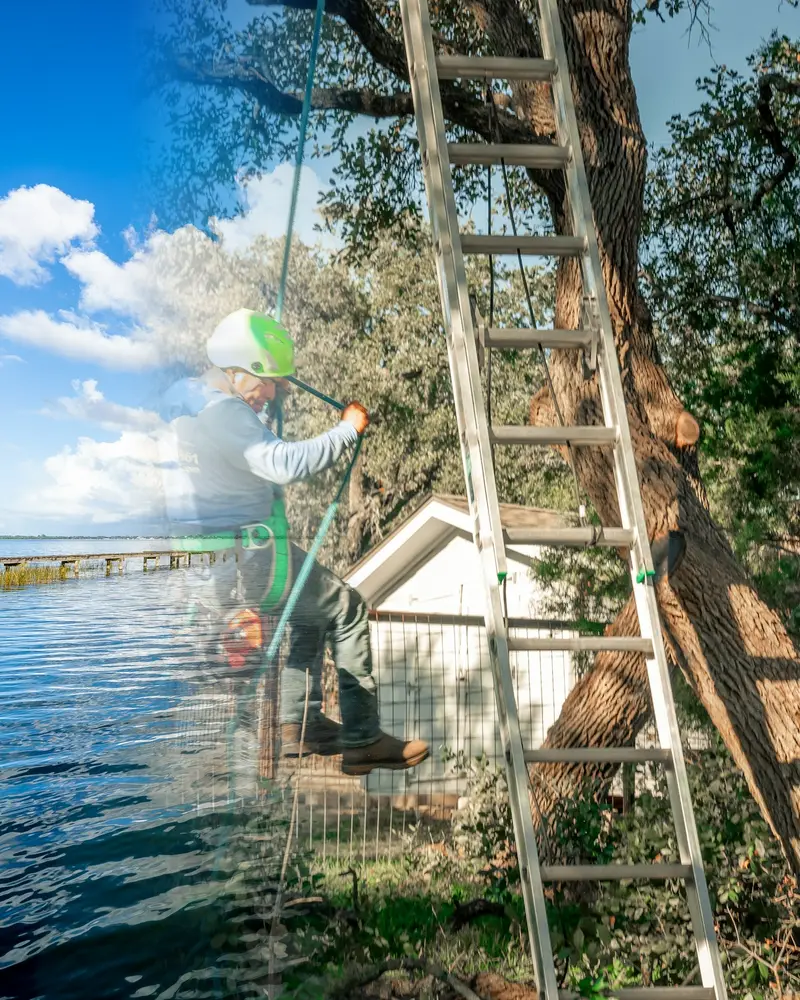
Larger lots change the nature of the work. Trees are more likely to stand clear of structures, but properties often carry many more of them, and lakeside frontages introduce their own access and drop-zone limits.
Land O’ Lakes is unincorporated and therefore falls under Pasco County provisions. Requirements can vary by property and jurisdiction. Property owners should confirm current requirements with the relevant local authority before work begins.
Typical commercial triggers
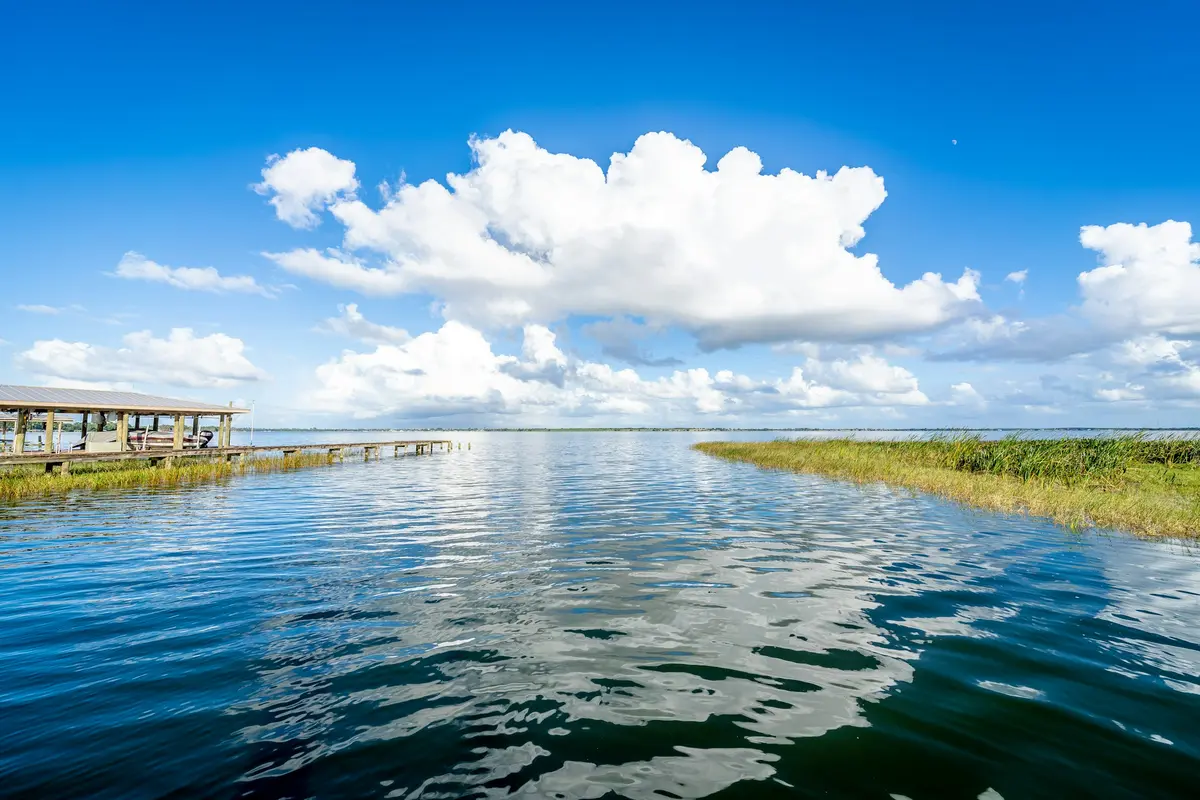
On shared lakeside common area the association manages the land, several owners have a view on the outcome, and the shoreline restricts where equipment can go. Establishing who authorises what comes first.
- A tree in a parking area dropping limbs onto vehicles.
- Canopy interfering with signage, lighting or camera sightlines.
- A tree obstructing a delivery route, service yard or refuse collection point.
- Clearance along a long driveway or approach where growth has closed in from both sides.
- Growth overhanging a dock, deck or seawall, where anything dropped would go into the water rather than onto ground.
Access and coordination questions that come first
- Whether adjoining tenants or neighbouring businesses need notice.
- Where a chipper and truck can stand without blocking a fire lane or loading area.
- Who on site holds keys, gate codes and authority to change the plan on the day.
- Whether parking bays or drive aisles need to be taken out of use, and for how long.
- Which hours the work can occupy the site without disrupting trading or tenants.
In hours or out of hours?
On an operating site the cutting is rarely the constraint. What decides the plan is how much of the site can be out of use at once, and when the people who use it are not there.
Normal hours usually work Low-traffic footprint
- Pedestrians can be routed around the exclusion zone on an existing path.
- The work is a single visit rather than a phased programme.
Out of hours earns its cost Access or occupancy pressure
- The only equipment position is a customer entrance or a fire route.
- Losing the bays during trading hours costs more than the out-of-hours premium.
Keeping a working site safe
Sites change during the day: a delivery arrives, a fire route needs clearing, a tenant objects. Establishing beforehand who on your side can pause or redirect the crew avoids decisions being made by whoever happens to be standing there.
Never approach, move or work near a downed or sagging power line, and do not assume a line is inactive. Keep people, pets and vehicles well clear, and report the line to your electric utility or emergency services before anyone goes near the area.
How a commercial job is normally organised
- Site walk with the responsible person
Trees, access, service routes and operating constraints are reviewed together, so the plan reflects how the site actually runs.
- Define the working window
Early mornings, off-peak hours or closed days often cost less disruption than a mid-day start, and that is usually the deciding factor.
- Sequence multi-tree work
On larger sites the order is chosen so that no more of the site is out of use at once than necessary.
- Execute with the zone controlled
Work proceeds inside a maintained boundary, with the zone reduced or relocated as the job moves across the site.
- Hand the area back clean
Surfaces cleared, bays reopened, and the site walked with the responsible person before the crew leaves.
What drives cost and duration on commercial sites
- Whether debris can be staged on site or must leave with each load.
- Coordination with other trades already working on the site.
- Restricted working hours, which lengthen the calendar even when the work is small.
- Whether machinery can reach the working position without leaving ruts that outlast the tree work.
- Whether material risks entering the water, which has to be prevented rather than recovered afterwards.
- The length of the approach from the road to the working area — a long unmade track changes the plant that can realistically be brought in.
Debris and cleanup
On an operating site, debris handling is a logistics problem as much as a clearing one. Material is normally taken directly to the truck rather than piled, because a pile on a commercial property blocks something — a bay, a lane, an accessible route.
- Where the work is close to water, catching material before it enters is part of the method, and it normally means smaller sections and more rigging than the same tree inland.
- Where ground conditions limit vehicle access, material is often staged nearer the road and loaded from there, which needs a position agreeing in advance.
- Larger parcels usually allow material to be staged near the working area, so the carry is short and the loading happens in one place.
Hauled away, chipped on site, or stacked in an agreed position — all three are normal, and they are different amounts of work. Whichever you want should be stated in the scope before the day rather than settled afterwards.
What speeds up a commercial quote
- Whether documentation is needed for a managing agent or owner's file.
- Permitted working hours and any restricted dates.
- Whether any bays or routes can be closed, and who arranges that.
- Say what sits between the tree and the water — a seawall, dock, lift, bulkhead or open bank — and roughly how much clear ground is left between them.
- Say whether the approach is made-up surface or open ground, and whether it has stayed wet recently. It is the difference between driving to the tree and working off it.
- Walk the property before you call and count what actually needs attention, rather than describing the single tree that prompted it. Several trees in one visit is normally more efficient than separate calls.
Commercial Tree Removal in Land O’ Lakes: common questions
Who authorises work in a common area?
Usually an association or a district rather than an individual owner. Confirming that before scoping saves considerable effort, and it is worth establishing at the outset.
Can equipment work along a shoreline?
With care and often at reach rather than driving to the water's edge. Bank stability matters, and heavier machinery generally has to stay back on firmer ground.
Will the car park surface be damaged?
Equipment loads on asphalt are a genuine consideration, particularly in hot weather and with heavier machines. Protection can be used, positioning can be adjusted, and where a surface is a concern it should be flagged during the site walk.
Can several trees across the property be looked at in one visit?
Usually, and it is generally the more efficient way to do it because the setup, the access and the equipment move are shared. Whether it works in practice depends on whether the trees sit on the same access route or need separate positioning.
The ground is soft where the tree is. Does the work have to wait?
Sometimes, and it is usually better than the alternative. Driving heavy equipment over saturated ground leaves damage that outlasts the tree work. Where waiting is not practical, the method shifts toward smaller equipment and more hand carrying, which takes longer but leaves the ground intact.
Related tree services in Land O’ Lakes
For a single tree on the site
Where one tree drives the job, the method question is the same as on a residential property.
Read about tree removalFor a parcel rather than a tree
Scoped by area and by outcome, with retention decided before work starts.
Read about land and lot clearingFor volume across the site
Staging position and carry distance usually matter more than total volume.
See how debris hauling worksDiscuss Commercial Tree Removal Needs in Land O’ Lakes
Tell us who has authority for the area, where the trees sit and how equipment could reach them. That is the starting point for Land O’ Lakes commercial work.
- Phone: 877-269-2454
- Serving Tampa Bay, Florida
Information on this page is general guidance for property owners and managers in the Tampa Bay area. It is not an arboricultural assessment, a legal opinion, a permitting determination or an insurance decision. Tree condition and site risk can only be judged in person.